Vedic Panchang
Śrī Subhadrā Tattva

Devī Subhadrā

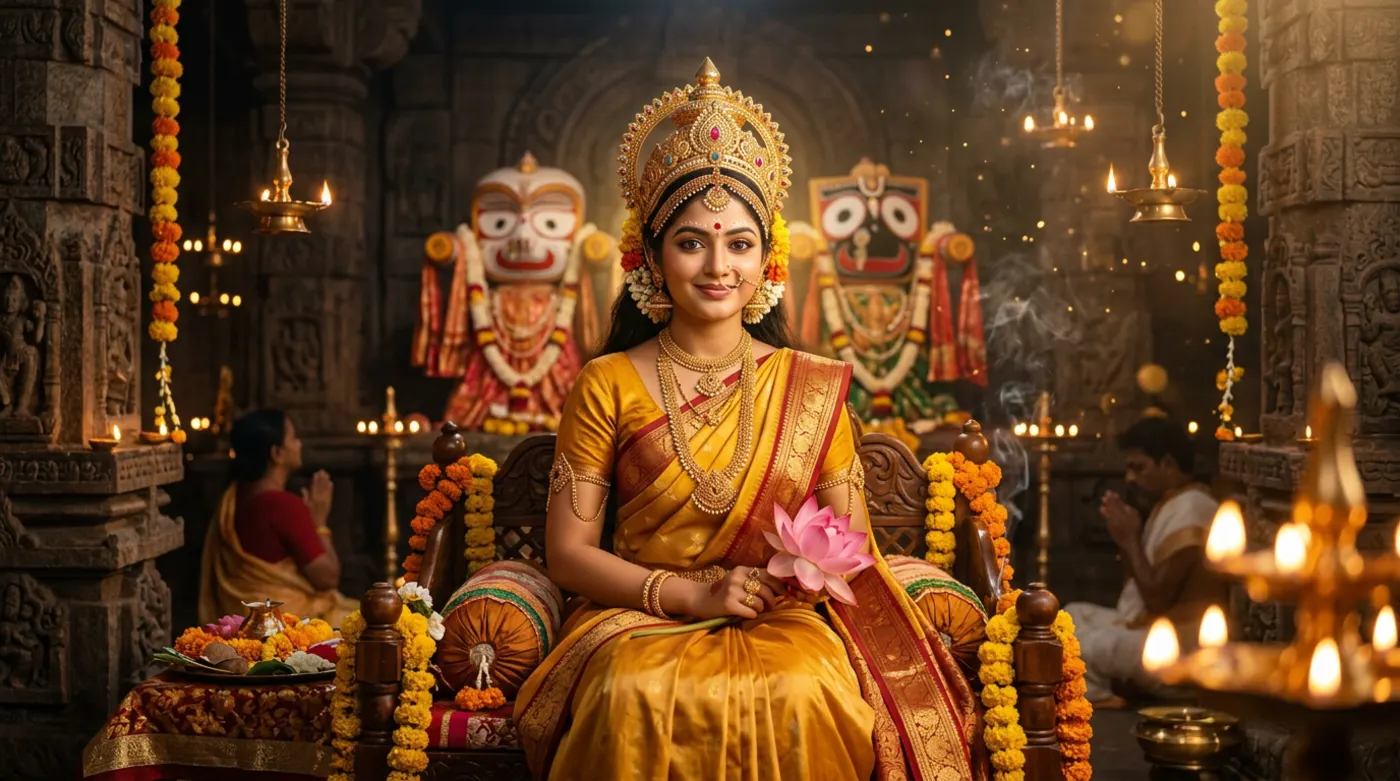
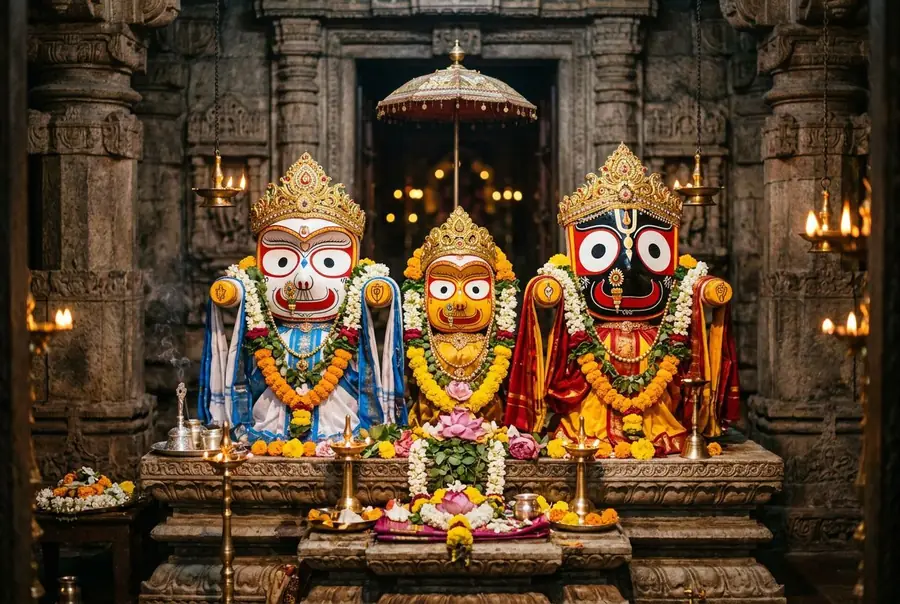
The golden Goddess in the middle of the Ratnavedī of Purī — Yogamāyā Ekānaṃśā, the sister of Śrī Jagannātha and Śrī Balabhadra, wife of Arjuna and mother of Abhimanyu, who rides the twelve-wheeled chariot Darpadalana, the crusher of pride.

Tattva
Yogamāyā
Name
Ekānaṃśā
Ratha
Darpadalana
Place
Ratnavedī, Purī
Devī Subhadrā, the golden goddess of the Jagannātha triad, in the sanctum of Śrī Mandira, Purī

Who is Devī Subhadrā?

Yogamāyā — the middle of the triad

On the Ratnavedī of Śrī Mandira, Purī, Devī Subhadrā stands between Lord Jagannātha and Lord Balabhadra, golden as molten gold, without arms — for she is not a form that acts but the very power (śakti) by which the Lord acts. Vaiṣṇava tradition of Puruṣottama Kṣetra identifies her with Yogamāyā, the internal potency who arranges every līlā of Kṛṣṇa, veils Him from the proud and reveals Him to the devoted.
Ekānaṃśā — the sister of Kṛṣṇa

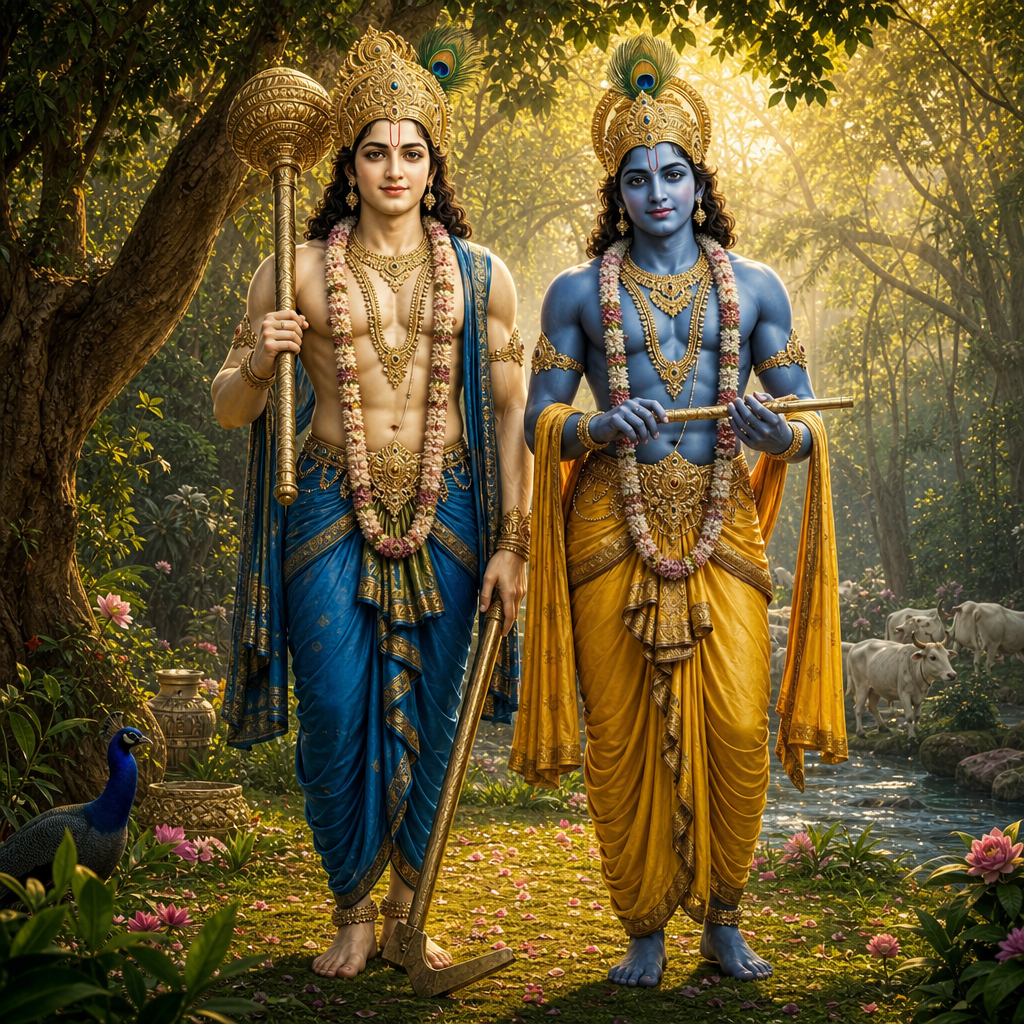
The Harivaṃśa and Purāṇic tradition call her Ekānaṃśā, the daughter born to Yaśodā who was exchanged for the infant Kṛṣṇa and slipped from Kaṃsa's hands into the sky as the Goddess. She is therefore Kṛṣṇa's sister in the fullest sense — the same divinity in feminine form, worshipped in the classic Ekānaṃśā triad of Balarāma–Ekānaṃśā–Kṛṣṇa long before the present Purī images.

Durgā, Bhuvaneśvarī, Bhadrakālī

In the Śākta–Vaiṣṇava synthesis of Odisha the same Ekānaṃśā who eluded Kaṃsa is Vindhyavāsinī Durgā, and Subhadrā is worshipped with Bhuvaneśvarī and Bhadrakālī / Kātyāyanī mantras. Śākta upāsakas of Purī see the triad as Kṛṣṇa-Bhairava, Sankarṣaṇa-Sadāśiva and the Goddess between them — Vaiṣṇava by day, Śākta by night, one truth in two languages.

Subhadrā of the Mahābhārata

She is the daughter of Vasudeva, younger sister of Kṛṣṇa and Balarāma, and — in the Subhadrā-haraṇa episode of the Ādi Parva — the wife of Arjuna, whom Kṛṣṇa Himself counselled to carry her away. She becomes the mother of Abhimanyu and thus the grandmother of Parīkṣit, through whom the Bhāgavata itself was spoken. Courage, sweetness and unbreakable dharma meet in her.

Darpadalana — her chariot

In the Ratha Yātrā her chariot is Darpadalana (also called Devadalana), 'the crusher of pride' — twelve wheels, red and black cloth, drawn by the rope Svarṇacūḍā. Jagannātha's Nandighoṣa has sixteen wheels and Balabhadra's Tāḍadhvaja fourteen. Her chariot moves in the middle: mercy travelling between the Lord and His shelter, grinding down the ego of whoever pulls the rope.

The fourth mūrti — Sudarśana

Beside Subhadrā on the Ratnavedī stands Sudarśana, the wooden pillar-form of the Lord's disc, and he shares her chariot during the Yātrā. Together the four — Jagannātha, Balabhadra, Subhadrā, Sudarśana — form the complete darśana of Puruṣottama Kṣetra: the Lord, His strength, His energy and His will.

Dhyāna — how she is seen

Meditate on her as molten gold, seated between the dark Jagannātha and the white Balabhadra; her face round as the full moon with wide lotus eyes, a red-bordered yellow silk about her, without visible arms — for her hands are the hands of the Lord Himself. She is smiling, motionless, and yet everything moves because of her: she is the will that becomes the world.

Mantras & invocation

Praṇāma
ॐ सुभद्रायै नमः
oṁ subhadrāyai namaḥ

The simple nāma-mantra of the Goddess, chanted before darśana of the triad and on Ratha Yātrā days.

Triad invocation
जगन्नाथः बलभद्रः सुभद्रा च महोदधौ
jagannāthaḥ balabhadraḥ subhadrā ca mahodadhau

Traditional Puruṣottama Kṣetra salutation remembering the three together on the shore of the great ocean.

Yogamāyā stuti
नमस्ते योगमायायै एकानंशायै धीमहि
namas te yogamāyāyai ekānaṁśāyai dhīmahi

A salutation to her as Yogamāyā Ekānaṃśā — the potency who conceals and reveals the Lord.

Worship her on Āṣāḍha Śukla Dvitīyā (Ratha Yātrā), Snāna Pūrṇimā, and on Fridays with turmeric, yellow flowers, ghee lamps and khīra.

A note on sources

Unlike Jagannātha, Balabhadra, Kṛṣṇa or Kālī, Devī Subhadrā has no attested Sahasranāma or Aṣṭottara-śatanāma in the classical Sanskrit corpus — none is listed in the standard sahasranāma and nāmāvalī collections. Rather than publish an invented list of names, this page gives only what is textually grounded: the Mahābhārata (Ādi Parva) account, the Harivaṃśa and Purāṇic Ekānaṃśā material, the Skanda Purāṇa Utkala Khaṇḍa / Puruṣottama Kṣetra tradition, and the living ritual of Śrī Mandira, Purī. Modern devotional compositions such as the Subhadrā Gītāmṛtam exist and are beautiful, but they are contemporary works, not scripture.

Continue the darśana