Svayam Bhagavan
Sri Krishna & His Expansions
“īśvaraḥ paramaḥ kṛṣṇaḥ sac-cid-ānanda-vigrahaḥ / anādir ādir govindaḥ sarva-kāraṇa-kāraṇam”
— Brahma Saṁhitā 5.1
Krishna is the Supreme Personality — beginningless, the origin of all, cause of all causes. From Him flow Vishnu, Sankarshana, Maha Vishnu, Sadashiva, Adya Kali, Bhairava and Lord Jagannath. This page traces those expansions through the Vedas, Upanishads, Puranas, Pancharatra and Tantras.
The Source
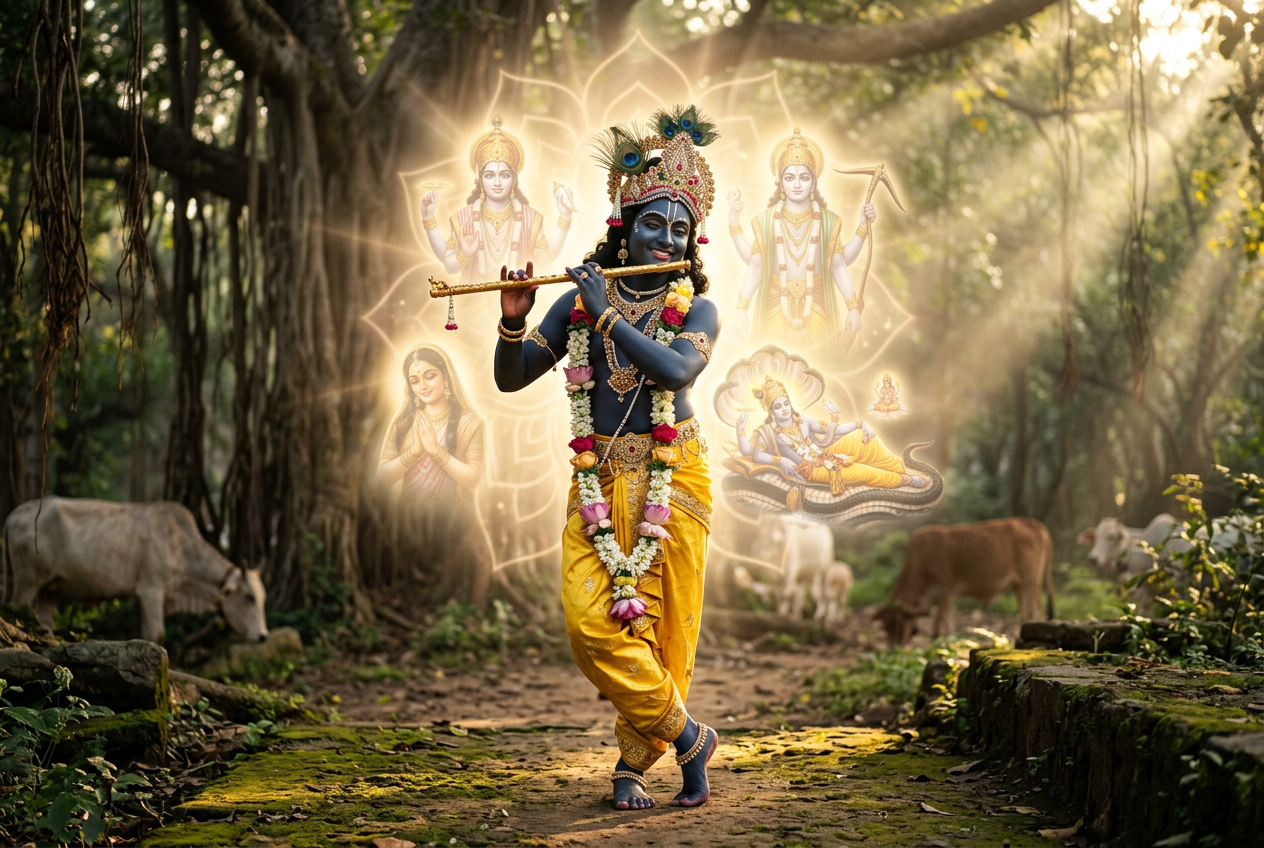
Krishna is Svayam Bhagavan — the Original Person
The Śrīmad Bhāgavatam declares (1.3.28): “ete cāṁśa-kalāḥ puṁsaḥ kṛṣṇas tu bhagavān svayam” — “All these (avatars) are portions or portions-of-portions of the Puruṣa; but Krishna is Bhagavan Himself.” He is not an incarnation among many; He is the viṣṇu-tattva Himself in His most complete svarūpa.
The Gopāla-tāpanī Upaniṣad (Atharva Veda) calls Him “sat-cid-ānanda-rūpāya kṛṣṇāya” — pure being, consciousness and bliss. The Chandogya Upaniṣad (3.17.6) names Him as the disciple of Ghora Āṅgirasa; the Mahānārāyaṇa Upaniṣad identifies the same reality as Nārāyaṇa. In the Bhagavad Gītā (10.8) Krishna Himself says: “ahaṁ sarvasya prabhavo mattaḥ sarvaṁ pravartate” — “I am the origin of all; from Me everything proceeds.”
His eternal abode is Goloka Vṛndāvana, described in the Brahma Saṁhitā (5.29) as cintāmaṇi-prakara-sadmasu — a realm of wish-fulfilling stones, surabhi cows, and kalpa-vṛkṣa trees, where He plays His flute eternally surrounded by lakṣmī-sakhīs.
Modern Sampradāya
ISKCON and the Hare Krishna Mahā-mantra
The International Society for Krishna Consciousness (ISKCON) was founded in New York in 1966 by His Divine Grace A. C. Bhaktivedanta Swami Prabhupāda, in the Gauḍīya Vaiṣṇava lineage of Śrī Caitanya Mahāprabhu (1486–1534). Caitanya Mahāprabhu is worshipped as the combined form of Rādhā and Krishna — Krishna assuming the golden complexion and mood of His own beloved to relish His own sweetness.
The heart of the tradition is the Hare Krishna Mahā-mantra, given in the Kali-Santaraṇa Upaniṣad as the specific means of liberation in Kali-yuga:
हरे कृष्ण हरे कृष्ण कृष्ण कृष्ण हरे हरे
हरे राम हरे राम राम राम हरे हरे
Hare is the vocative of Harā — Śrīmatī Rādhārāṇī, the internal pleasure potency (hlādinī-śakti). Kṛṣṇa and Rāma are the two names of the Supreme who attracts and delights. Together the mantra is a prayer: “O Energy of the Lord, O Lord, please engage me in Your service.”
ISKCON preserves the theology of acintya-bheda-abheda-tattva — inconceivable simultaneous oneness and difference — taught by Caitanya. Krishna and His expansions, energies, and devotees are simultaneously one with Him and eternally distinct.
Pañcarātra & Vyūha
Vāsudeva, Saṅkarṣaṇa, Pradyumna, Aniruddha
The Pañcarātra Āgama and the Nārāyaṇīya Parva of the Mahābhārata (Śānti Parva 335–351) describe Krishna’s primary expansions as the Catur-vyūha — four cosmic forms:
- Vāsudeva — the source, presiding over pure consciousness (citta). This is Krishna Himself as the origin of the vyūha.
- Saṅkarṣaṇa — the first expansion, presiding over the ego principle (ahaṅkāra). He is Balarāma / Ananta Śeṣa, the destroyer at the end of time.
- Pradyumna — presiding over intelligence (buddhi) and the mind. The maintainer.
- Aniruddha — presiding over mind (manas) and the material creation itself.
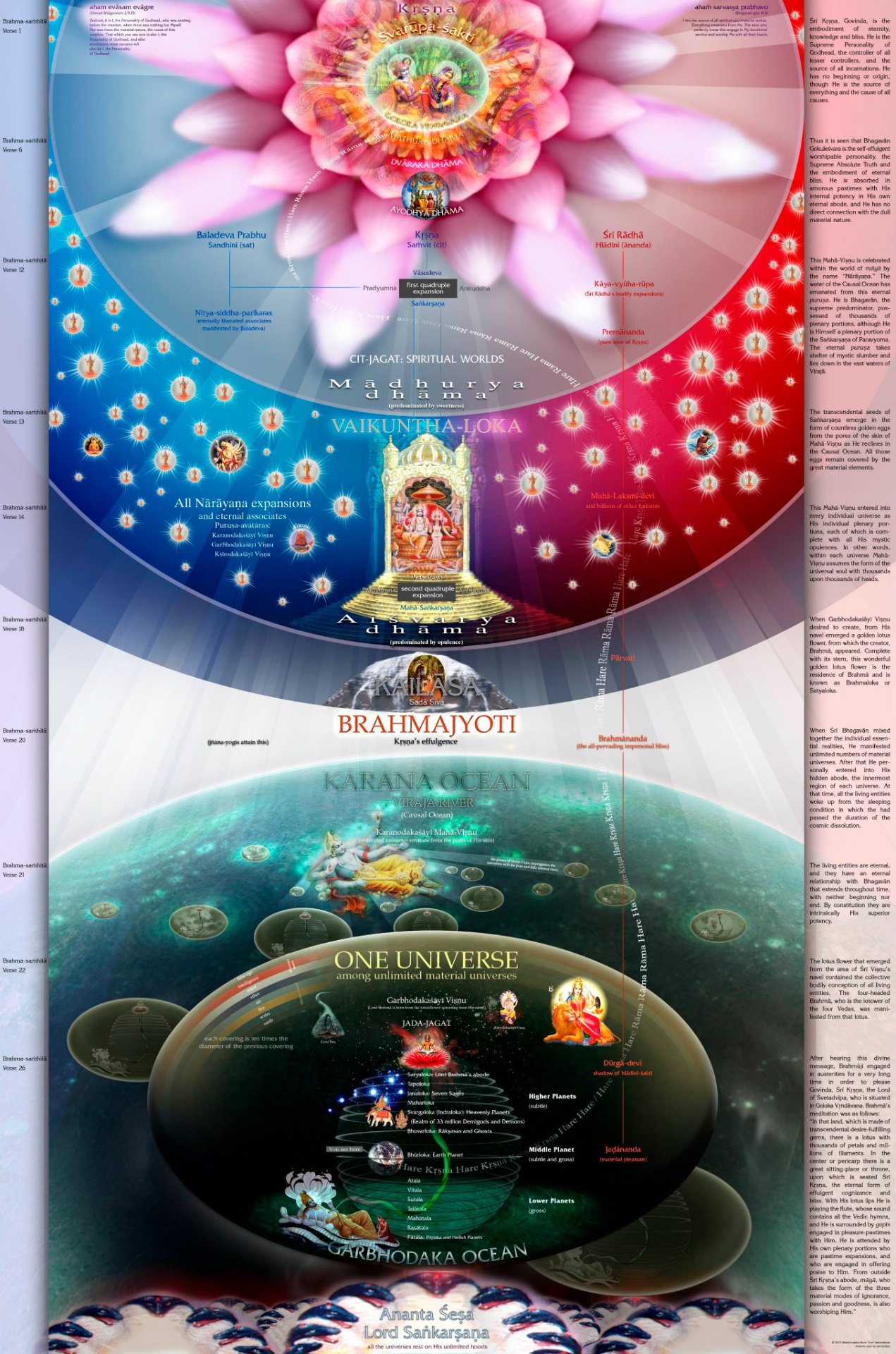
The Chaitanya Caritāmṛta (Ādi-līlā 5.41) explains: from Krishna comes Balarāma (Saṅkarṣaṇa) in Goloka; from Him a second Saṅkarṣaṇa in Vaikuṇṭha; from Him the three puruṣa-avatāras — Kāraṇodakaśāyī, Garbhodakaśāyī and Kṣīrodakaśāyī Viṣṇu — who preside over the material universes.
The Puruṣa Avatāras
How Krishna Becomes Maha Vishnu & Maha Sankarshana
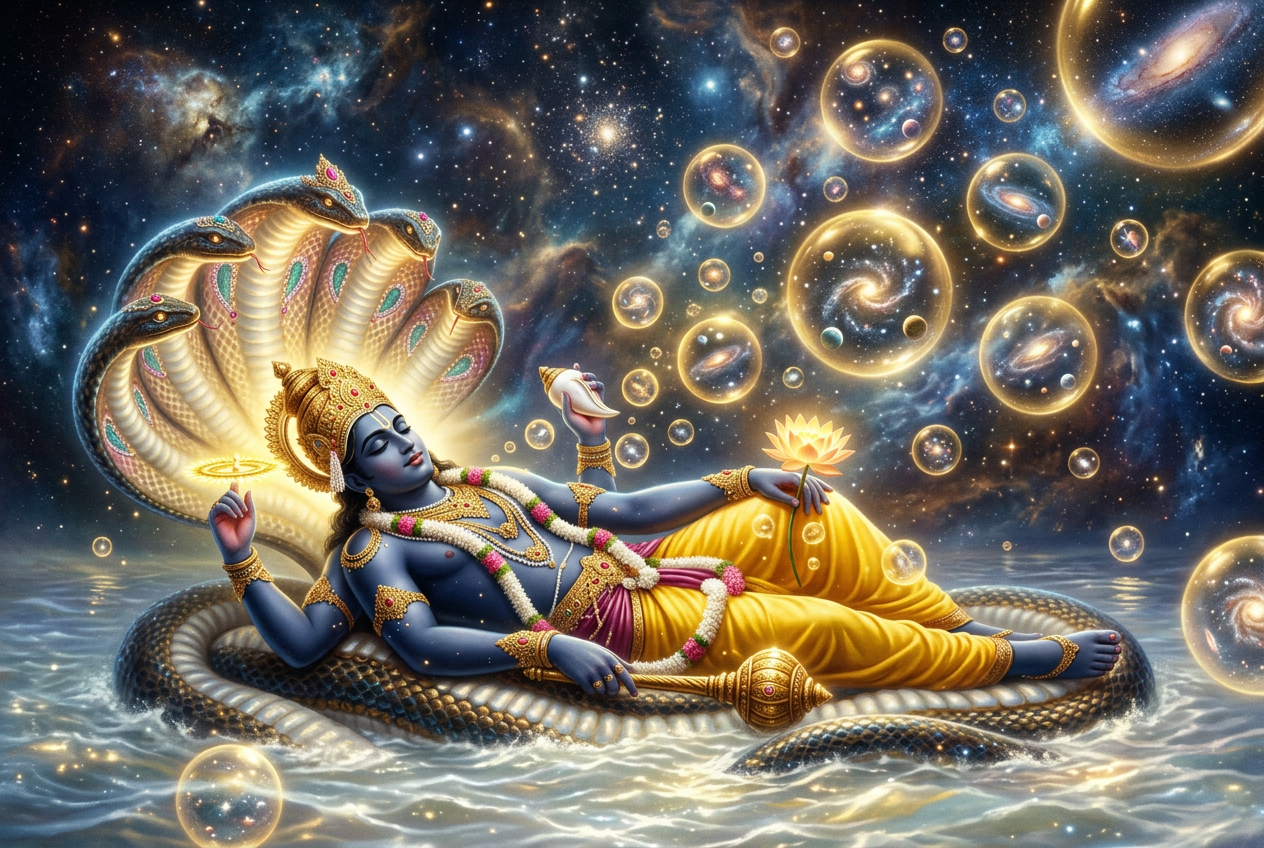
From Krishna → Baladeva (Goloka Saṅkarṣaṇa) → Mūla Saṅkarṣaṇa (Mahā Saṅkarṣaṇa) in the topmost Vaikuṇṭha. From Mahā Saṅkarṣaṇa arises the first puruṣa: Kāraṇodakaśāyī Viṣṇu — Mahā Viṣṇu.
The Śrīmad Bhāgavatam (2.6.42) and Brahma Saṁhitā (5.11–13, 5.47–48) describe how Mahā Viṣṇu lies on the Kāraṇa Ocean — the Causal Ocean of undifferentiated matter. With one glance He fertilizes prakṛti; with each of His exhalations, innumerable universes (brahmāṇḍas) emerge like bubbles from the pores of His skin. When He inhales, they return.
Then He enters each universe as Garbhodakaśāyī Viṣṇu, from whose navel-lotus Brahmā is born. A third expansion, Kṣīrodakaśāyī Viṣṇu, enters the heart of every atom and every living being as the Paramātmā — the Supersoul.
“yasyaika-niśvasita-kālam athāvalambya jīvanti loma-vila-jā jagad-aṇḍa-nāthāḥ”
— Brahma Saṁhitā 5.48 — “The Brahmās who rule the universes live only for the duration of one exhalation of Mahā Viṣṇu.”
Śiva-tattva
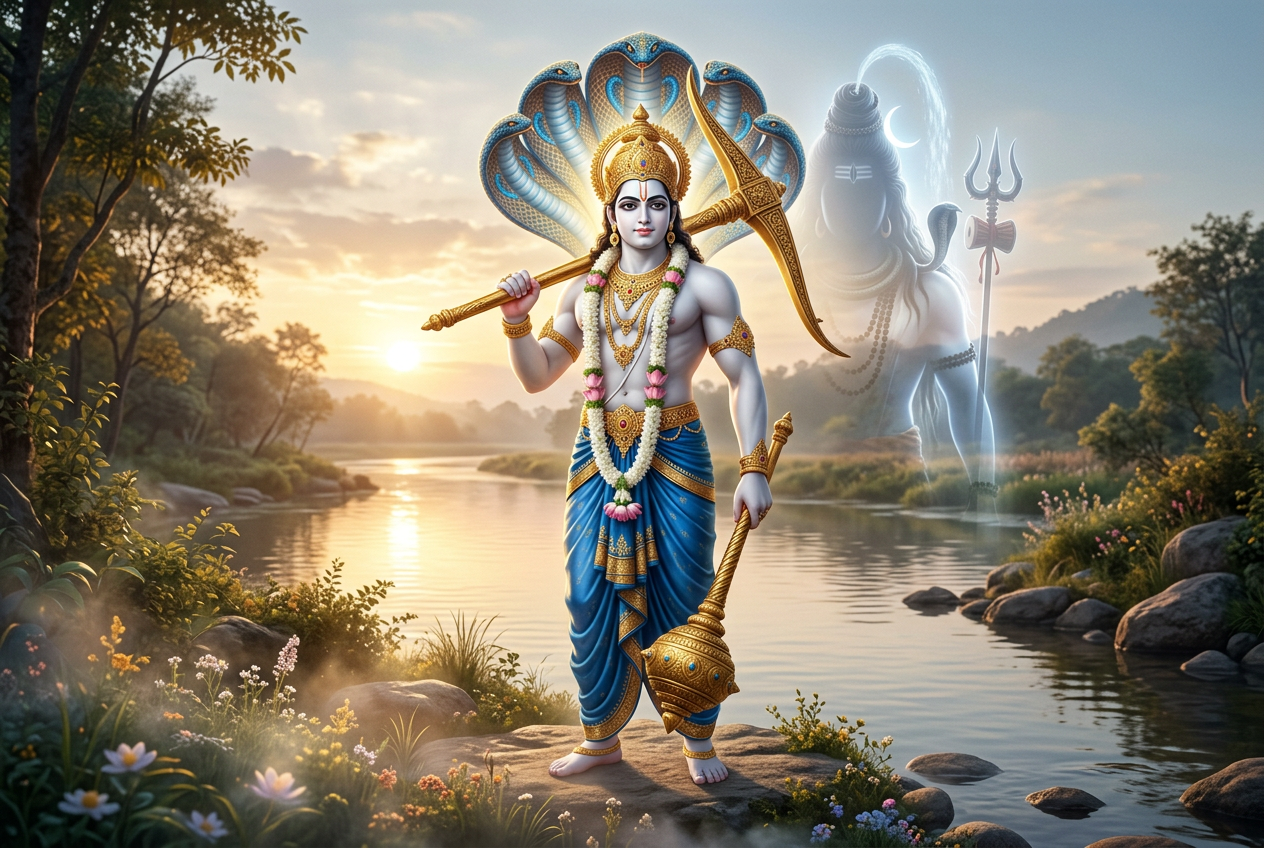
How Sankarshana Expands as Sadashiva & Shiva
The Śrīmad Bhāgavatam (10.88.3) teaches that Viṣṇu, Brahmā and Śiva are the three presiding deities of the three guṇas. Where does Śiva come from? The Chaitanya Caritāmṛta (Madhya 20.308–311) and the Laghu-bhāgavatāmṛta of Rūpa Gosvāmī answer clearly:
- From Mahā Viṣṇu comes Sadāśiva in the Śiva-loka just above the Kāraṇa Ocean. Sadāśiva is Saṅkarṣaṇa Himself in the form that touches matter.
- From Sadāśiva comes Rudra / Śiva, born from the space between Brahmā’s eyebrows in each universe, presiding over tamo-guṇa and dissolution.
The famous verse: “kṣīraṁ yathā dadhi vikāra-viśeṣa-yogāt” (Brahma Saṁhitā 5.45) — “As milk is transformed into yogurt by a specific agent (yet is still milk in essence), Śambhu (Śiva) is that transformation of Kṛṣṇa which contacts material nature. He is neither non-different nor entirely different from Him.”
This is why Śiva is simultaneously the greatest Vaiṣṇava (vaiṣṇavānāṁ yathā śambhuḥ — SB 12.13.16) and the Lord of dissolution. In Vaiṣṇava theology He is Krishna’s own expansion for a particular cosmic function; in Śaiva theology He is worshipped as the Supreme Himself — and the two views resolve in the recognition that Krishna and Sadāśiva share one divine substance.
Puruṣottama-kṣetra, Puri
Lord Jagannath: Vishnu, Shiva and Shakti as One
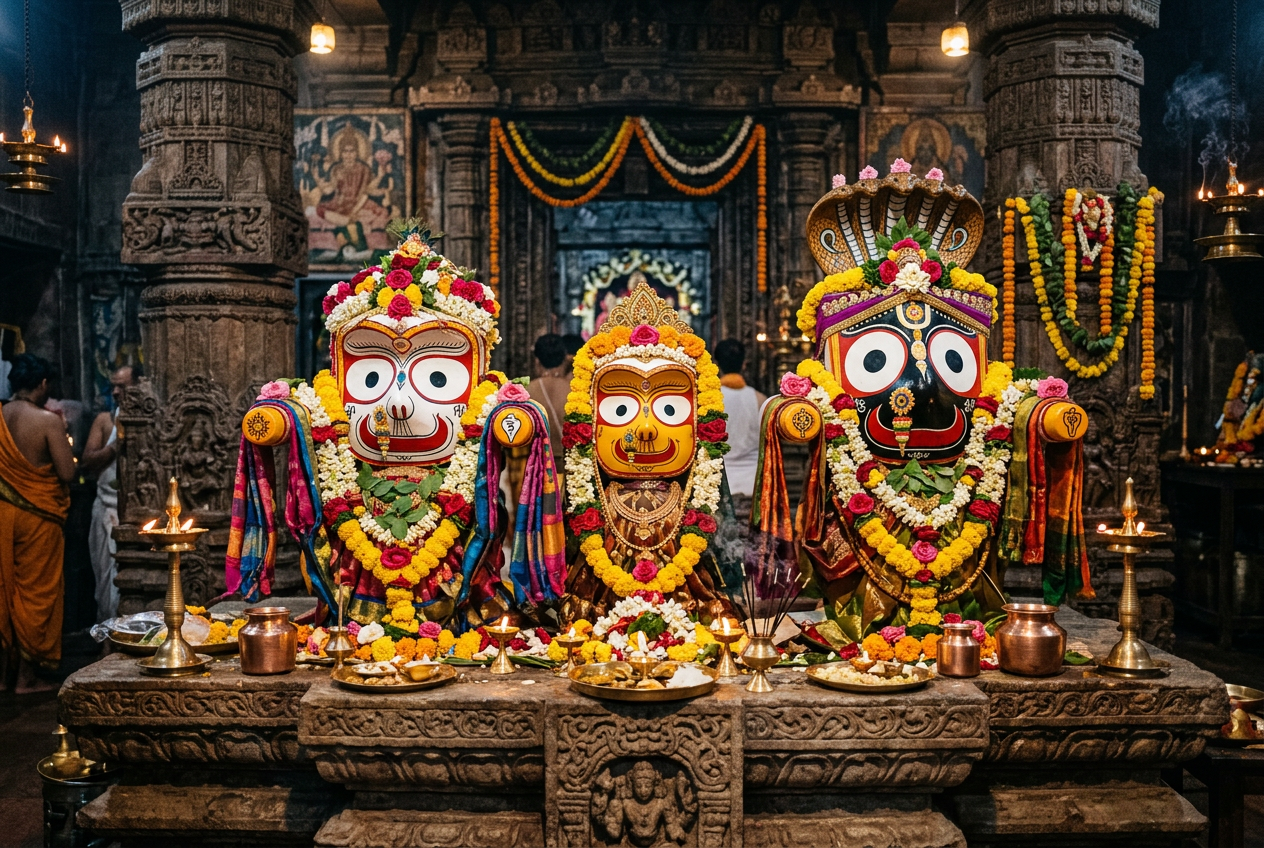
The Skanda Purāṇa (Puruṣottama-kṣetra Māhātmya) and the Brahma Purāṇa reveal Puri as the Puruṣottama-kṣetra — where the Supreme Person Himself appears in the wooden form of dāru-brahma. The three deities on the ratna-vedi encode the entire theology of expansions in a single altar:
- Lord Jagannātha — dark like the rain-cloud, round unblinking eyes — is Krishna Himself, the source Puruṣottama.
- Lord Balabhadra — white, elder brother — is Saṅkarṣaṇa / Sadāśiva, the Śiva-tattva who touches matter.
- Devī Subhadrā — golden, seated between them — is Yogamāyā / Ādi Śakti, the Mother who is Krishna’s own internal energy.
So the Puri altar simultaneously worships Viṣṇu, Śiva and Śakti — the entire trinity of tattva reduced to one wooden form of Krishna. This is why devotees from every sampradāya — Vaiṣṇava, Śaiva, Śākta, Buddhist, Jain, tribal Śabaras — all claim Jagannātha as their own; because He literally is all of them.
The Śākta tantras call the same triad Nīlamādhava, Bhairava, and Vimalā Devī — and Vimalā Devī within the Jagannātha Mandira itself is one of the 51 Śakti Pīṭhas. Whatever is offered to Jagannātha is first sanctified as prasāda by being offered to Vimalā.
Śakti of the Supreme
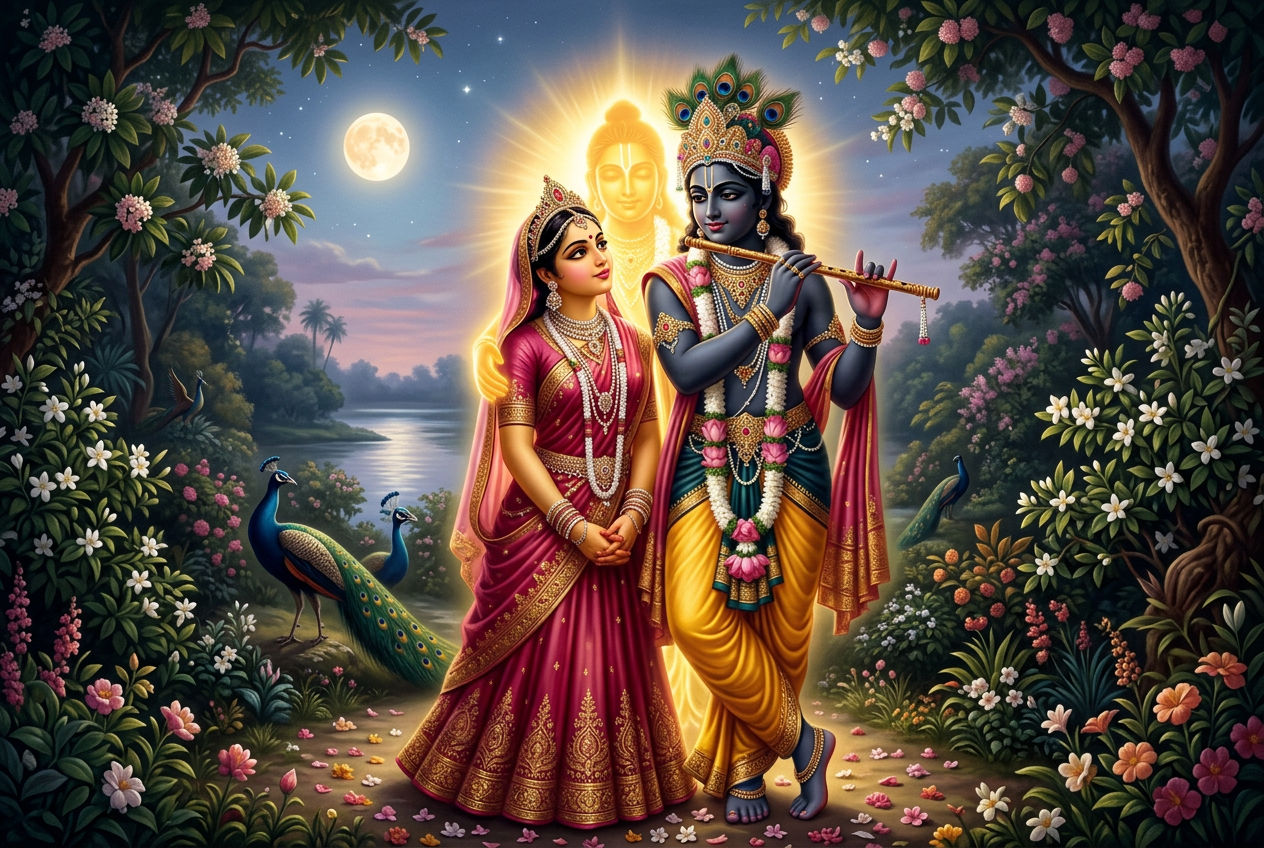
Krishna is Radha, Radha is Krishna
Rādhā is not another goddess added to Krishna — She is His own hlādinī-śakti, the pleasure aspect of His own being. The Rādhā-tāpanī Upaniṣad (a Vaiṣṇava Upaniṣad of the Atharva) declares: rādhā vai brahma-vādinī, and “ekaṁ eva rūpaṁ dvidhā gataṁ” — “One form has become two.”
The Chaitanya Caritāmṛta (Ādi 4.55–56) puts it exactly: “rādhā kṛṣṇa-praṇaya-vikṛtir hlādinī śaktir asmād / ekātmānāv api bhuvi purā deha-bhedaṁ gatau tau” — Rādhā and Krishna are one soul that has taken two bodies to relish Their own love. When They fuse again, that combined form is Śrī Caitanya Mahāprabhu — Krishna glowing with Rādhā’s golden lustre.
To chant Hare Kṛṣṇa is therefore to invoke Krishna together with His own Self as Rādhā. Without Rādhā, Krishna is only power; with Rādhā, He is rasa — the sweetness of Divine Love itself.
Vaiṣṇava & Śākta unity
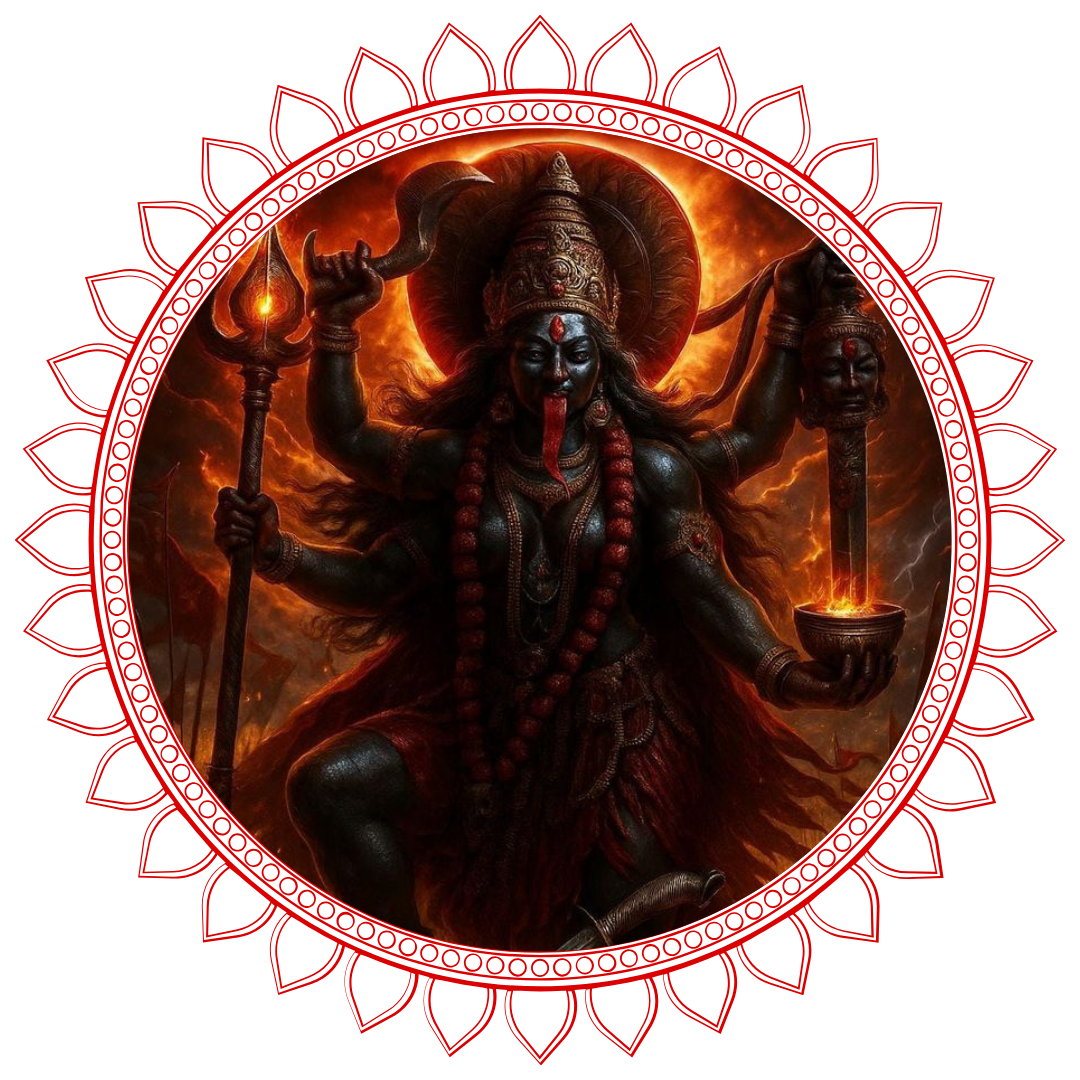
Krishna is Adya Kali, Adya Kali is Krishna
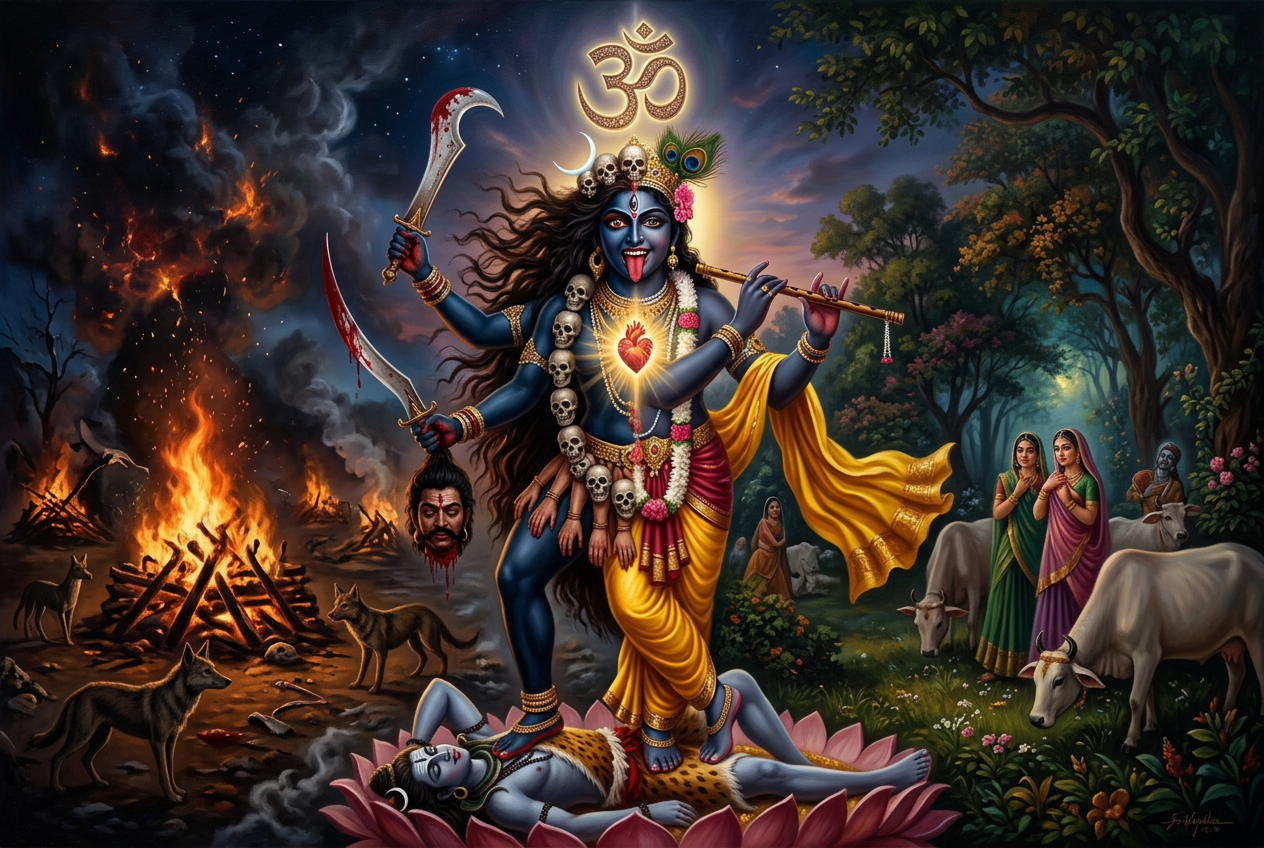
The Mahānirvāṇa Tantra (4.30) and Kālī Tantra declare that Ādyā Kālī is the Supreme Brahman — “kālī brahma-svarūpiṇī”. The Bṛhannīla Tantra and the Kālīvilāsa Tantra go further: they identify Krishna and Kālī as one reality wearing two forms.
The Bṛhannīla Tantra famously says: “kṛṣṇa-varṇā mahā-māyā kālī nāma parā-parā / vṛndāvane bhavet kṛṣṇaḥ kailāse kālikā smṛtā” — “The dark-hued Mahā-Māyā is called Kālī, both transcendent and immanent. In Vṛndāvana She becomes Kṛṣṇa; on Kailāsa She is remembered as Kālikā.”
Both are Śyāma — deep blue-black, the colour of infinity. Krishna holds a flute of eternal love; Kālī holds a sword of eternal liberation. Krishna dances the rāsa of union; Kālī dances the tāṇḍava of dissolution. But the tantra teaches that the sword and the flute are two hands of the same Divine — one cuts the ego, the other calls the soul home.
The Bengali Śākta saint Rāmprasād Sen and later Śrī Rāmakṛṣṇa Paramahaṁsa both realised this directly: “My Kālī and Kṛṣṇa of Vṛndāvana are one and the same.” Rāmakṛṣṇa, priest of Dakṣiṇeśvar Kālī, wept at the sound of Krishna’s flute; the temple’s Kālī and the Vṛndāvana Bāṅke-Bihārī were, for him, one Mother-Beloved.
Bhairava-tattva
Krishna is Bhairava, Bhairava is Shiva
The Śiva Purāṇa (Śatarudra Saṁhitā) and Kālikā Purāṇa describe Bhairava as the fierce, timeless (kāla) form of Śiva — bhīru-rāvaṇa, He who removes fear by roaring away all illusion. The Netra Tantra and Svacchanda Bhairava Tantra of Kashmir Śaivism declare Bhairava the very Supreme — “bhairavaḥ para-śivaḥ”.
Because Śiva is Saṅkarṣaṇa’s expansion, and Saṅkarṣaṇa is Krishna’s first expansion, Bhairava is Krishna’s fierce protective face. The gentle flute-player who steals butter and the terrifying Kāla-Bhairava who guards Kāśī are the same Person seen through two moods — mādhurya (sweetness) and aiśvarya (majesty and awe).
Explore the eight guardian forms in our Kaal Bhairava & Ashta Bhairava section — including Swarṇākarṣaṇa Bhairava, the golden aspect who bestows lasting abundance.
Trīguṇa
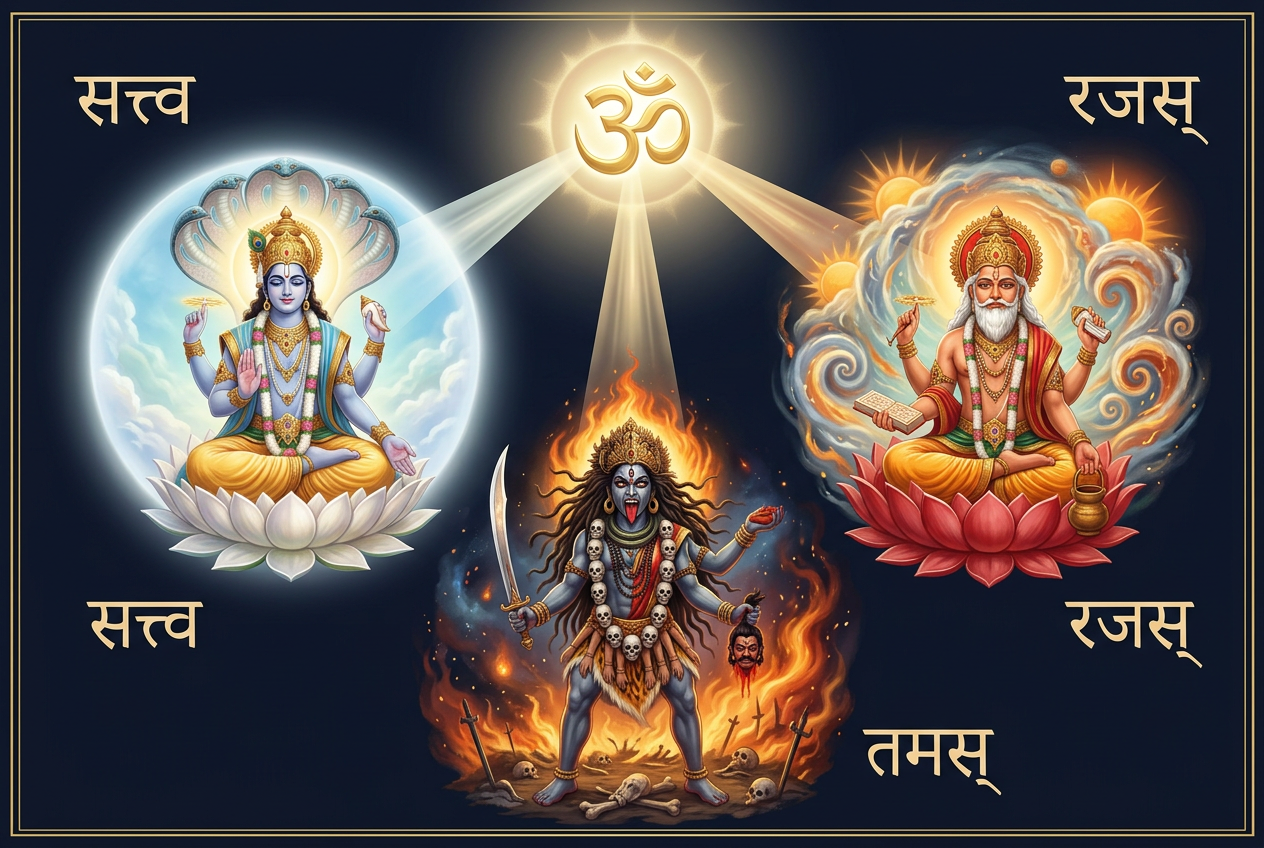
Tantric, Sattvic, Rājasic — the Three Faces of the One
The Bhagavad Gītā (14.5–18) and Sāṅkhya Kārikā teach that all manifestation moves through three guṇas. When the One Supreme appears through each guṇa, He takes on a distinct name and form — yet the substance is always the same Krishna:
- Sattva (light, harmony, preservation) — presides as Mahā Viṣṇu / Krishna. The devotional path, the temple, the flute, the mantra.
- Rajas (creativity, movement, generation) — presides as Brahmā for creation and as Durgā for the creative-protective energy of the world. The path of dharma, action, and shakti.
- Tamas (dissolution, transformation, transcendence-through-piercing-form) — presides as Mahā-Kāla Bhairava / Ādyā Kālī. The tantric path, the cremation ground, the sword that cuts illusion.
The three are not rivals but faces of one Person, three doorways for three temperaments. The Bhāgavatam’s “ekaṁ sad viprā bahudhā vadanti” (Ṛg Veda 1.164.46) is enacted here: the sages call the One by many names — Indra, Mitra, Varuṇa, Agni — and in later revelation Viṣṇu, Brahmā, Śiva, Śakti, Kālī, Bhairava, Kṛṣṇa.
Advaita of Bhakti
All Is One Lord Jagannath
When you stand before Lord Jagannātha in Puri, you are standing before all of it at once: Krishna as Puruṣottama, Sadāśiva as Balabhadra, Ādi Śakti as Subhadrā, Vimalā as the Śakti Pīṭha in the same courtyard, Bhairava as the kṣetra-pāla guarding the city. The daru-brahma is the physical mūrti of the advaita that all the scriptures point to.
This is why the Puri tradition teaches “Yaḥ paśyati sa paśyati” — one who truly sees Jagannātha has seen everything. Krishna is Rādhā, Rādhā is Krishna. Krishna is Kālī, Kālī is Krishna. Krishna is Bhairava, Bhairava is Śiva, Śiva is Saṅkarṣaṇa, Saṅkarṣaṇa is Krishna. All roads — Vaiṣṇava, Śaiva, Śākta, Tantric — return to the same Puruṣottama.
“sarva-dharmān parityajya mām ekaṁ śaraṇaṁ vraja / ahaṁ tvāṁ sarva-pāpebhyo mokṣayiṣyāmi mā śucaḥ”
— Bhagavad Gītā 18.66 — “Abandon all varieties of dharma and just surrender unto Me alone. I shall deliver you from all sinful reactions; do not fear.”
Continue your exploration:
Sources: Śrīmad Bhāgavatam · Bhagavad Gītā · Brahma Saṁhitā · Gopāla-tāpanī, Kṛṣṇa Upaniṣad, Rādhā-tāpanī, Kali-Santaraṇa Upaniṣads · Chaitanya Caritāmṛta · Laghu-bhāgavatāmṛta · Mahābhārata Nārāyaṇīya · Skanda & Brahma Purāṇas (Puruṣottama-kṣetra) · Mahānirvāṇa, Bṛhannīla, Kālīvilāsa Tantras · Netra & Svacchanda Bhairava Tantras · Śiva Purāṇa Śatarudra Saṁhitā.