Vedic Panchang
Śrī Sankarṣaṇa Tattva

Lord Sankarṣaṇa

The first expansion of Śrī Kṛṣṇa — Ananta Śeṣa who holds the universes on His hoods, the second of the four vyūhas, the origin of Sadāśiva, and Balabhadra who stands beside Lord Jagannātha in Purī. He is the reservoir of all strength and the shelter of every soul.

Vyūha
Caturvyūha
Form
Ananta Śeṣa
Tattva
Ahaṅkāra
Weapon
Hala & Musala
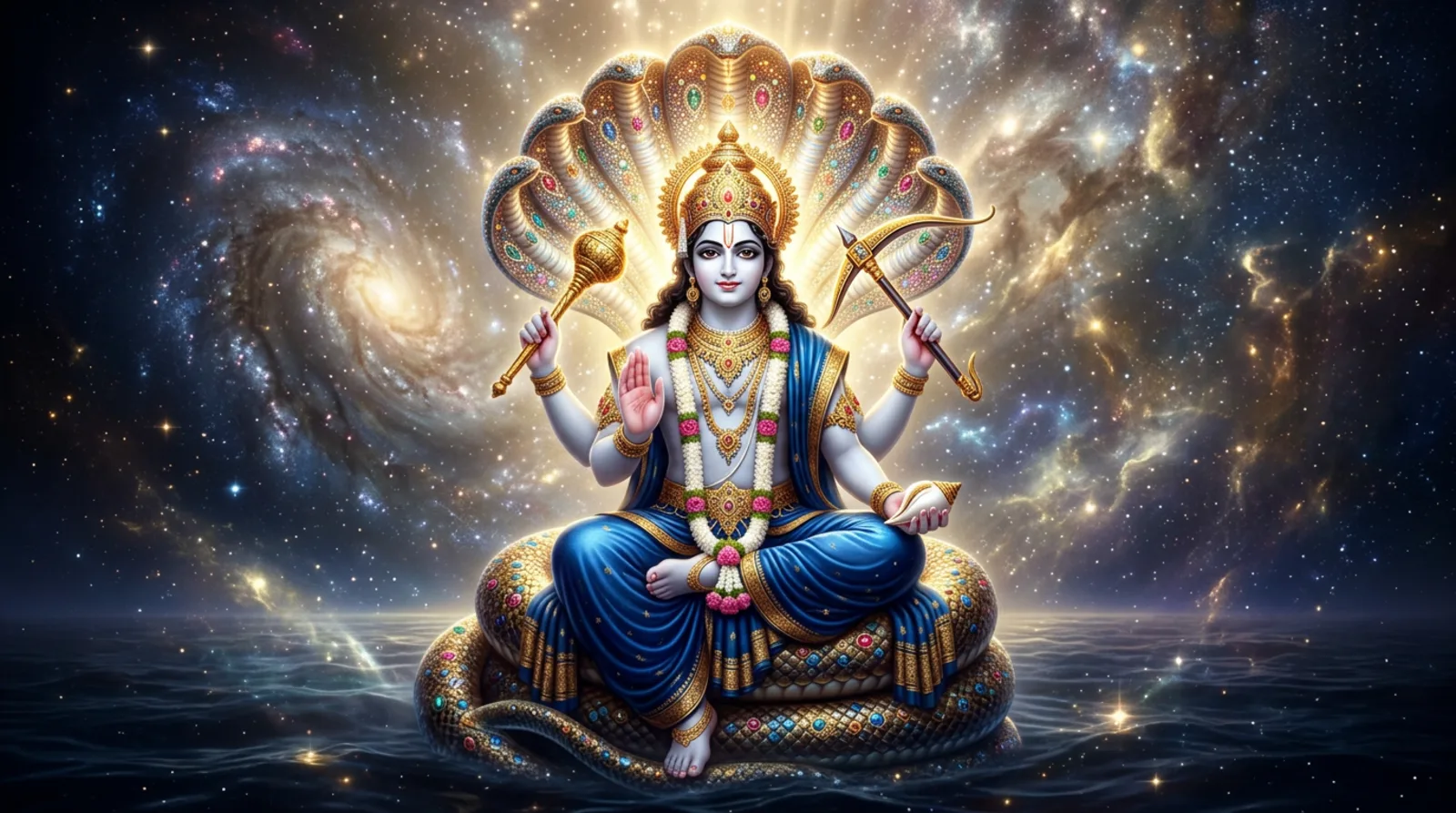
Lord Sankarṣaṇa as Ananta Śeṣa, canopied by a thousand serpent hoods over the cosmic ocean

Who is Sankarṣaṇa?

Mahā-Sankarṣaṇa — the origin of the vyūhas

From Śrī Kṛṣṇa, Svayaṁ Bhagavān, comes Baladeva; from Baladeva in Vaikuṇṭha comes Mahā-Sankarṣaṇa, and from Him the caturvyūha — Vāsudeva, Sankarṣaṇa, Pradyumna and Aniruddha. Sankarṣaṇa is therefore not a lesser deity but Kṛṣṇa's own first personal expansion, the shelter (āśraya) from whom all further descents of Viṣṇu proceed.
Ananta Śeṣa — who upholds the worlds

As Ananta Śeṣa He lies beneath creation with a thousand jewelled hoods, bearing the universes like mustard seeds and never feeling their weight. Śeṣa means 'the remainder' — what remains when everything else dissolves. He is the eternal bed of Viṣṇu, the servitor-form of God serving God, and the ideal of pure devotional service.

The source of Sadāśiva

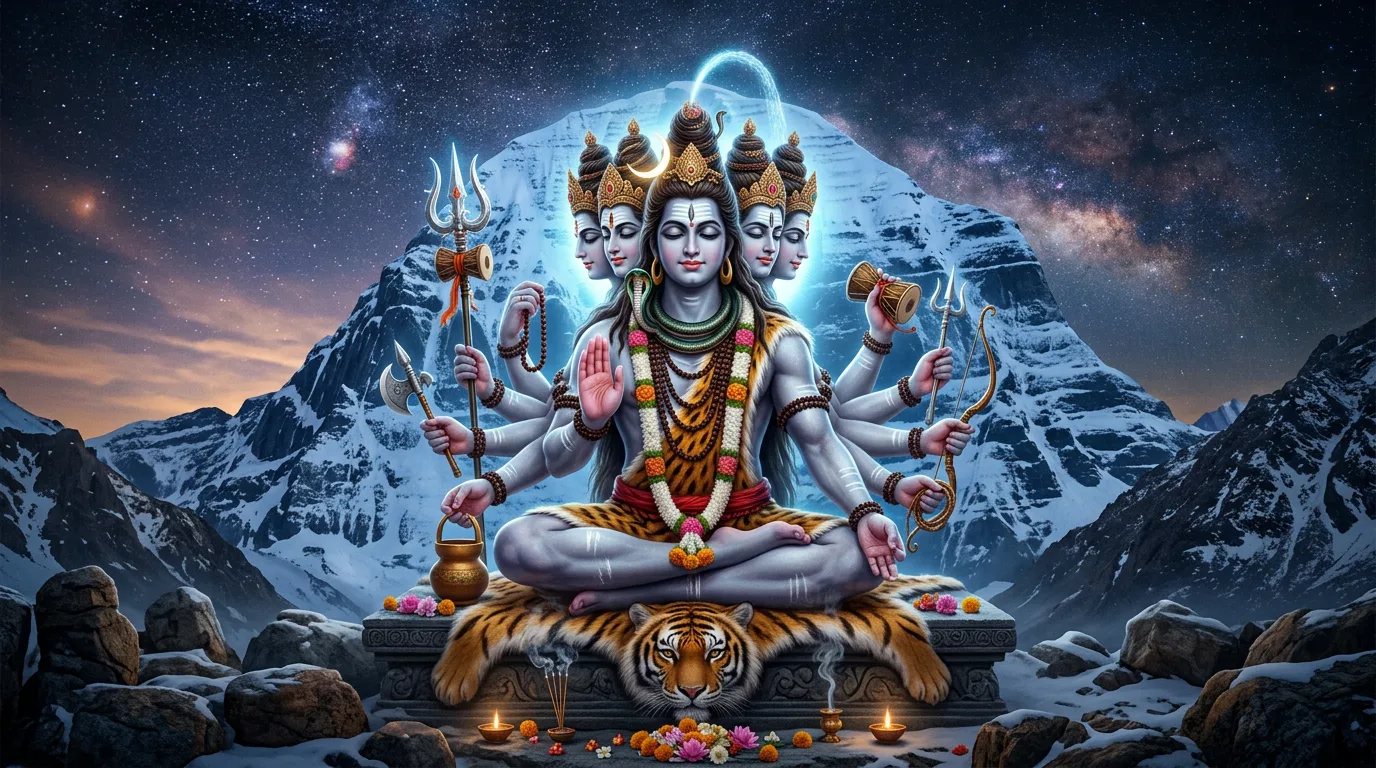
The Purāṇas describe that from Sankarṣaṇa arises Rudra / Sadāśiva, and that Sankarṣaṇa presides over ahaṅkāra, the ego-principle by which the material creation is individuated. Śiva is thus non-different from Viṣṇu in essence — like milk transformed into yoghurt (Brahma Saṁhitā 5.45) — yet takes up the distinct office of dissolution.

Balabhadra of Purī

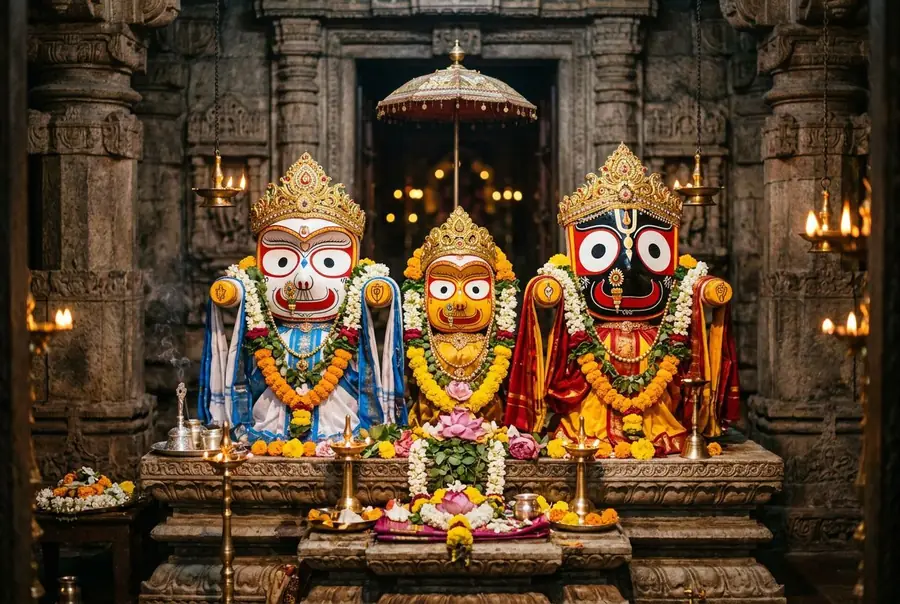
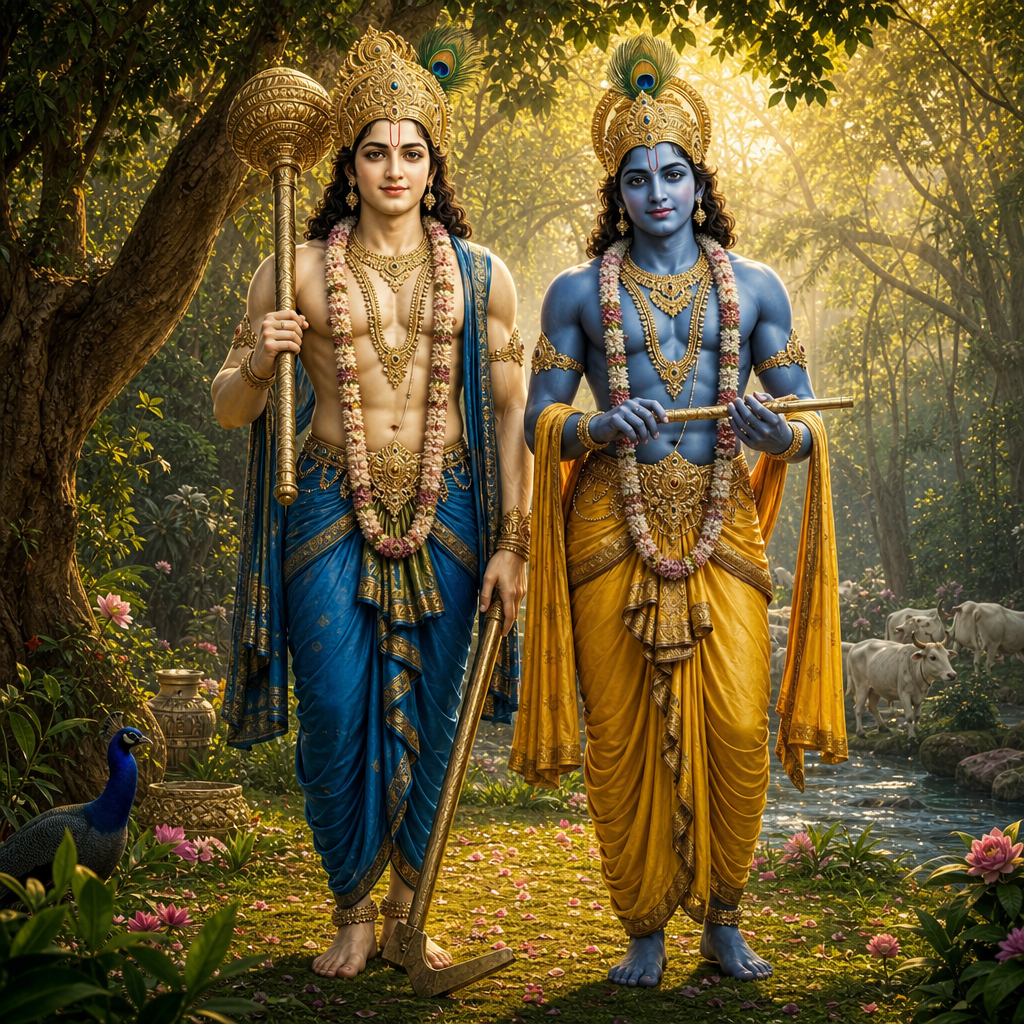
On the Ratnavedī of Śrī Mandira, Purī, He stands white as the autumn moon to the left of Lord Jagannātha, with Devī Subhadrā between them. Here Sankarṣaṇa is Balabhadra — plough-bearer, elder brother, the strength (bala) and auspiciousness (bhadra) that shelters every devotee who approaches Jagannātha.

Dhyāna — how He is seen

Meditate on Him white as a mountain of camphor, His limbs draped in blue silk, a garland of forest flowers on His chest, eyes rolling slightly with the joy of divine intoxication, plough and pestle in His hands, seated at ease upon the coils of Ananta while the thousand hoods above Him blaze with jewels — calm, immovable, and inexhaustibly strong.

Mantras & invocation

Mūla mantra
ॐ नमो भगवते सङ्कर्षणाय
oṁ namo bhagavate saṅkarṣaṇāya

The classical Pāñcarātra invocation of the second vyūha — chanted for strength, protection and steadiness of mind.

Balabhadra mantra
ॐ हलायुधाय विद्महे मुसलायुधाय धीमहि । तन्नो बलः प्रचोदयात् ॥
oṁ halāyudhāya vidmahe musalāyudhāya dhīmahi | tanno balaḥ pracodayāt ||

The Balabhadra Gāyatrī — 'may the plough-bearer, the wielder of the pestle, impel our strength'.

Ananta stuti
अनन्ताय नमस्तुभ्यं सहस्रवदनाय च
anantāya namas tubhyaṁ sahasra-vadanāya ca

A salutation to Ananta of a thousand mouths, recited for release from debt, disease and fear of snakes.

Chant after bath facing east, ideally on Ananta Caturdaśī, Balarāma Jayantī (Śrāvaṇa Pūrṇimā) or any Sunday, offering white flowers, milk and camphor.

Continue the darśana