108 Sacred Names of Devī Subhadrā
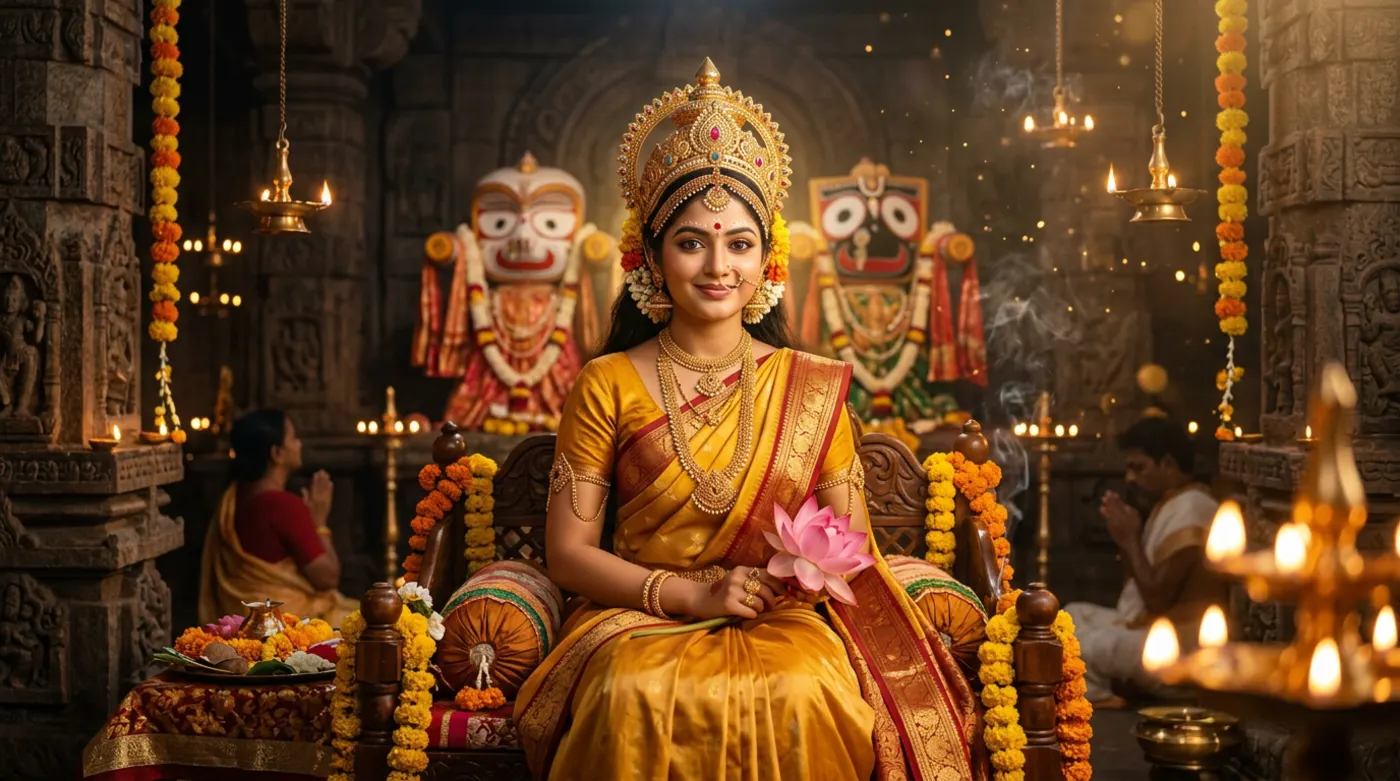
The golden Goddess of the Ratnavedī — Yogamāyā Ekānaṃśā, sister of Jagannātha and Balabhadra. Each name is given in Sanskrit (Devanāgarī), IAST transliteration and English meaning, in the traditional dative form for recitation as Oṃ … namaḥ.
Where these names come from
Unlike Kālī, Rāma or Jagannātha, Devī Subhadrā has no aṣṭottara-śatanāmāvalī or sahasranāma preserved in the classical Sanskrit corpus. Rather than invent scripture, this nāmāvalī is compiled name by name from her attested epithets and deeds across the śāstra, arranged in the traditional dative (caturthī) form used for archanā.
1 · Ekānaṃśā of the Harivaṃśa
The Harivaṃśa (Viṣṇu-parvan, Āryā-stava) praises her as Ekānaṃśā — the daughter of Yaśodā who slipped from Kaṃsa's hand, rose into the sky in an eight-armed form bearing celestial weapons, and foretold his end. Names 2, 11–13 and 72–76 come from that passage.
2 · Yogamāyā and Vindhyavāsinī
The Viṣṇu Purāṇa and Bhāgavata (10.2) name her Yogamāyā, the internal potency who arranges every līlā, and record her taking abode in the Vindhya hills as Vindhyavāsinī, worshipped there by the Śabaras. Names 3–10 and 77–79 follow this.
3 · The Mahābhārata Subhadrā
The Ādi-parvan gives her human life: daughter of Vasudeva and Rohiṇī, seen at the Raivataka festival, wed to Arjuna — she herself taking the chariot reins — and mother of Abhimanyu, through whom the Kuru line survived in Parīkṣit. Names 14–16 and 42–56.
4 · The Purī tradition
The Brahma and Skanda Purāṇa Puruṣottama-kṣetra-māhātmya and living Purī practice give her the Ratnavedī, the Dāru-brahman form, the golden armless icon, and the twelve-wheeled chariot Darpadalana, "crusher of pride". Names 21–40.
Honest attribution: this is a devotional compilation of scriptural epithets, not a translation of a single ancient stotra. Every name is traceable to Harivaṃśa, Viṣṇu Purāṇa, Bhāgavata Purāṇa, Mahābhārata Ādi-parvan, or the Brahma/Skanda Purāṇa Purī māhātmya.
The 108 Names
- सुभद्रायै#1subhadrāyai
She who is supremely auspicious — the bearer of all good fortune
- एकानंशायै#2ekānaṃśāyai
The One without a second portion — the undivided Goddess of the Harivaṃśa
- योगमायायै#3yogamāyāyai
The internal potency by whom the Lord arranges every līlā
- महामायायै#4mahāmāyāyai
The great illusive power that veils and reveals the Supreme
- मूलप्रकृत्यै#5mūlaprakṛtyai
The root nature from which all manifestation proceeds
- आदिशक्त्यै#6ādiśaktyai
The primordial power, first of all energies
- पराशक्त्यै#7parāśaktyai
The supreme transcendental potency
- चिच्छक्त्यै#8cicchaktyai
The power of pure consciousness
- ह्लादिन्यै#9hlādinyai
The bliss-giving potency, essence of divine joy
- संविद्रूपिण्यै#10saṃvidrūpiṇyai
She whose form is undivided knowing
- नन्दजायै#11nandajāyai
The daughter born in the house of Nanda
- यशोदातनयायै#12yaśodātanayāyai
The daughter of Mother Yaśodā
- गोकुलोद्भवायै#13gokulodbhavāyai
She who appeared in Gokula
- वसुदेवसुतायै#14vasudevasutāyai
The daughter of Vasudeva
- रोहिणीनन्दिन्यै#15rohiṇīnandinyai
The delight and daughter of Rohiṇī Devī
- यादवकुलोद्भवायै#16yādavakulodbhavāyai
She who arose in the Yadu dynasty
- कृष्णभगिन्यै#17kṛṣṇabhaginyai
The sister of Lord Kṛṣṇa
- बलभद्रानुजायै#18balabhadrānujāyai
The younger sister of Lord Balabhadra
- जगन्नाथभगिन्यै#19jagannāthabhaginyai
The sister of Lord Jagannātha
- रामकृष्णमध्यगायै#20rāmakṛṣṇamadhyagāyai
She who stands between Balarāma and Kṛṣṇa
- रत्नवेदीस्थितायै#21ratnavedīsthitāyai
She who is seated upon the jewelled altar of Purī
- पुरुषोत्तमक्षेत्रवासिन्यै#22puruṣottamakṣetravāsinyai
The dweller of Puruṣottama Kṣetra
- नीलाचलनिवासिन्यै#23nīlācalanivāsinyai
She who resides on the blue hill of Nīlācala
- श्रीमन्दिरशोभिन्यै#24śrīmandiraśobhinyai
The splendour of the Śrī Mandira
- दारुविग्रहिण्यै#25dāruvigrahiṇyai
She who accepts a form of sacred wood
- दारुब्रह्मरूपिण्यै#26dārubrahmarūpiṇyai
The Absolute manifest as Dāru-brahman
- हेमगौर्यै#27hemagauryai
She who is golden-fair like molten gold
- कनकप्रभायै#28kanakaprabhāyai
She whose radiance is of pure gold
- पीतवर्णायै#29pītavarṇāyai
She of the golden-yellow complexion
- पद्मनेत्रायै#30padmanetrāyai
She whose eyes are lotuses
- वृत्तनेत्रायै#31vṛttanetrāyai
She of the great round eyes of the Purī form
- बाहुवर्जितायै#32bāhuvarjitāyai
She who is without arms — pure potency, not action
- दिव्यालङ्कारभूषितायै#33divyālaṅkārabhūṣitāyai
She adorned with divine ornaments
- पुष्पमालाधरायै#34puṣpamālādharāyai
She who wears garlands of fresh flowers
- स्वर्णमुकुटधारिण्यै#35svarṇamukuṭadhāriṇyai
She who wears the golden crown
- दर्पदलनारूढायै#36darpadalanārūḍhāyai
She who rides the chariot Darpadalana, crusher of pride
- द्वादशचक्ररथस्थायै#37dvādaśacakrarathasthāyai
She seated upon the chariot of twelve wheels
- रक्तपटावृतरथायै#38raktapaṭāvṛtarathāyai
She whose chariot is draped in red cloth
- रथयात्राप्रियायै#39rathayātrāpriyāyai
She who delights in the great Chariot Festival
- गुण्डिचागमनप्रियायै#40guṇḍicāgamanapriyāyai
She who loves the journey to the Guṇḍicā temple
- भक्तवत्सलायै#41bhaktavatsalāyai
She who is tender to her devotees
- अर्जुनप्रियायै#42arjunapriyāyai
The beloved of Arjuna
- पार्थवल्लभायै#43pārthavallabhāyai
The dear wife of Pārtha
- अभिमन्युमात्रे#44abhimanyumātre
The mother of the hero Abhimanyu
- परीक्षित्पितामह्यै#45parīkṣitpitāmahyai
The grandmother of King Parīkṣit
- कुरुकुलवर्धिन्यै#46kurukulavardhinyai
She who preserved and increased the Kuru line
- द्वारकावासिन्यै#47dvārakāvāsinyai
The resident of golden Dvārakā
- रैवतकोत्सवप्रियायै#48raivatakotsavapriyāyai
She who delights in the festival of Mount Raivataka
- हरणलीलावत्यै#49haraṇalīlāvatyai
She who enacted the pastime of being carried away
- रथसारथिन्यै#50rathasārathinyai
She who herself took the reins and drove the chariot
- धीरायै#51dhīrāyai
She who is steady and fearless
- वीर्यवत्यै#52vīryavatyai
She endowed with valour
- साहसप्रियायै#53sāhasapriyāyai
She who loves courage
- क्षत्रियकन्यायै#54kṣatriyakanyāyai
The noble kṣatriya maiden
- पतिव्रतायै#55pativratāyai
She devoted wholly to her husband
- कुलनन्दिन्यै#56kulanandinyai
The joy of her whole lineage
- भ्रातृवत्सलायै#57bhrātṛvatsalāyai
She who is affectionate to her brothers
- भगिनीरूपिण्यै#58bhaginīrūpiṇyai
She who takes the form of the eternal sister
- सर्वमङ्गलायै#59sarvamaṅgalāyai
She who is all-auspiciousness
- माङ्गल्यदायिन्यै#60māṅgalyadāyinyai
The giver of marital and household auspiciousness
- शुभायै#61śubhāyai
She who is pure good
- शुभङ्कर्यै#62śubhaṅkaryai
The maker of all that is good
- भद्रायै#63bhadrāyai
She who is blessedness itself
- भद्रकाल्यै#64bhadrakālyai
The benign fierce Kālī who protects
- कात्यायन्यै#65kātyāyanyai
The Goddess Kātyāyanī worshipped by the gopīs
- दुर्गायै#66durgāyai
She who is hard to approach and rescues from difficulty
- नारायण्यै#67nārāyaṇyai
The śakti of Nārāyaṇa
- वैष्णव्यै#68vaiṣṇavyai
The Vaiṣṇavī power of Viṣṇu
- कन्याकुमार्यै#69kanyākumāryai
The eternal virgin maiden
- नित्यकन्यायै#70nityakanyāyai
She who is ever-youthful and undefiled
- ब्रह्मचारिण्यै#71brahmacāriṇyai
She who moves in Brahman, of perfect austerity
- कंसहस्तविमुक्तायै#72kaṃsahastavimuktāyai
She who slipped free from the hand of Kaṃsa
- आकाशगामिन्यै#73ākāśagāminyai
She who rose and travelled through the sky
- अष्टभुजायै#74aṣṭabhujāyai
The eight-armed Goddess of the Harivaṃśa
- दिव्यास्त्रधारिण्यै#75divyāstradhāriṇyai
She who bears celestial weapons
- कंसगर्वनाशिन्यै#76kaṃsagarvanāśinyai
The destroyer of Kaṃsa's pride
- विन्ध्यवासिन्यै#77vindhyavāsinyai
She who took her abode in the Vindhya mountains
- विन्ध्याचलस्थितायै#78vindhyācalasthitāyai
She established upon the Vindhya range
- शबरसेवितायै#79śabarasevitāyai
She served by the forest-dwelling Śabaras
- अपराजितायै#80aparājitāyai
The unconquered one
- जयायै#81jayāyai
Victory herself
- विजयायै#82vijayāyai
The all-conquering
- मोहिन्यै#83mohinyai
She who bewilders the proud
- अविद्यानाशिन्यै#84avidyānāśinyai
The destroyer of ignorance
- ज्ञानदायिन्यै#85jñānadāyinyai
The bestower of knowledge
- भक्तिमात्रे#86bhaktimātre
The mother of devotion
- प्रेमरूपिण्यै#87premarūpiṇyai
She whose very form is divine love
- करुणामय्यै#88karuṇāmayyai
She who is full of compassion
- भवतारिण्यै#89bhavatāriṇyai
She who ferries souls across existence
- संसारबन्धमोचन्यै#90saṃsārabandhamocanyai
The releaser from the bondage of saṃsāra
- लीलाविधायिन्यै#91līlāvidhāyinyai
The arranger of all divine pastimes
- कृष्णलीलासहायिन्यै#92kṛṣṇalīlāsahāyinyai
The helper of Kṛṣṇa in all His līlā
- भक्तकृपाप्रदायिन्यै#93bhaktakṛpāpradāyinyai
She who grants the Lord's mercy to devotees
- वृन्दावनेश्वर्यै#94vṛndāvaneśvaryai
The presiding potency of Vṛndāvana
- पौर्णमासीरूपिण्यै#95paurṇamāsīrūpiṇyai
She manifest as Paurṇamāsī, guide of the Vraja līlā
- कालस्वरूपिण्यै#96kālasvarūpiṇyai
She whose nature is time itself
- सृष्टिस्थितिलयकारिण्यै#97sṛṣṭisthitilayakāriṇyai
The doer of creation, maintenance and dissolution
- त्रिभुवनेश्वर्यै#98tribhuvaneśvaryai
The sovereign of the three worlds
- सर्वदेवस्तुतायै#99sarvadevastutāyai
She praised by all the gods
- वेदवेद्यायै#100vedavedyāyai
She who is to be known through the Vedas
- मन्त्ररूपिण्यै#101mantrarūpiṇyai
She whose form is sacred mantra
- बीजाक्षररूपिण्यै#102bījākṣararūpiṇyai
She who is the seed-syllable itself
- हृदयवासिन्यै#103hṛdayavāsinyai
The dweller in the heart of the devotee
- शान्तिदायिन्यै#104śāntidāyinyai
The giver of peace
- आरोग्यदायिन्यै#105ārogyadāyinyai
The bestower of health
- सौभाग्यदायिन्यै#106saubhāgyadāyinyai
The giver of good fortune
- मोक्षदायिन्यै#107mokṣadāyinyai
The granter of liberation
- श्रीसुभद्रादेव्यै#108śrīsubhadrādevyai
The blessed Goddess Śrī Subhadrā Devī
How to chant
Recite after bath, seated before the image of the Purī triad. Offer yellow or golden flowers and a ghee lamp. Prefix each name with Oṃ and close with namaḥ — for example Oṃ subhadrāyai namaḥ — completing all 108 with a mālā. Thursdays, Pūrṇimā and the days of Ratha-yātrā are especially dear to her.
Oṃ Subhadrāyai Namaḥ · Oṃ Ekānaṃśāyai Namaḥ · Oṃ Yogamāyāyai Namaḥ