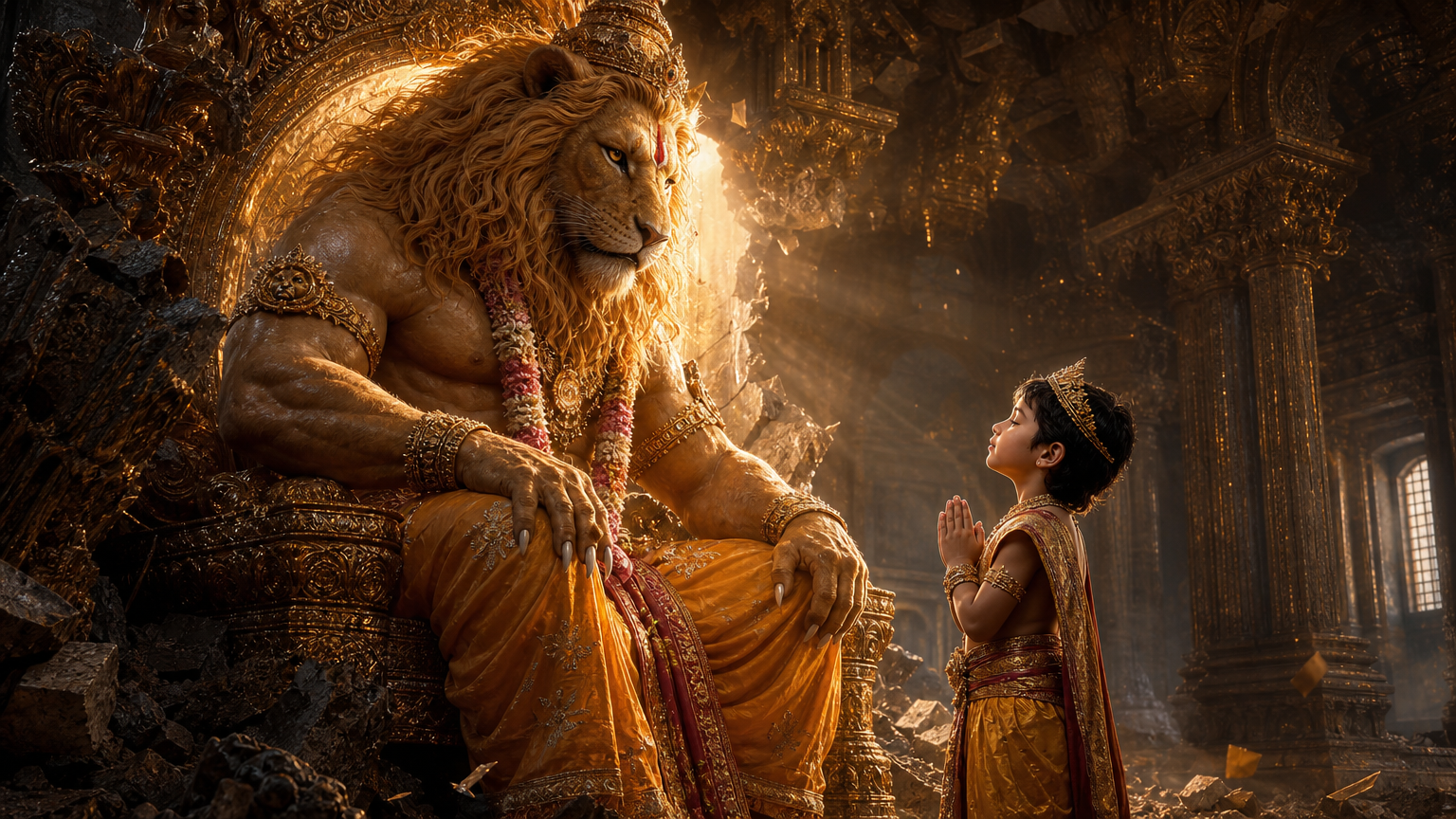
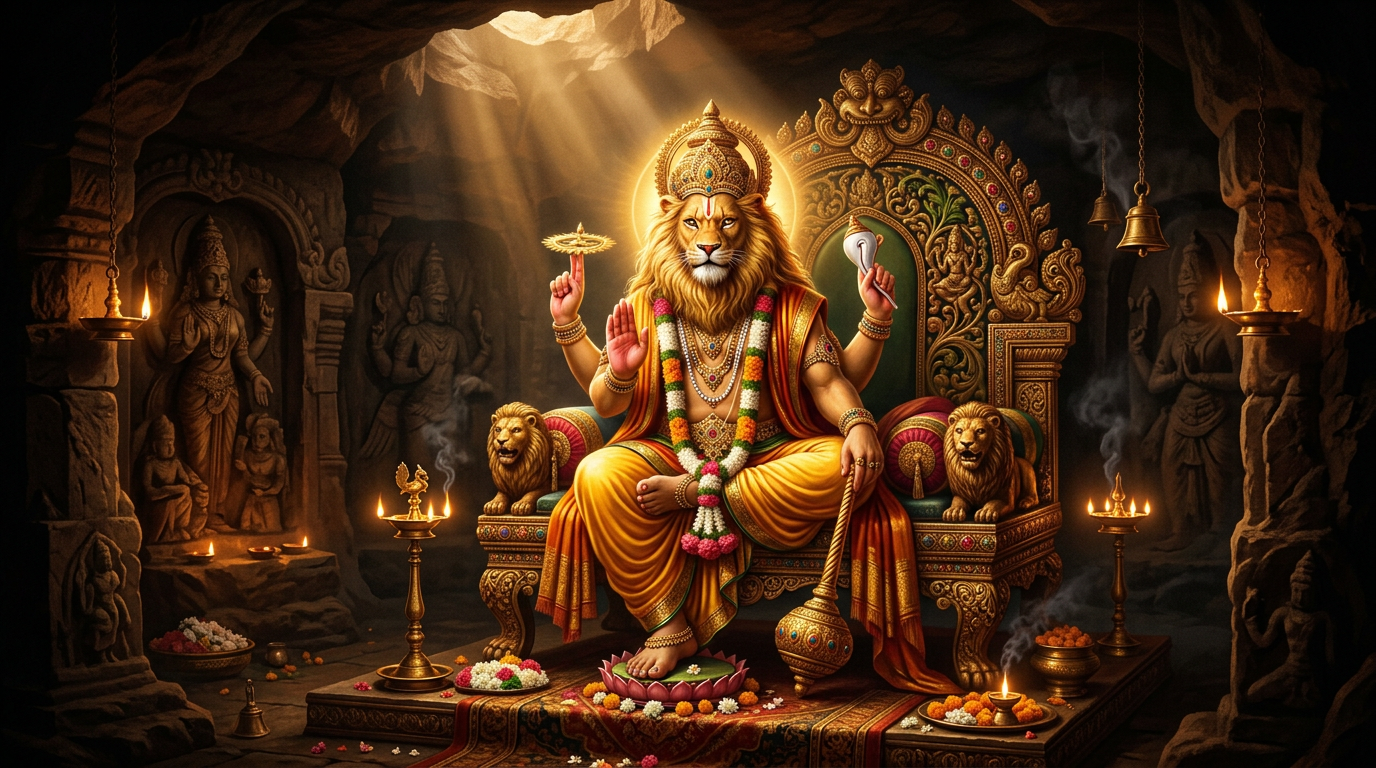
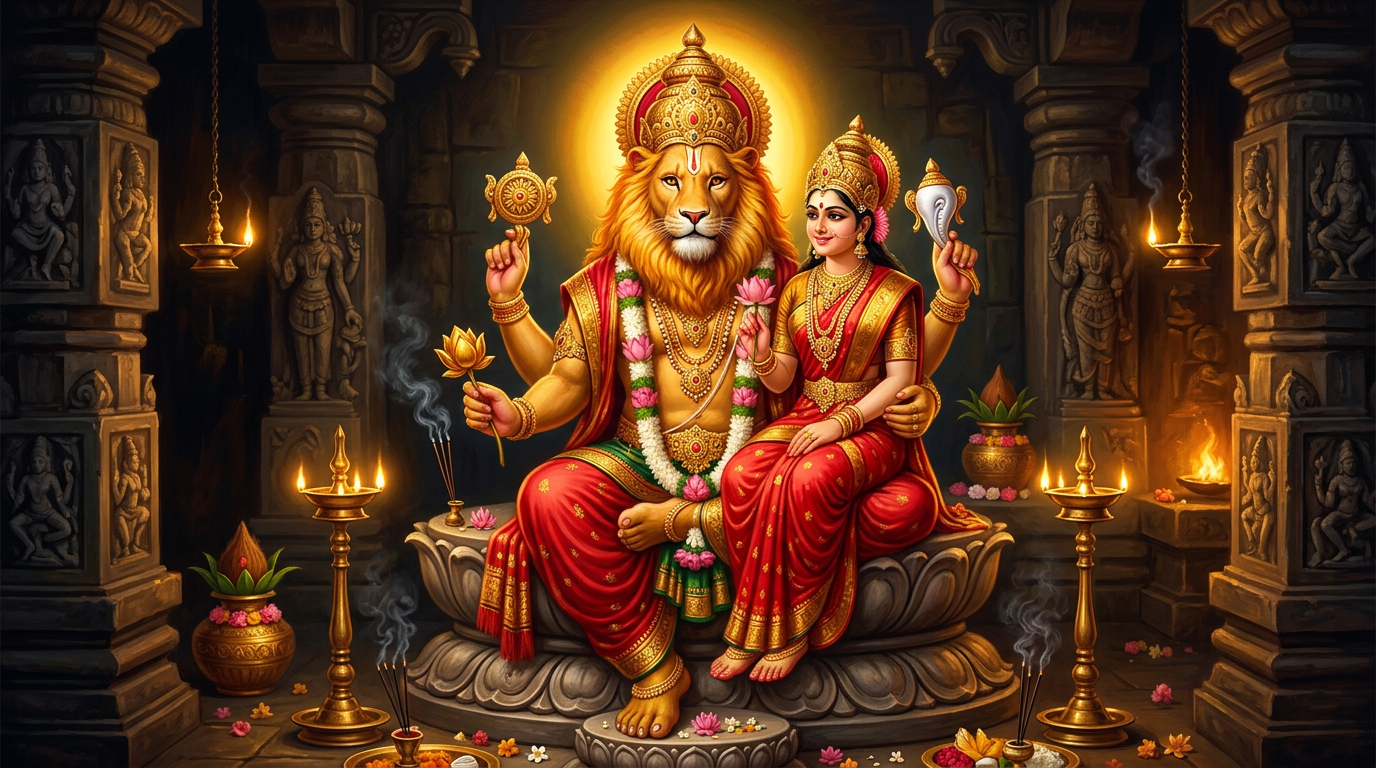
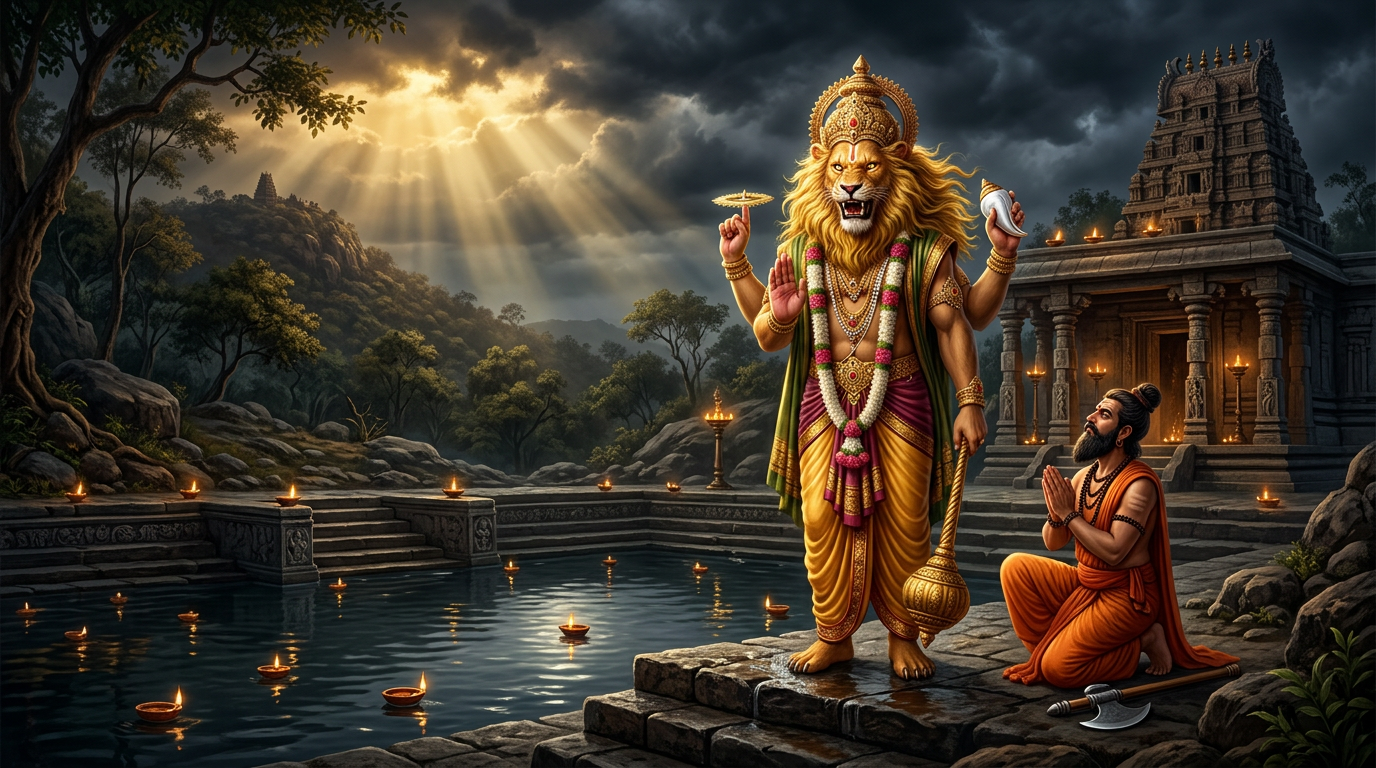
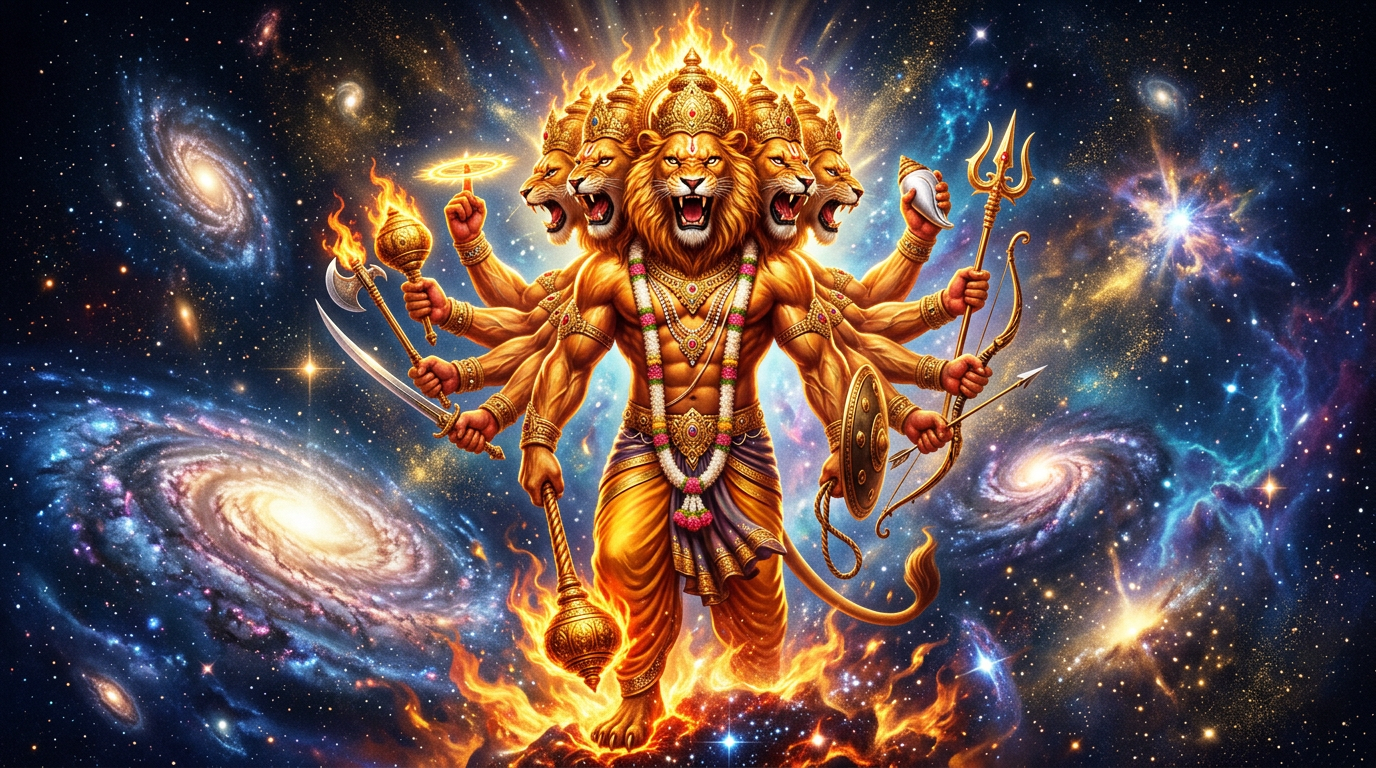
When the Lord burst from the pillar at twilight — neither day nor night, neither inside nor outside, neither man nor beast — the boon of Hiraṇyakaśipu was undone without a single word of it being broken. That single act contained many moods: wrath, protection, teaching, tenderness and finally peace.
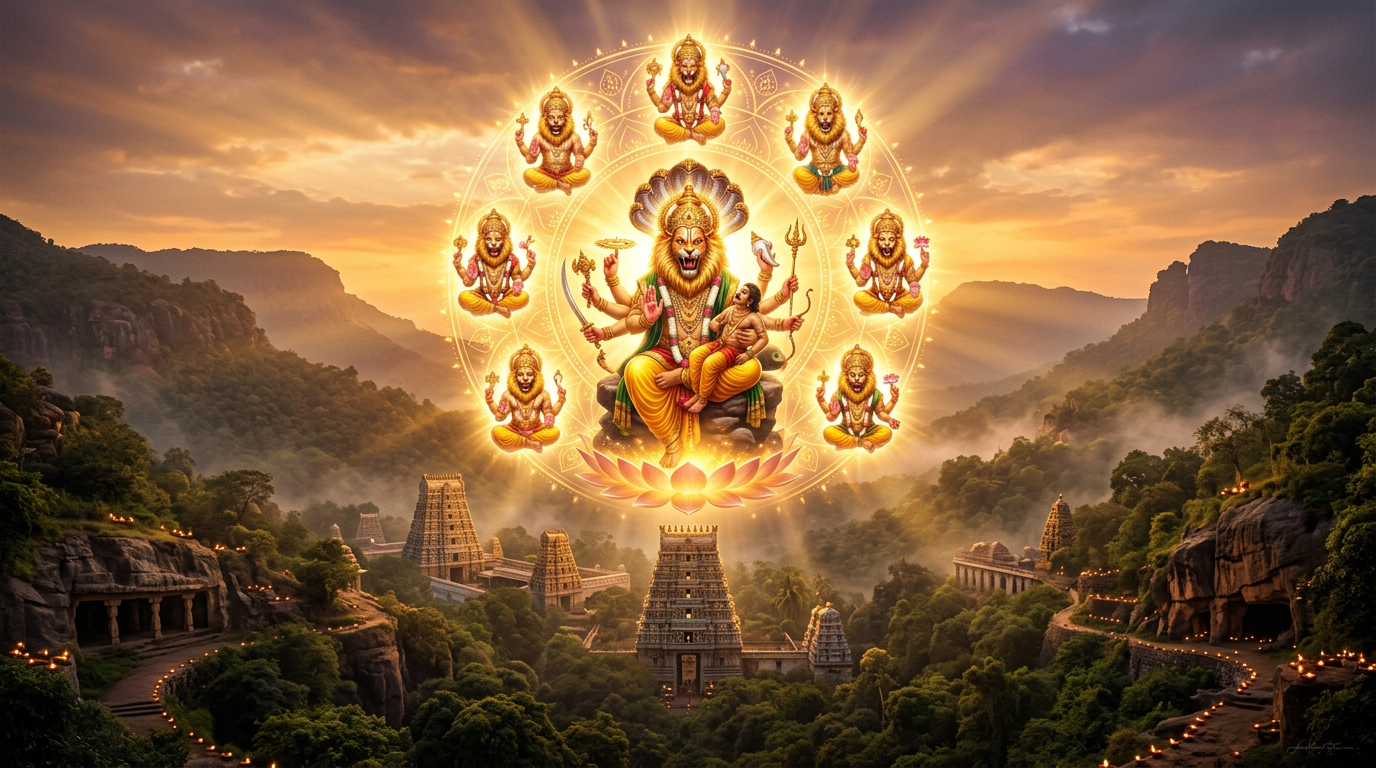
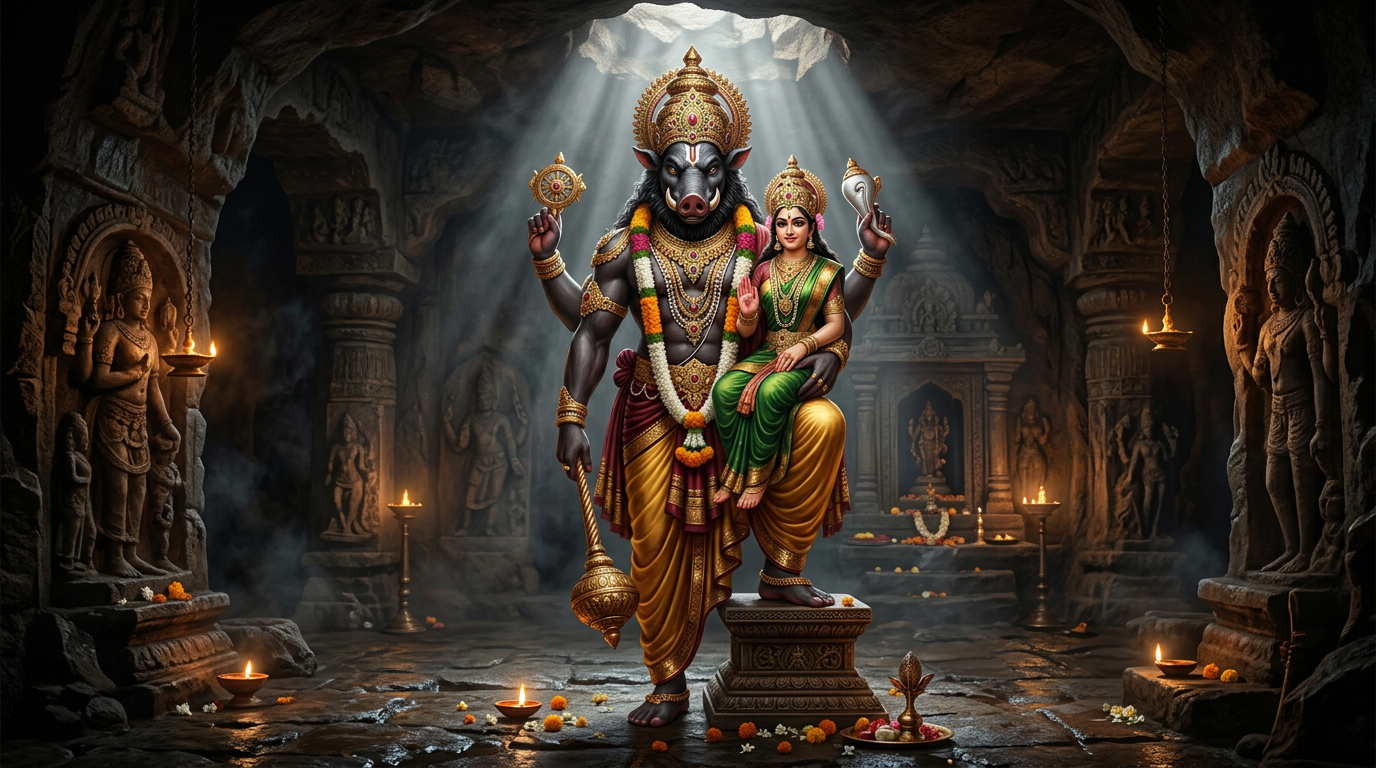
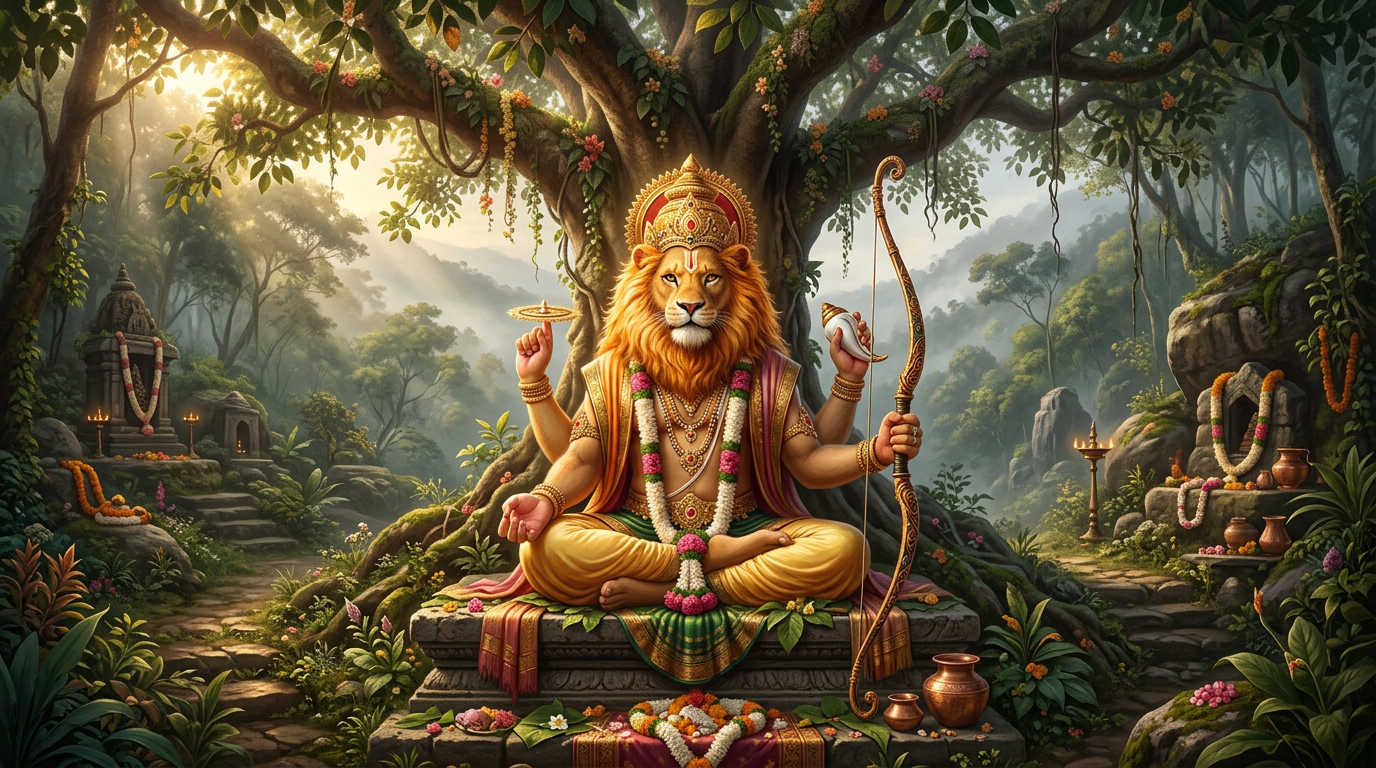
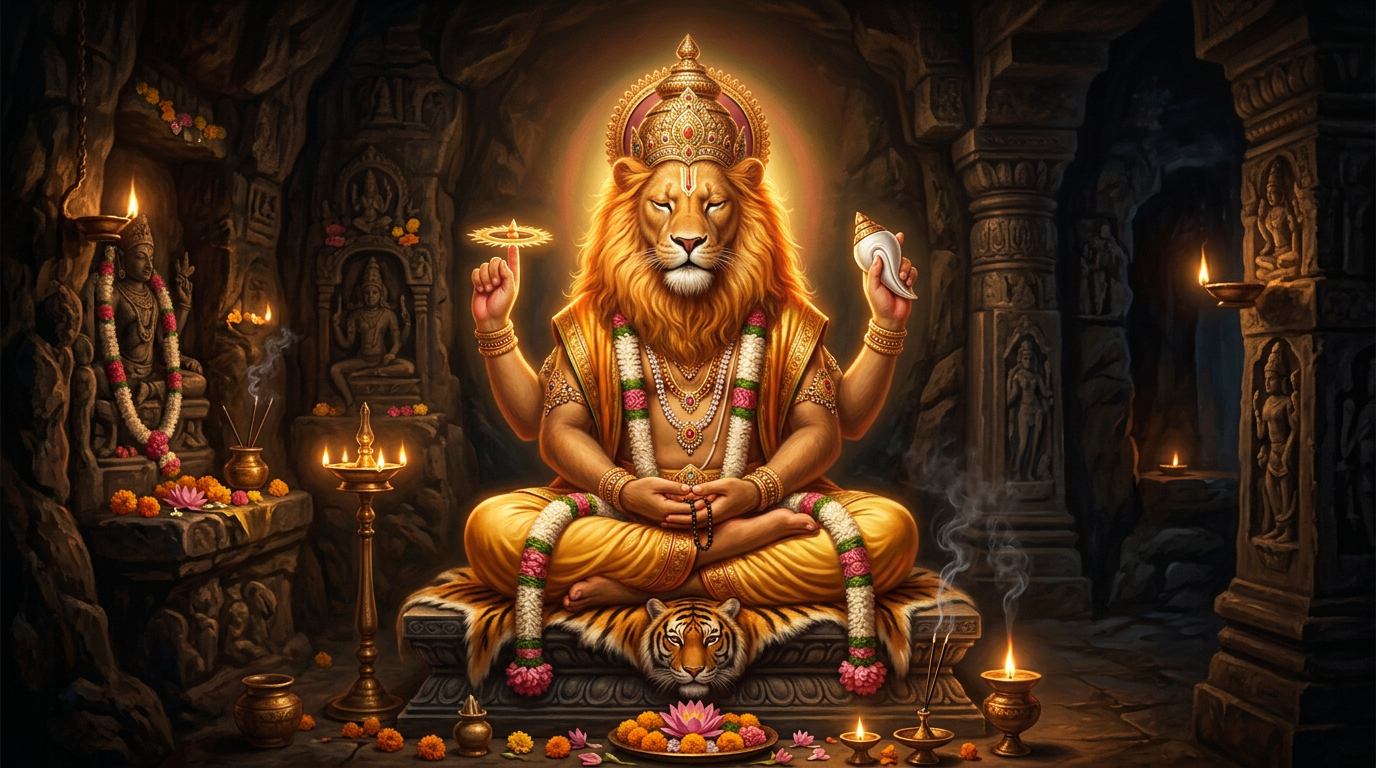
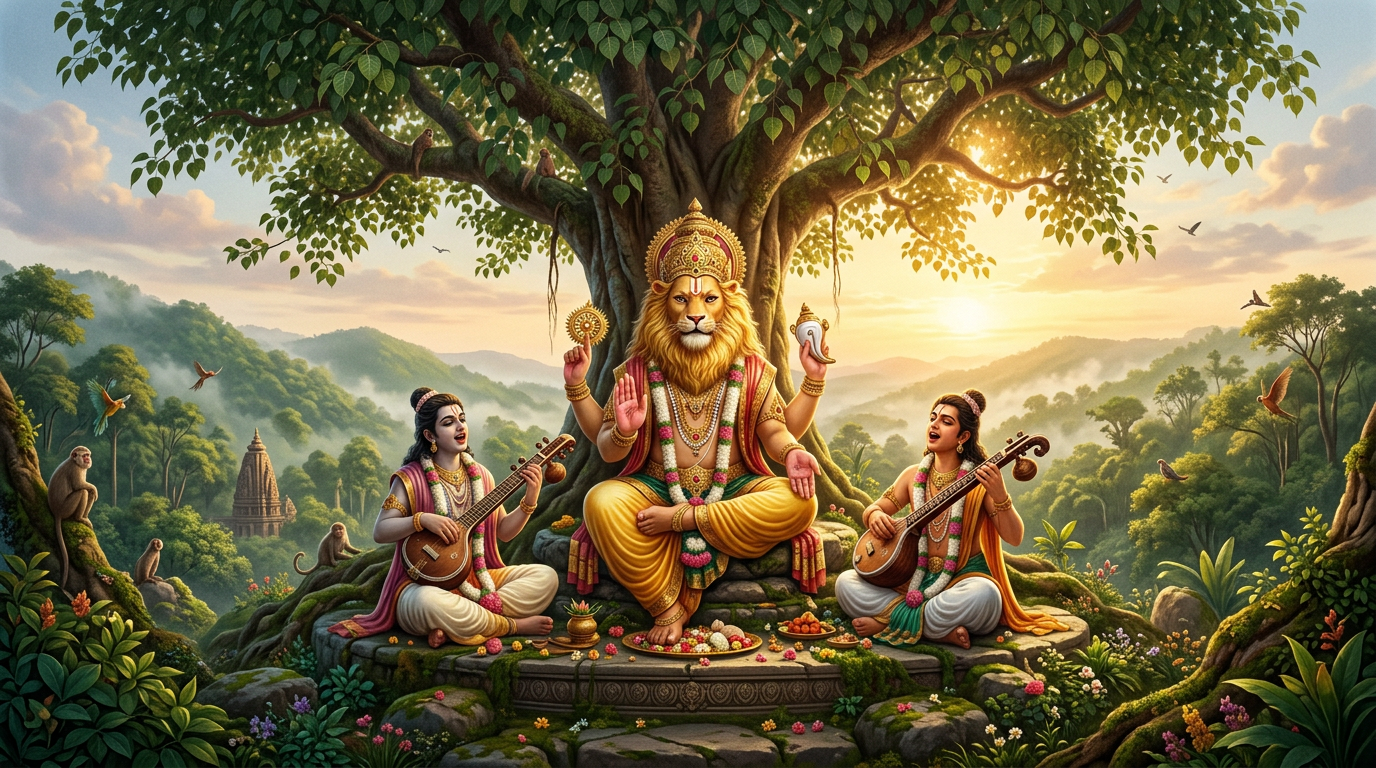
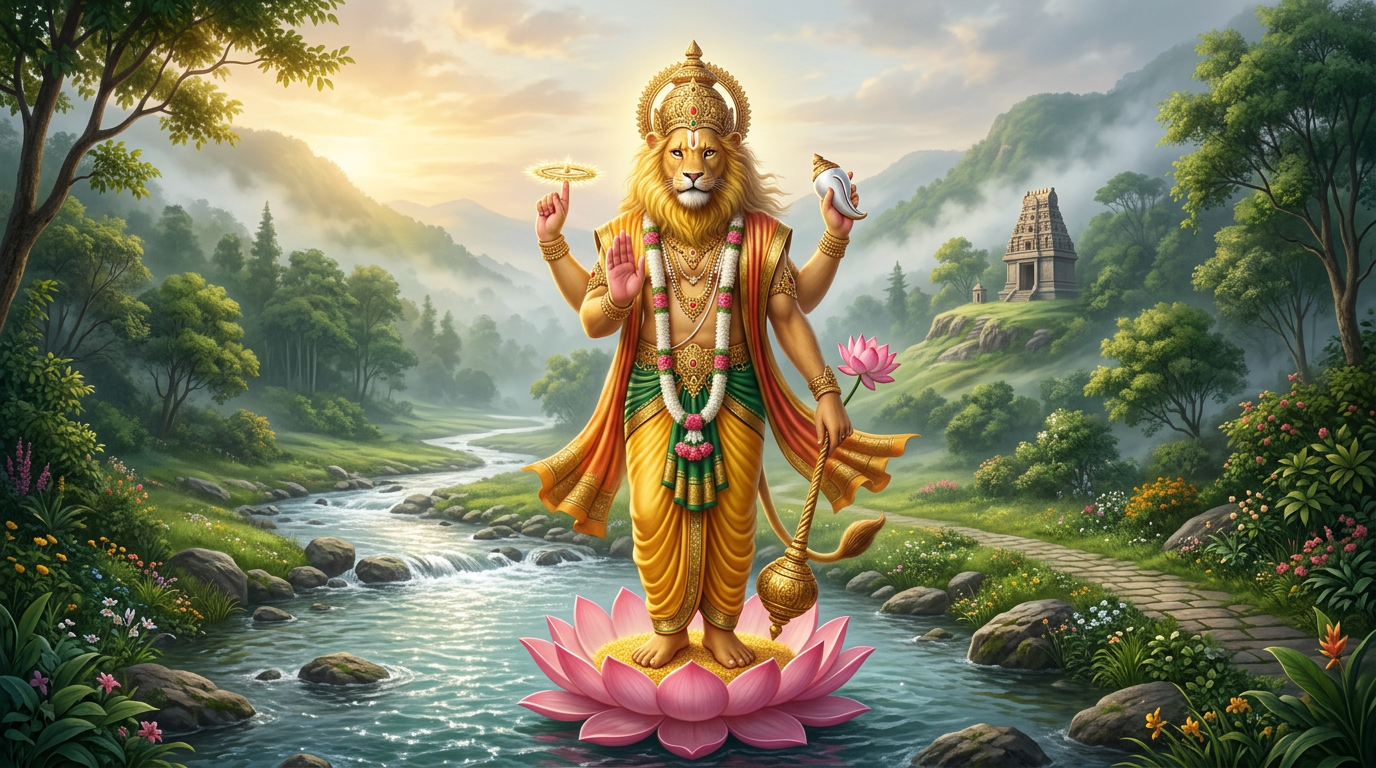
Tradition holds that the Lord did not depart after the deed. He remained in the hills of Ahobilam, settling into nine self-manifest (svayaṁvyakta) shrines, each holding one of those moods. Pilgrims walk from shrine to shrine — a journey of roughly eight kilometres of forest and rock — and the sequence itself is the teaching: fury first, grace last.
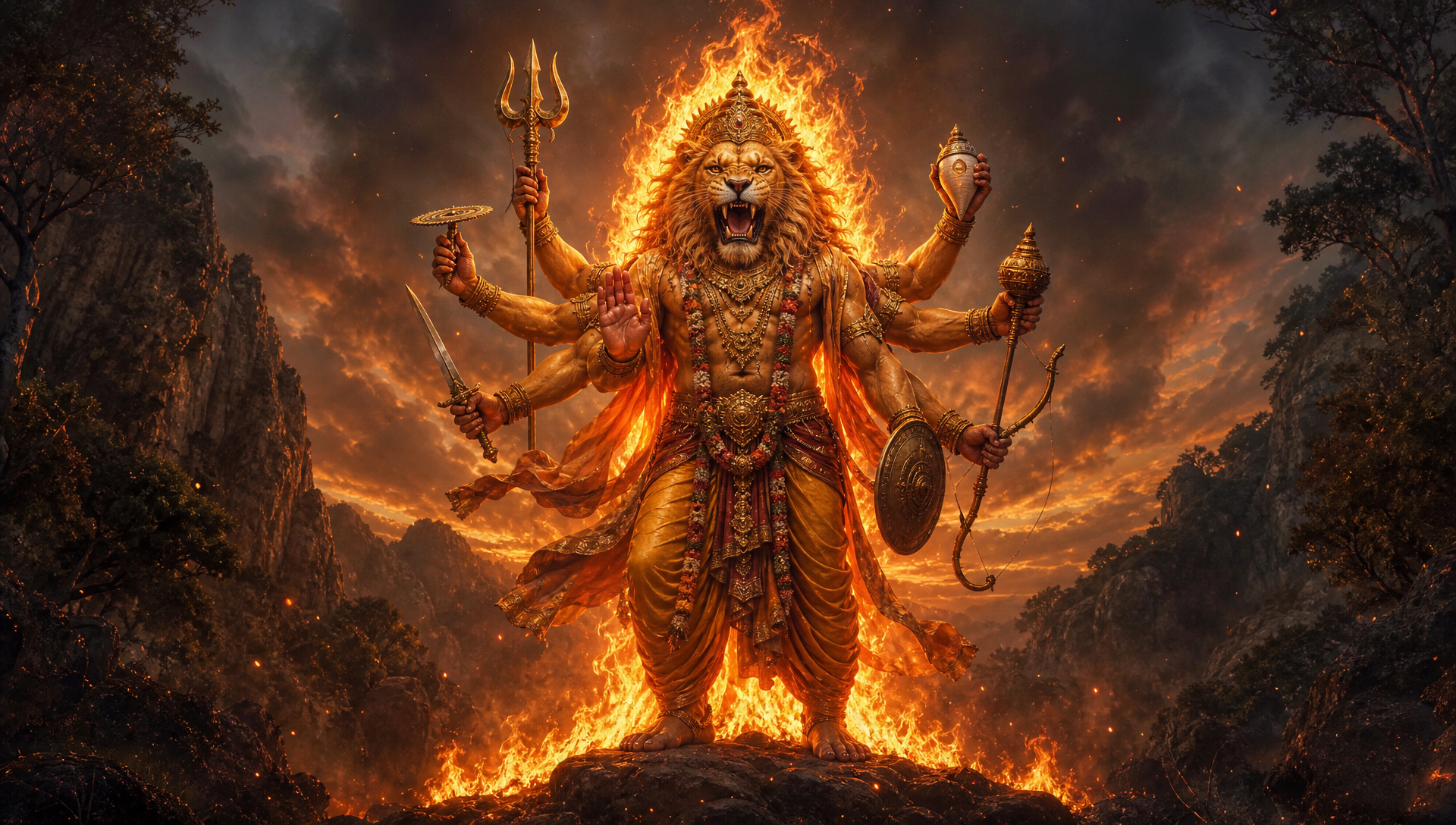
Yet beyond the nine shrines lies a still greater vision: Ugra Narasiṁha, the purely cosmic form. Five heads face every direction, sixteen arms hold the weapons of the three worlds, and the body itself is woven from fire and starlight. This is the Narasiṁha not limited to geography — the universal protector who answers whenever adharma threatens the cosmos.
Ahobilam is counted among the 108 Divya Deśams sung by the Āḻvārs, and the Ahobila Maṭha, founded in the 14th century, still carries Mālola Narasiṁha in procession to this day.