Vedic Panchang
Adya Mahakali
Mother Adya & The Ten Wisdoms

Dasha Mahavidya — the ten faces of the Mother

Adya Mahakali · Kali · Tara · Tripura Sundari · Bhuvaneshwari · Bhairavi · Chhinnamasta · Dhumavati · Bagalamukhi · Matangi · Kamala

From the dark womb of the primordial Mother emanate the ten radiant goddesses by whom the universe is known — beauty and terror, wisdom and abundance, silence and the song of the saints. These are the Mahavidyas: ten doors into the same Devi.

0 · The Source

Adya Mahakali

The Primordial Mother — Source of the Ten Wisdoms

Adya Mahakali
Mother of the Mahavidyas

Origin

Before time, before form, before the gods themselves stirred from sleep, there was only the Adya Shakti — the primordial Mother. From her single dark womb arose Brahma, Vishnu and Shiva; from her wisdom-aspect emanated the Dasha Mahavidya, the ten radiant goddesses by whom the universe is known. Adya Mahakali is the Kali before Kali — the formless darkness that holds all light, the silence that contains every mantra. She is worshipped at Kalighat in Kolkata as the city's living mother, and across Bengal as the Mahakali of the Adya Stotra, said to grant whatever the heart truly asks.

Significance

Adya Mahakali is the source of all ten Mahavidyas — Kali is her first emanation, Tara her compassion, Tripura Sundari her beauty, and so on through the ten. To worship her is to bow at the root of every Devi sadhana. She is invoked for fearless protection, dissolution of karma, fulfilment of every rightful desire, and the final liberation that comes when the seeker recognises her own face in the Mother's.

Iconography
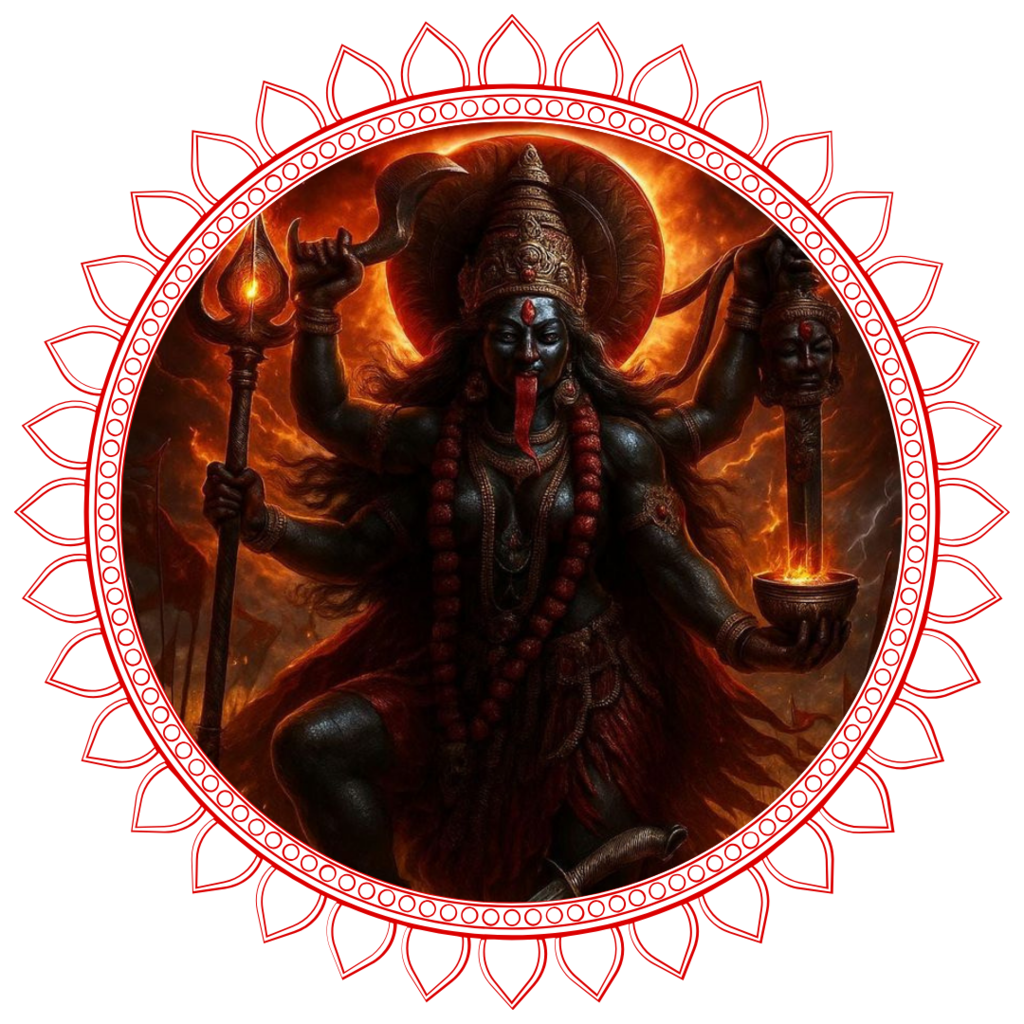
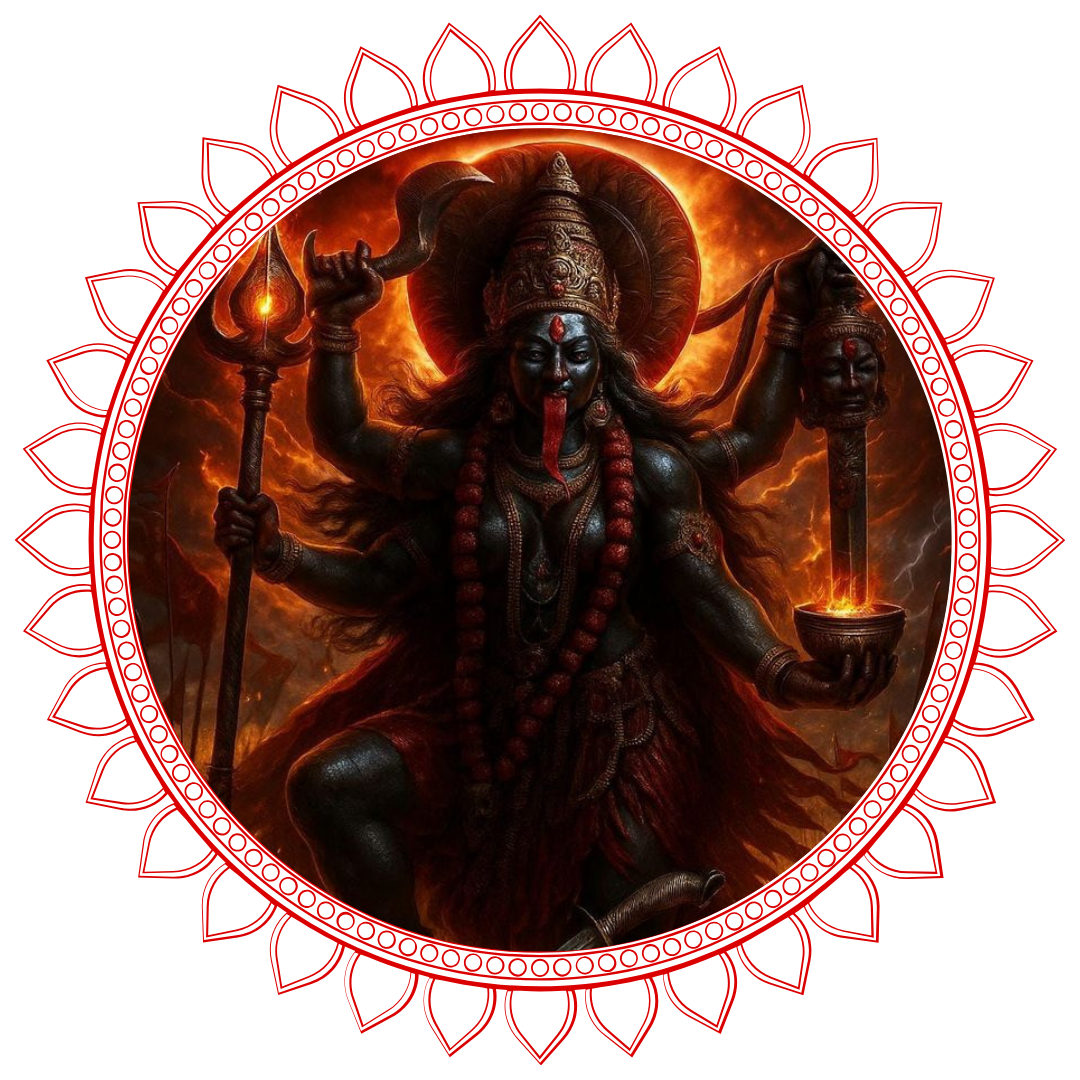
  • Form: jet-black skin, four arms, garland of skulls
  • Holds: sword, severed head, and varada / abhaya mudras
  • Stands upon: the supine body of Shiva — consciousness as her seat
  • Sacred shrine: Kalighat, Kolkata (Bengal)
  • Sacred day: Amavasya (new moon) and every Kalashtami
Mool Mantra

ॐ क्रीं कालिकायै नमः

Om Kreem Kaalikaayai Namah

Adya Stotra — "Om Hreem Brahmaani Brahmalokeshi…" — recited daily for swift fulfilment of any sincere prayer.

Her Bhairava — Mahakaal Bhairava

The Bhairava of Adya Mahakali is Mahakaal Bhairava — the Great Time. In the deepest Tantric vision He is the same one Supreme who appears as Shree Krishna in Vrindavan, as Shiva on Kailash, and as Mahakaal Bhairava in Kashi. God in Sanatana Dharma is one — only the expansions are many. Adya Mahakali and Mahakaal Bhairava are not two beings; they are the feminine and masculine face of the single timeless Reality.

"Eko devah sarva-bhuteshu gudhah" — One God, hidden in every being. Sanatana Dharma is monotheism by knowing, not by counting.

Blessings of the Mother
  • Removes the deepest fear — fear of death itself
  • Dissolves prarabdha karma and ancestral entanglements
  • Fulfils every rightful prayer when recited with sincerity
  • Grants the courage to face the truth of oneself
  • Opens the door to all ten Mahavidya sadhanas
Worship

Devotees offer red hibiscus, raw cane sugar, kheer and a small lamp lit with mustard oil at her feet, especially on Amavasya, Kalashtami and during Kali Puja in the Bengali month of Kartik. The Adya Stotra is chanted 108 times for swift fulfilment of any sincere prayer.

Why ten goddesses?

The Mahavidyas are not ten separate deities — they are ten ways of knowing the same Devi. Each goddess answers a different prayer, removes a different obstacle, and grants a different gift, but each is a doorway into the one undivided Mother.

From Kali, the dissolver of time, to Kamala, the lotus-goddess of abundance, the ten Mahavidyas are arranged like a path: from the fierce, naked truth of the void at one end, through the awakening fires of the middle, to the full-flowering grace of the world at the other. A complete sadhana of the Devi traditionally moves through all ten.

"ekaiva paramaa shaktih param-eshvara-samshritaa, sa-aiva mahavidya rupa…" — She is the one supreme power, taking ten radiant forms so that every soul may find a face it can love.

One God, Many Bhairavas

In Sanatana Dharma, every male God is a Bhairava — every female form, His Shakti.

The Mother Adya Mahakali's Bhairava is Mahakaal Bhairava — the Great Time Himself. In the deepest Tantric vision, He is the same one Reality who appears as Shree Krishna in Vrindavan, as Shiva on Kailash, and as Mahakaal Bhairava in Kashi.

Krishna, Shiva, Vishnu, Rama, Narasimha, Bhairava — these are not separate gods. They are the expansions (vibhutis) of the one Para-Brahman, the limitless Self. Each Mahavidya stands beside her own Bhairava in the scriptures, but the teaching is always the same: male and female, fierce and gentle, dark and luminous — all are the play of one undivided Truth.

"Ekam sat vipraa bahudhaa vadanti" — Truth is one; the wise call it by many names. (Rig Veda 1.164.46)

Kali — The Black One — Devourer of Time
01 · Mahavidya

Mahavidya 1

Kali

The Black One — Devourer of Time

She who is the energy of Kala (time)

Bhairava
Mahakala Bhairava
Her Bhairava — Mahakala Bhairava

Lord of Time — Shiva as the devourer of all kalas; the masculine of Kali's very same time-energy.

Beeja Mantra

क्रीं

Kreem

Iconography

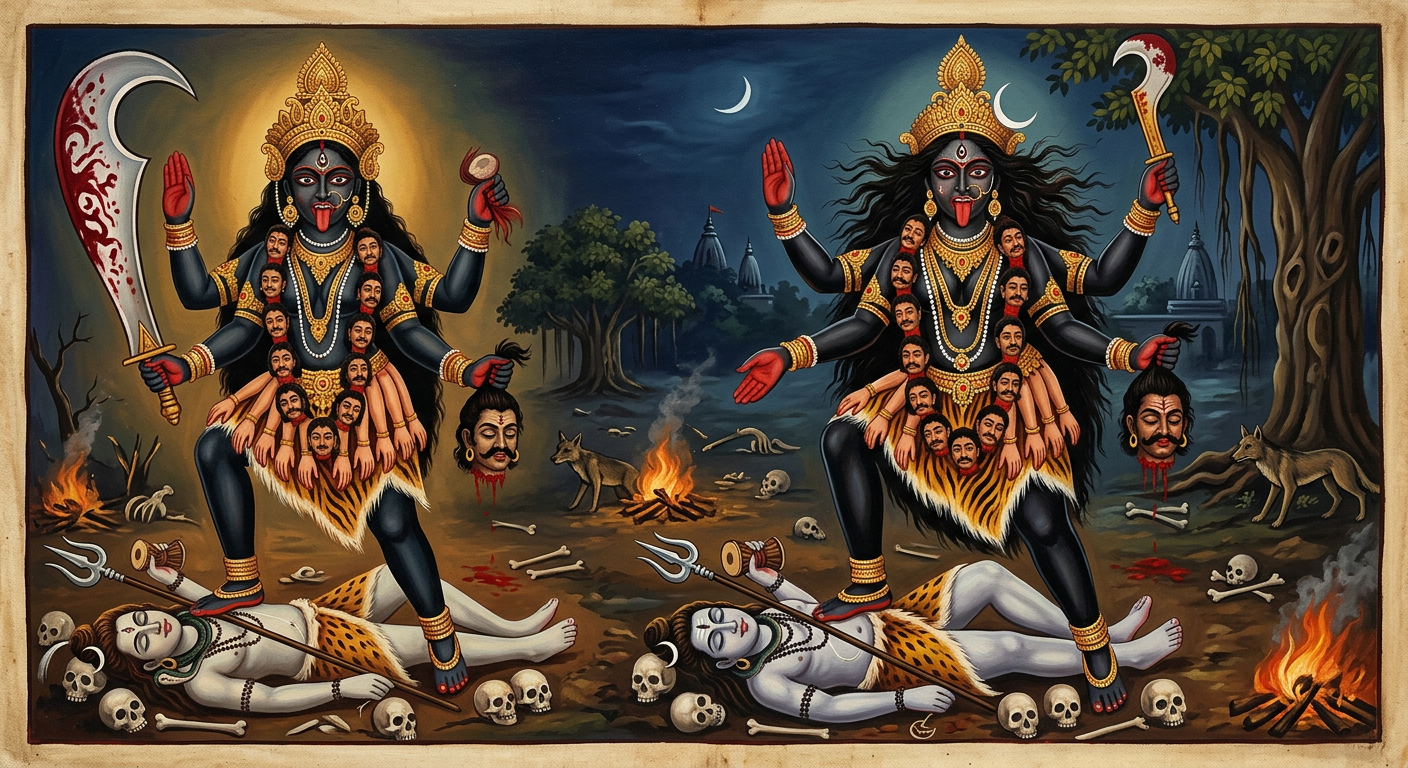
Jet-black skin, four arms, garland of fifty severed heads, skirt of human arms, blood-red tongue, standing upon the white body of Shiva.

When the demons Shumbha and Nishumbha could not be slain by the Devas, Goddess Durga, in her wrath, released Kali from her own forehead. Black as the void between stars, garlanded with the heads of the demons, she devoured the entire army in a single battle-trance. Drunk on victory she danced upon the cosmos until Shiva himself lay beneath her feet to halt the dissolution. Kali bit her tongue in shock — and so she stands eternally: terrible compassion frozen at the moment of recognition.

Blessings
  • Destroys ego, fear and the illusion of separateness
  • Burns away karmic seeds in a single sadhana
  • Grants fearlessness in the face of death and loss
  • Liberates the seeker from the bondage of time

Cuts ego, fear and the bondage of time itself.
Tara — The Star — She Who Saves
02 · Mahavidya

Mahavidya 2

Tara

The Star — She Who Saves

She who carries us across the ocean of samsara

Bhairava
Akshobhya Bhairava
Her Bhairava — Akshobhya Bhairava

The Unshakable — Shiva who held the halahala poison; calm vastness, the male form of Tara's saving grace.

Beeja Mantra

स्त्रीं

Streem

Iconography

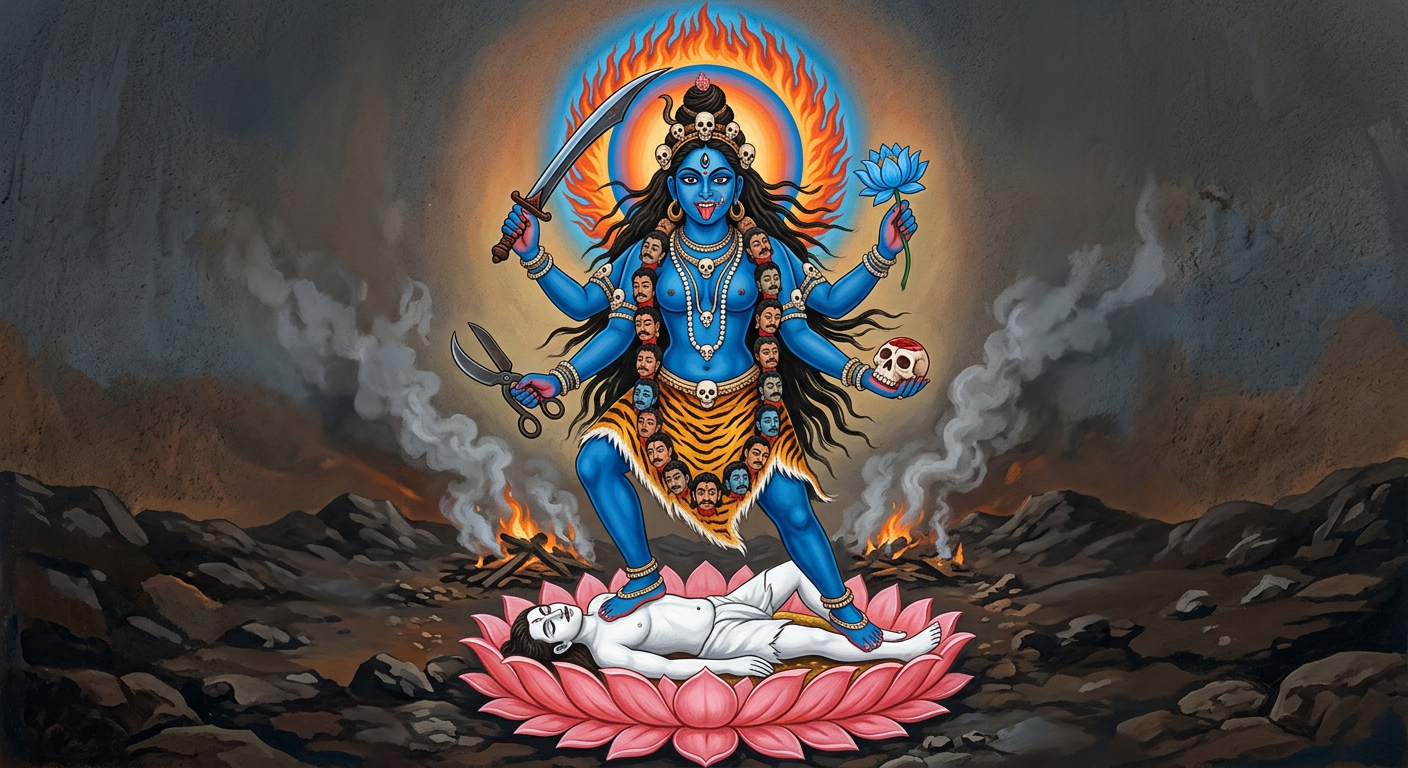
Blue-black skin, three eyes, four arms holding sword, lotus, scissors and skull-cup, standing upon a white corpse on a lotus, surrounded by flames.

When Shiva drank the halahala poison at the churning of the ocean, his throat burned blue and consciousness fled. Tara, the star-mother, took him onto her lap and nursed him as a child until the poison was held safely in his throat. From then on she became known as the Mother who saves — the one called upon when no other deity can answer. Buddhist and Hindu traditions both bow to her, for her compassion crosses every sect.

Blessings
  • Rescues from sudden danger and impossible situations
  • Bestows eloquence, scholarship and skill in language
  • Grants the courage of a mother — tireless and unafraid
  • Heals depression and the paralysis of grief

Bestows speech, wisdom and rescue from every crisis.

Tripura Sundari — Shodashi — The Beauty of the Three Worlds
03 · Mahavidya

Mahavidya 3

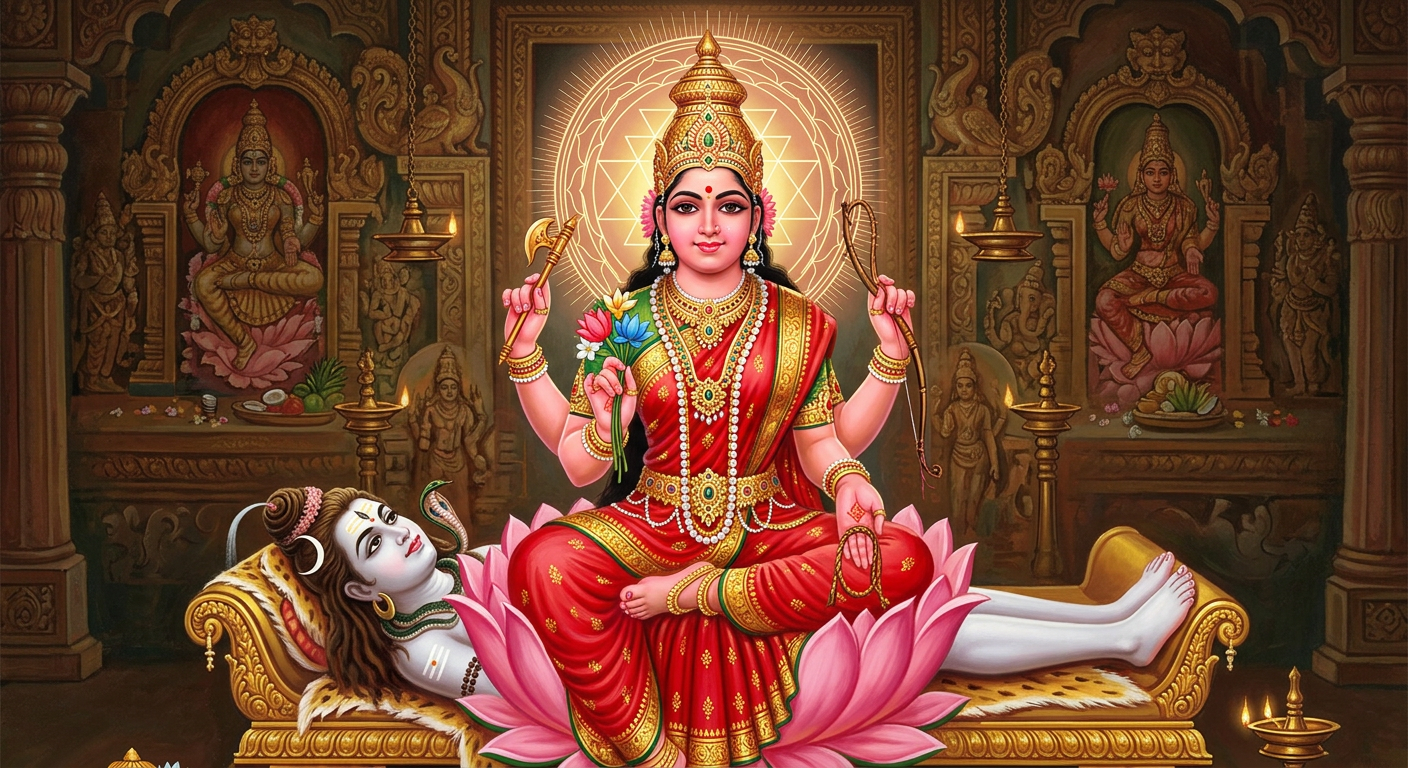
Tripura Sundari

Shodashi — The Beauty of the Three Worlds

She who is beautiful in the three cities (waking, dream, deep sleep)

Bhairava
Kameshwara Bhairava
Her Bhairava — Kameshwara Bhairava

Lord of Desire — Shiva of the Sri Vidya, seated beneath Tripura Sundari on the Sri Chakra throne.

Beeja Mantra

ॐ ऐं ह्रीं श्रीं

Om Aim Hreem Shreem

Iconography

Rose-pink skin, four arms holding noose, goad, sugarcane bow and five flower arrows, seated on a lotus that rests on the body of Shiva, on a throne whose four legs are Brahma, Vishnu, Rudra and Ishwara.

After Sati's self-immolation, Shiva carried her body wandering in grief. From his sorrow arose Tripura Sundari — sixteen years old, the colour of the rising sun, the beauty of all three worlds in a single form. She is the supreme deity of the Sri Vidya tradition, worshipped through the Sri Yantra as the very geometry of bliss. To know her is to recognise that beauty is not on the surface of the world but is the world's own awareness of itself.

Blessings
  • Bestows physical beauty and inner radiance
  • Grants sovereignty — mastery over one's own life
  • Awakens the Sri Vidya — the highest tantric wisdom
  • Confers lasting peace, prosperity and matrimonial harmony

Grants beauty, sovereignty and the bliss of the Self.

Bhuvaneshwari — Queen of the Worlds
04 · Mahavidya

Mahavidya 4

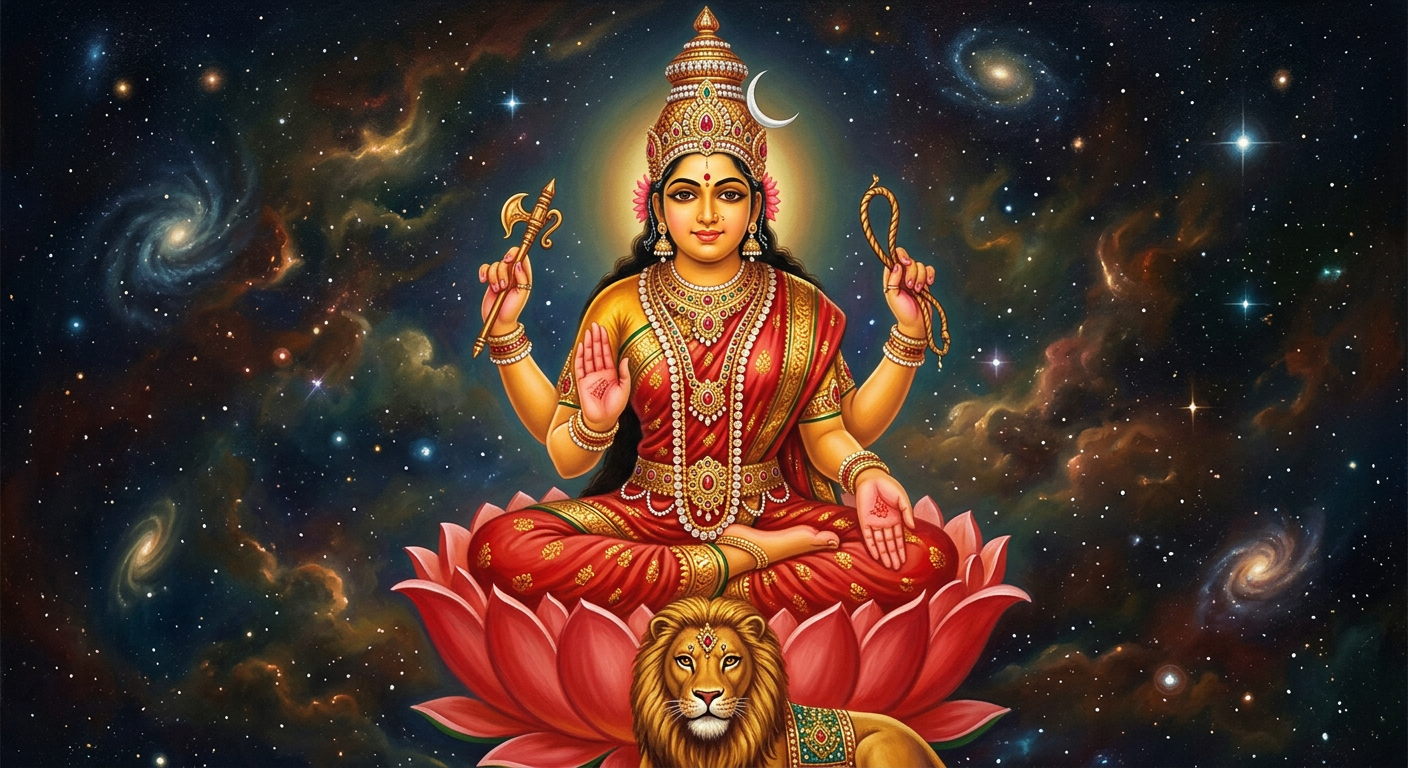
Bhuvaneshwari

Queen of the Worlds

She whose body is the fourteen worlds

Bhairava
Tryambaka Bhairava
Her Bhairava — Tryambaka Bhairava

The Three-Eyed One — Shiva as cosmic space, the Bhairava of Bhuvaneshwari's akasha-energy.

Beeja Mantra

ह्रीं

Hreem

Iconography

Golden skin like the rising sun, four arms holding noose, goad, varada and abhaya mudras, three eyes and a gentle smile, crowned with the crescent moon, seated on a lotus throne.

Bhuvaneshwari is the Devi as space itself — the akasha that holds every star, every breath, every thought. She is the Mother whose womb is the universe and whose body the seeker walks through every day. She emanates the elements one by one and withdraws them again at dissolution. Her worship grants the inner spaciousness of one who has nothing to hold onto and therefore nothing to lose.

Blessings
  • Grants spaciousness in life and freedom from claustrophobic karma
  • Heals respiratory and energetic blockages
  • Bestows authority, leadership and dominion over circumstances
  • Confers the experience of the Self as boundless space

Grants vast space, freedom and the breath of life.

Bhairavi — The Fierce One — Tapas Embodied
05 · Mahavidya

Mahavidya 5

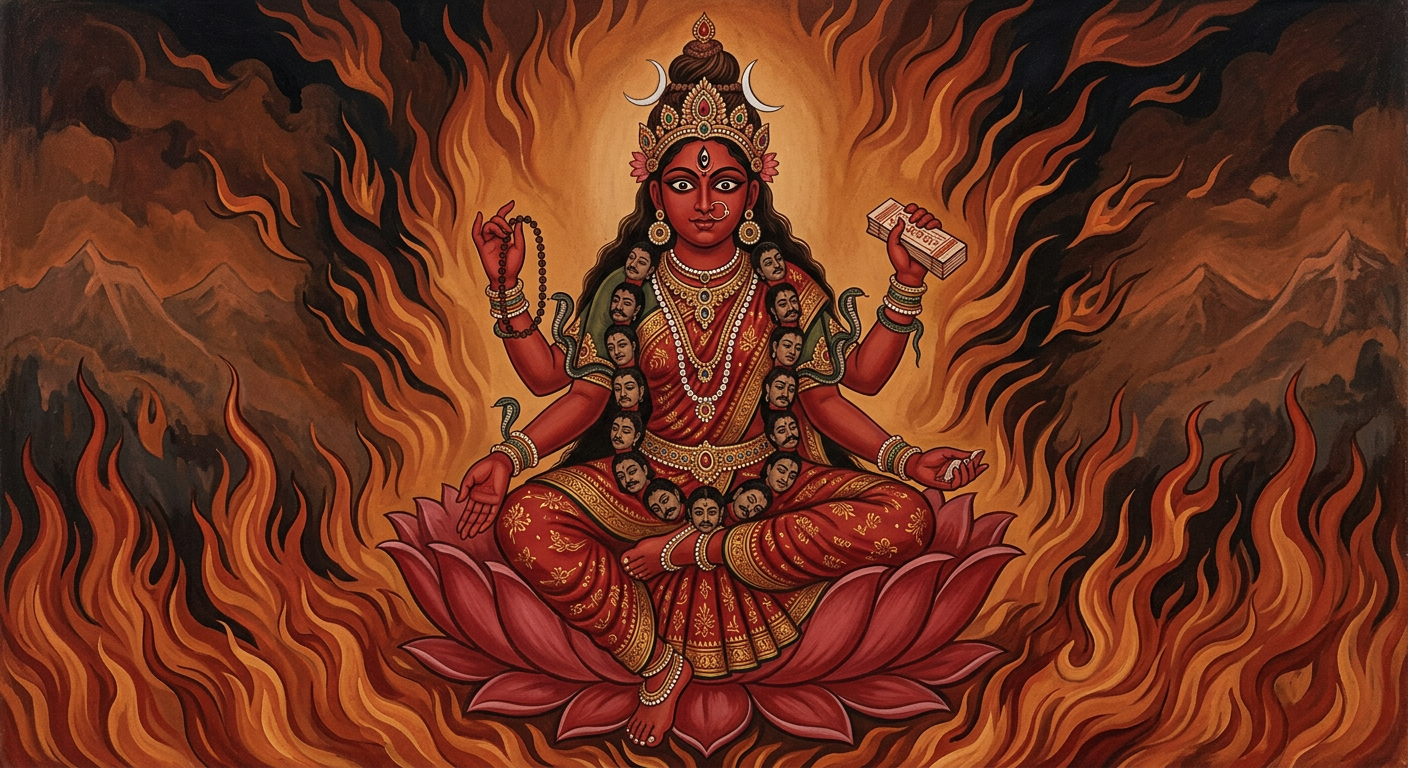
Bhairavi

The Fierce One — Tapas Embodied

She who is terrifying to all that is unreal

Bhairava
Kala Bhairava
Her Bhairava — Kala Bhairava

The fierce time-form of Shiva, kotwal of Kashi — directly the male form of Bhairavi's tapas-fire.

Beeja Mantra

ह्सैं ह्स्करीं ह्सैं

Hsaim Hskareem Hsaim

Iconography

Red as the rising sun, four arms holding rosary, book, varada and abhaya mudras, garlanded with severed heads, three eyes blazing.

Bhairavi is the female counterpart of Kalabhairava — the goddess of the kundalini fire that rises through the spine. She is the heat of every sadhana, the force that breaks the seeker open. Where the world sees only loss and burning, she is doing her work — clearing the obstructed channel so that consciousness may rise. She is worshipped by tantriks, yogis and any soul ready for transformation by fire.

Blessings
  • Awakens the kundalini and removes blockages in the spine
  • Burns away long-held karmic obstacles in compressed time
  • Bestows the heat (tapas) needed for any spiritual path
  • Grants protection from black magic and psychic attack

Burns ego and obstacles in the fire of tapasya.

Chhinnamasta — The Self-Decapitated Goddess
06 · Mahavidya

Mahavidya 6

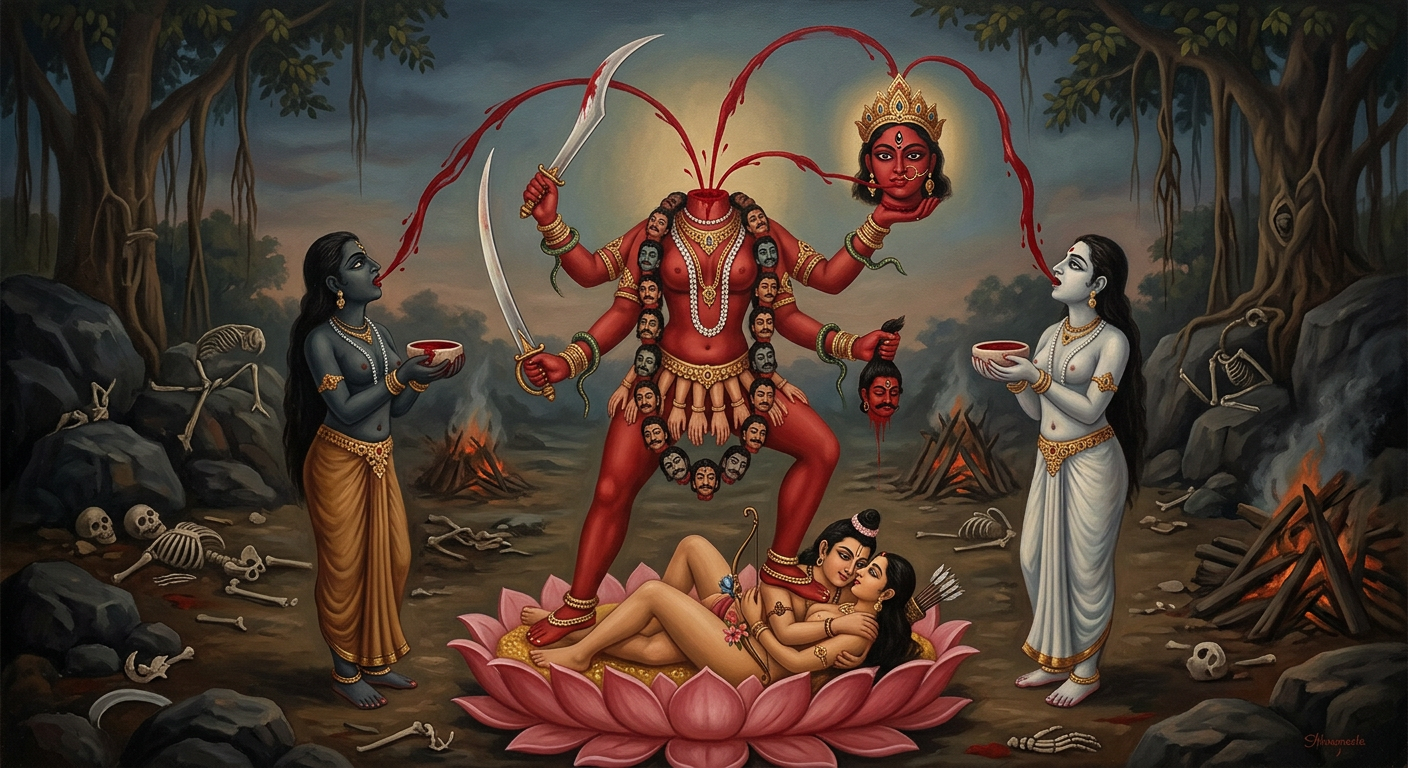
Chhinnamasta

The Self-Decapitated Goddess

She whose head is severed (by her own hand)

Bhairava
Kabandha (Chhinnamastaka) Bhairava
Her Bhairava — Kabandha (Chhinnamastaka) Bhairava

Shiva as the headless one — male counterpart of the self-decapitated Devi, ego severed at the root.

Beeja Mantra

श्रीं ह्रीं क्लीं ऐं वज्र वैरोचनीये हूं हूं फट् स्वाहा

Shreem Hreem Kleem Aim Vajra Vairochaneeye Hum Hum Phat Swaaha

Iconography

Red-skinned, naked, holding her own severed head in her left hand, sword in her right, three blood-streams rising from her neck, standing on the union of Kama and Rati.

While bathing with her two attendants Dakini and Varnini, the goddess saw their hunger and, smiling, severed her own head with her sword. Three streams of blood rose from her neck — two she fed to her companions, the third she drank herself, never letting her own head fall. She stands on the embracing forms of Kama and Rati, the gods of desire — feeding her devotees with her own life-force, an image of total self-giving and the cutting of the ego at its root.

Blessings
  • Cuts the ego at its root in a single moment of grace
  • Awakens the central channel (sushumna) for kundalini rise
  • Grants total fearlessness and the strength of self-sacrifice
  • Removes the bondage of desire by transmuting it into devotion

Liberates by cutting the ego in a single stroke.

Dhumavati — The Smoke Goddess — The Widow
07 · Mahavidya

Mahavidya 7

Dhumavati

The Smoke Goddess — The Widow

She of smoke — the void after dissolution

Bhairava
— (no Bhairava)
Her Bhairava — — (no Bhairava)

Dhumavati is the widow-Devi; her Bhairava has dissolved into her own smoke. She stands alone in the void after pralaya.

Beeja Mantra

धूं धूं धूमावती ठः ठः

Dhoom Dhoom Dhoomaavatee Thah Thah

Iconography

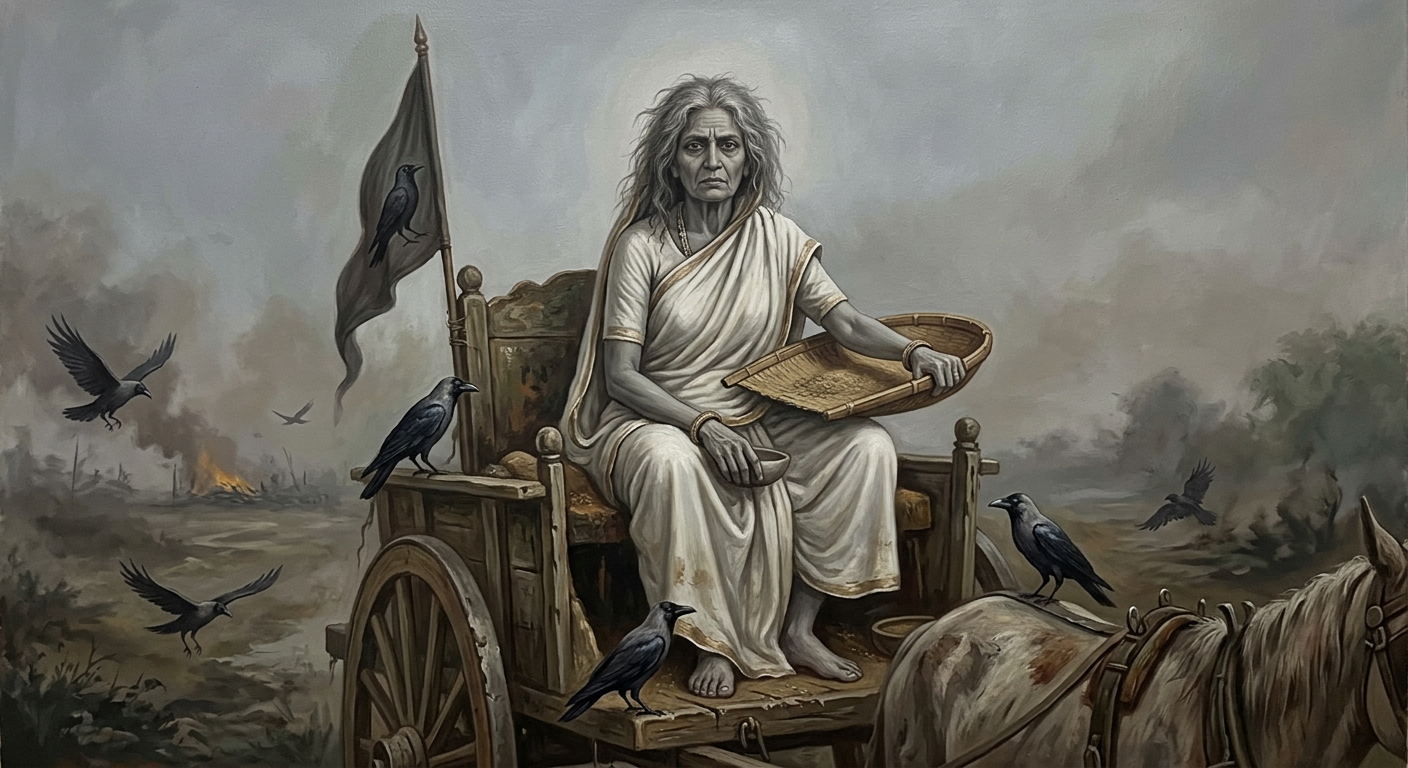
Ash-grey, dressed as a widow in white, riding a horseless chariot drawn by crows, holding a winnowing fan, tall and gaunt, smoke around her.

Once Sati, in unbearable hunger, swallowed Shiva himself. Realising what she had done, she released him — and Shiva cursed her to take the form of a widow, ash-grey, alone, riding a chariot pulled by crows. Dhumavati is the goddess of all that the world calls inauspicious: poverty, widowhood, dissolution. Yet she is worshipped by saints because she is the goddess after the world has ended — the smoke that rises when even desire has been burnt. To her devotees she gives the freedom that nothing can be taken from one who has nothing left.

Blessings
  • Removes poverty by removing the karmic root of poverty
  • Frees from chronic illness, lawsuits and prolonged suffering
  • Grants the freedom of one who has nothing left to lose
  • Closes karmic chapters that refuse to end any other way

Frees from poverty, suffering and the last of every illusion.

Bagalamukhi — The Paralyser of Enemies
08 · Mahavidya

Mahavidya 8

Bagalamukhi

The Paralyser of Enemies

She who paralyses the speech of adversaries

Bhairava
Maharudra (Mrityunjaya) Bhairava
Her Bhairava — Maharudra (Mrityunjaya) Bhairava

Shiva as the great roar that paralyses death itself — the masculine of Bagalamukhi's stambhana-power.

Beeja Mantra

ॐ ह्लीं बगलामुखि सर्वदुष्टानां वाचं मुखं पदं स्तम्भय जिह्वां कीलय बुद्धिं विनाशय ह्लीं ॐ स्वाहा

Om Hleem Bagalaamukhi Sarvadushtaanaam Vaacham Mukham Padam Stambhaya Jihvaam Keelaya Buddhim Vinaashaya Hleem Om Swaahaa

Iconography

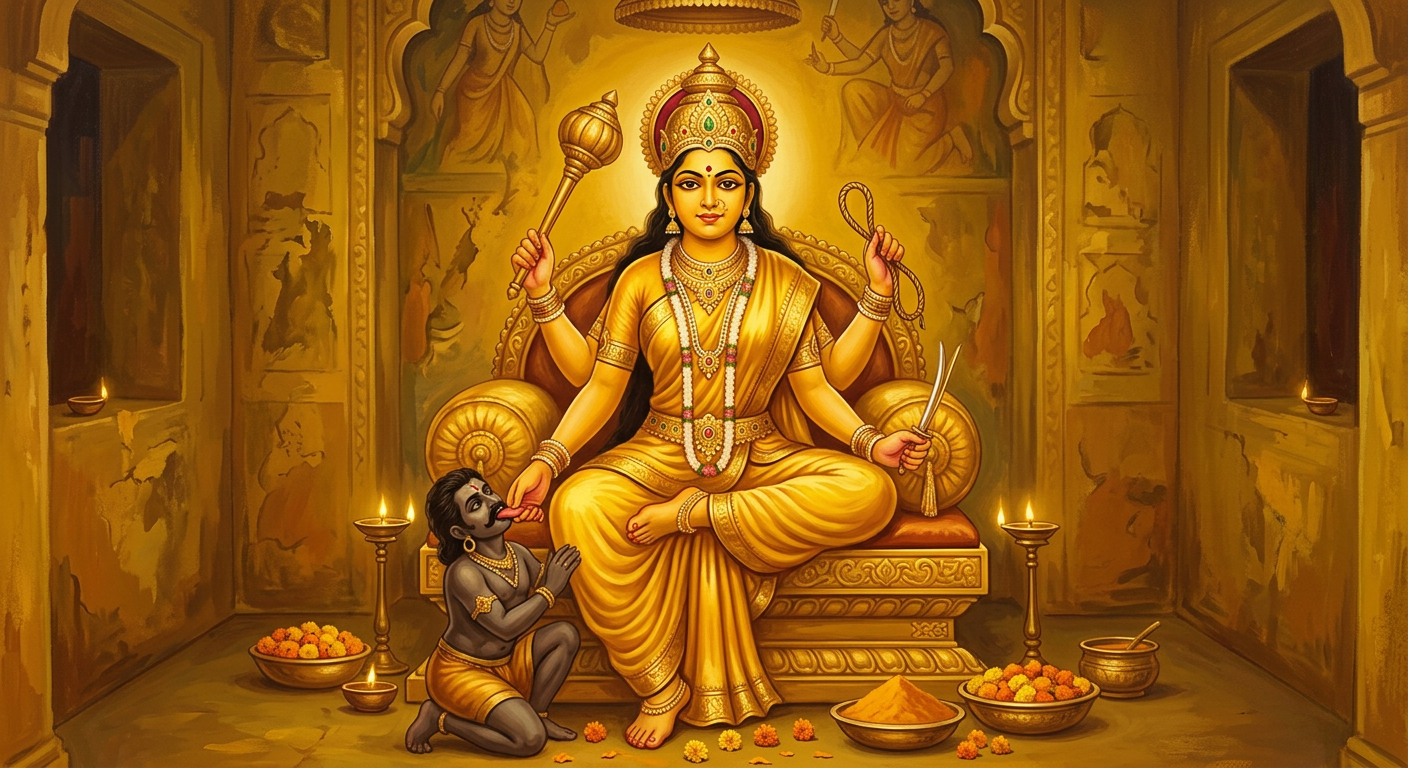
Golden yellow skin, dressed in yellow, two arms holding a club and the tongue of a demon, seated on a golden throne in a lake of turmeric water.

When a great storm threatened to destroy the universe, the gods invoked the Mother. From the Haridra (turmeric) lake she rose — golden-skinned, holding a club in her right hand and grasping the tongue of the demon in her left. With a single glance she paralysed the storm-demon, and so became known as Bagala — the crane-headed mother who freezes whatever she gazes upon. She is invoked in every situation where the truth must be defended against malice — courts, debates, hostile speech, black magic.

Blessings
  • Paralyses enemies, lawsuits, gossip and false accusations
  • Wins legal battles and courtroom victories
  • Cuts black magic, curses and hostile mantras at the source
  • Grants the power of decisive, irrefutable speech

Stuns enemies, lawsuits and adversaries into silence.

Matangi — The Outcaste Goddess of Inner Speech
09 · Mahavidya

Mahavidya 9

Matangi

The Outcaste Goddess of Inner Speech

She who is beyond caste — the goddess of inner sound

Bhairava
Matanga Bhairava
Her Bhairava — Matanga Bhairava

Shiva as the outcaste sage — male form of Matangi's ucchhishta (beyond-purity) energy.

Beeja Mantra

ॐ ह्रीं ऐं श्रीं नमो भगवती उच्छिष्ट चाण्डालिनि श्री मातंगेश्वरी सर्ववशंकरी स्वाहा

Om Hreem Aim Shreem Namo Bhagavatee Uchchhishta Chaandaalini Sri Maatangeshwari Sarvavashankaree Swaahaa

Iconography

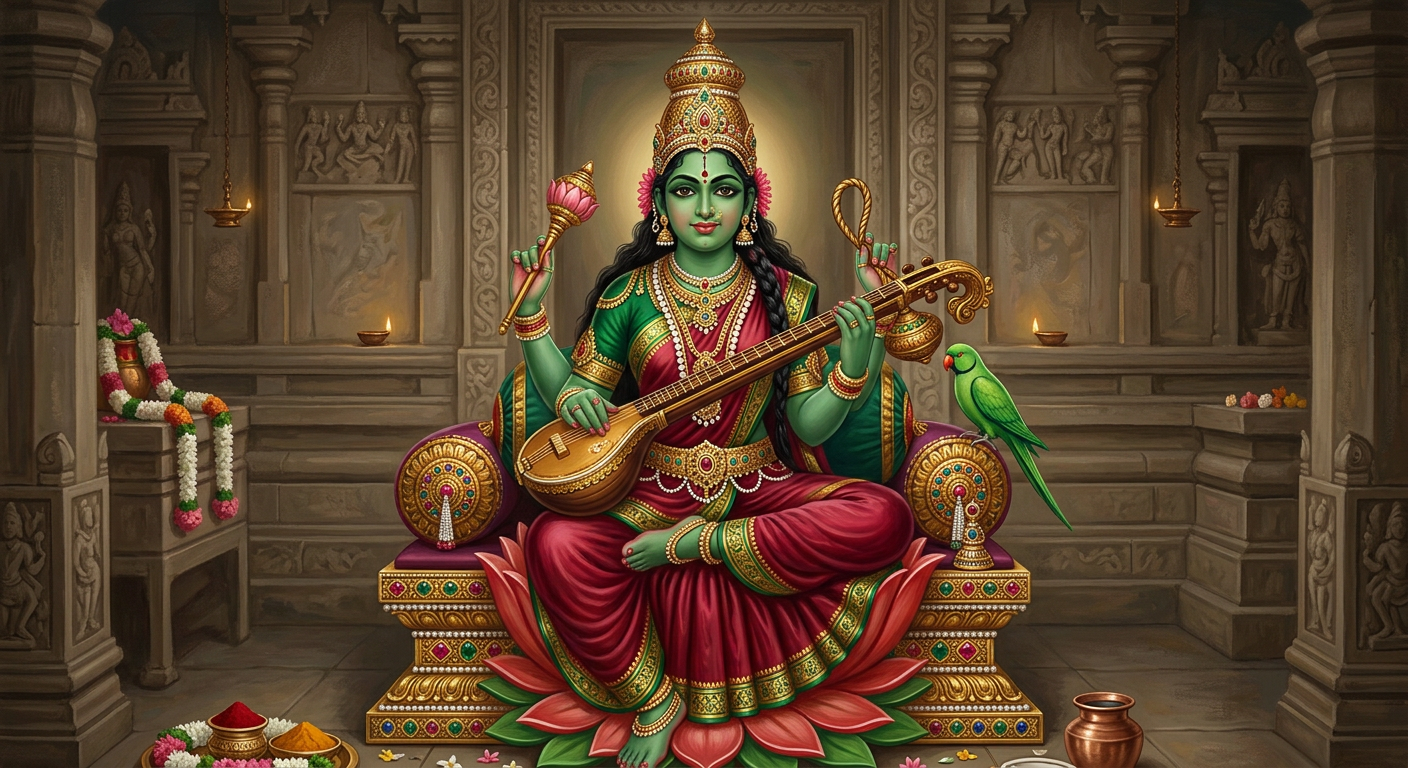
Emerald-green skin, four arms holding noose, sword, goad and club, dressed in red, seated on a jewelled throne, parrot on her hand.

Matangi is the Tantric form of Saraswati — the goddess of music, speech and the arts, but accepted in any form, even from the hands of an outcaste. She is the inner voice that speaks unbidden in the silence of meditation, the song of the saints, the poetry that rises in the heart. To her, no offering is impure if it is given with love. She blesses musicians, writers, dancers, orators and all who serve through the arts.

Blessings
  • Bestows mastery in music, dance, poetry and the fine arts
  • Awakens the inner voice — the spontaneous song of the saints
  • Grants persuasive, attractive and authoritative speech
  • Removes the karmic block that keeps an artist from their gift

Bestows the arts, music and the goddess's own voice.

Kamala — The Tantric Lakshmi — Lotus Goddess
10 · Mahavidya

Mahavidya 10

Kamala

The Tantric Lakshmi — Lotus Goddess

She who is the lotus — beauty, abundance, grace

Bhairava
MahaVishnu
Her Bhairava — MahaVishnu

The eternal Shiva fused with Vishnu — male counterpart of Kamala (Lakshmi), where Shaiva and Vaishnava streams meet.

Beeja Mantra

ॐ श्रीं ह्रीं श्रीं कमले कमलालये प्रसीद प्रसीद श्रीं ह्रीं श्रीं ॐ महालक्ष्म्यै नमः

Om Shreem Hreem Shreem Kamale Kamalaalaye Praseeda Praseeda Shreem Hreem Shreem Om Mahaalakshmyai Namah

Iconography

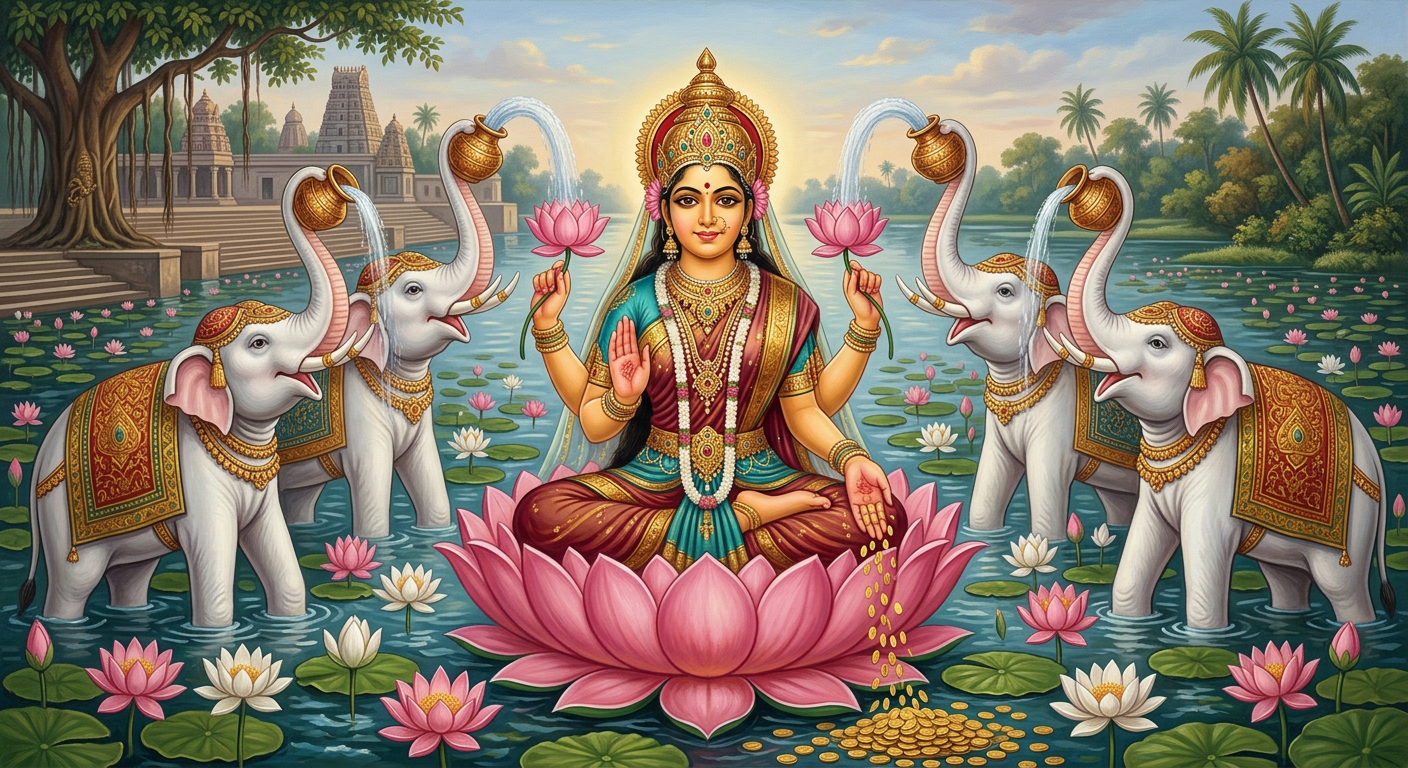
Golden-pink skin, seated on a fully open lotus, four arms holding two lotuses and varada / abhaya mudras, four white elephants showering her with water from golden pots.

Kamala is the Mahavidya form of Lakshmi — the lotus-goddess of wealth, but in her tantric aspect she gives more than worldly riches. She bestows the fullness of which money is only a small reflection: the abundance of grace, beauty, fertility, harmony in relationships and the lotus-quality of growing radiant from the mud of life. Worshipped by the four elephants of the directions who shower her with water, she is invoked at the close of every Mahavidya sadhana to seal the practice with grace.

Blessings
  • Bestows wealth, fertility and lasting prosperity
  • Heals the wounds of poverty consciousness and lack
  • Brings harmony, beauty and grace into the home
  • Seals every Devi sadhana with the gift of abundance

Bestows wealth, beauty and the abundance of the lotus.