Vedic Panchang
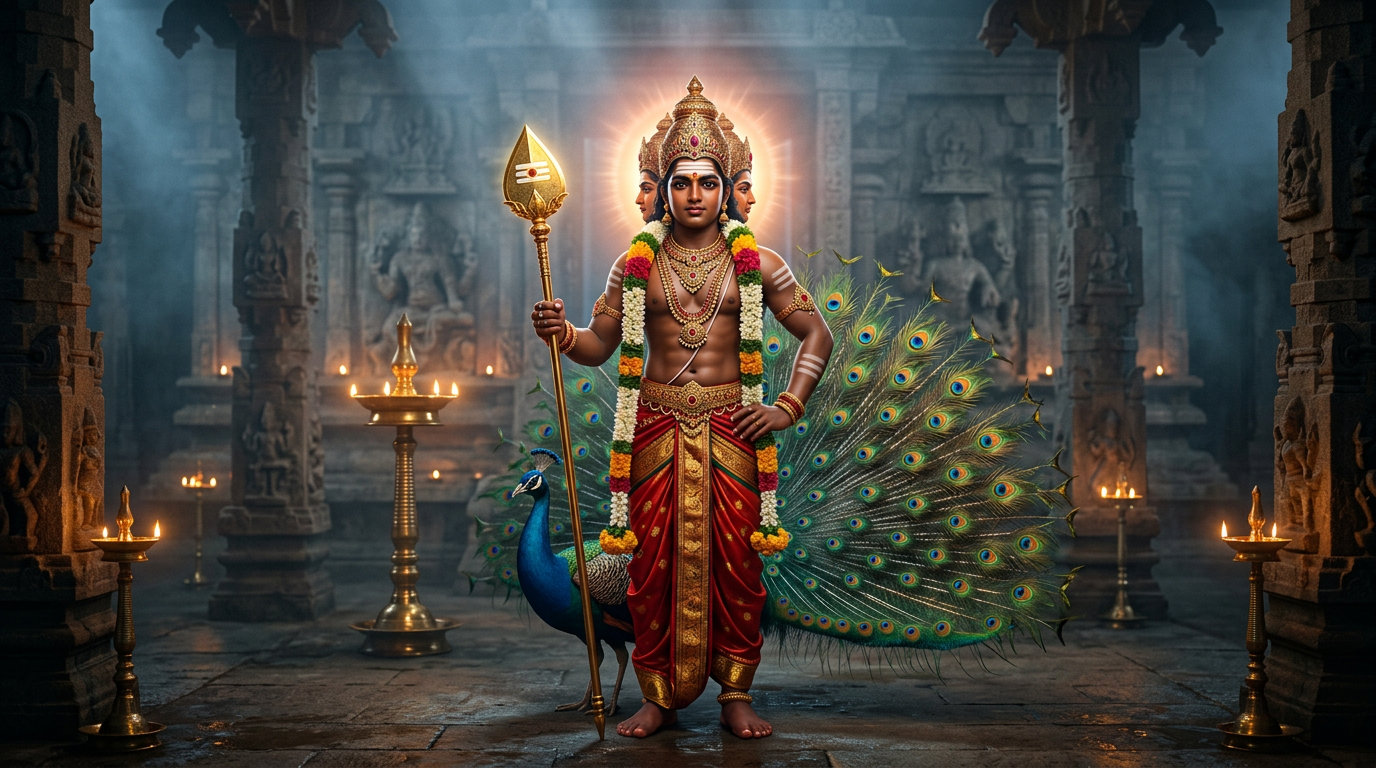
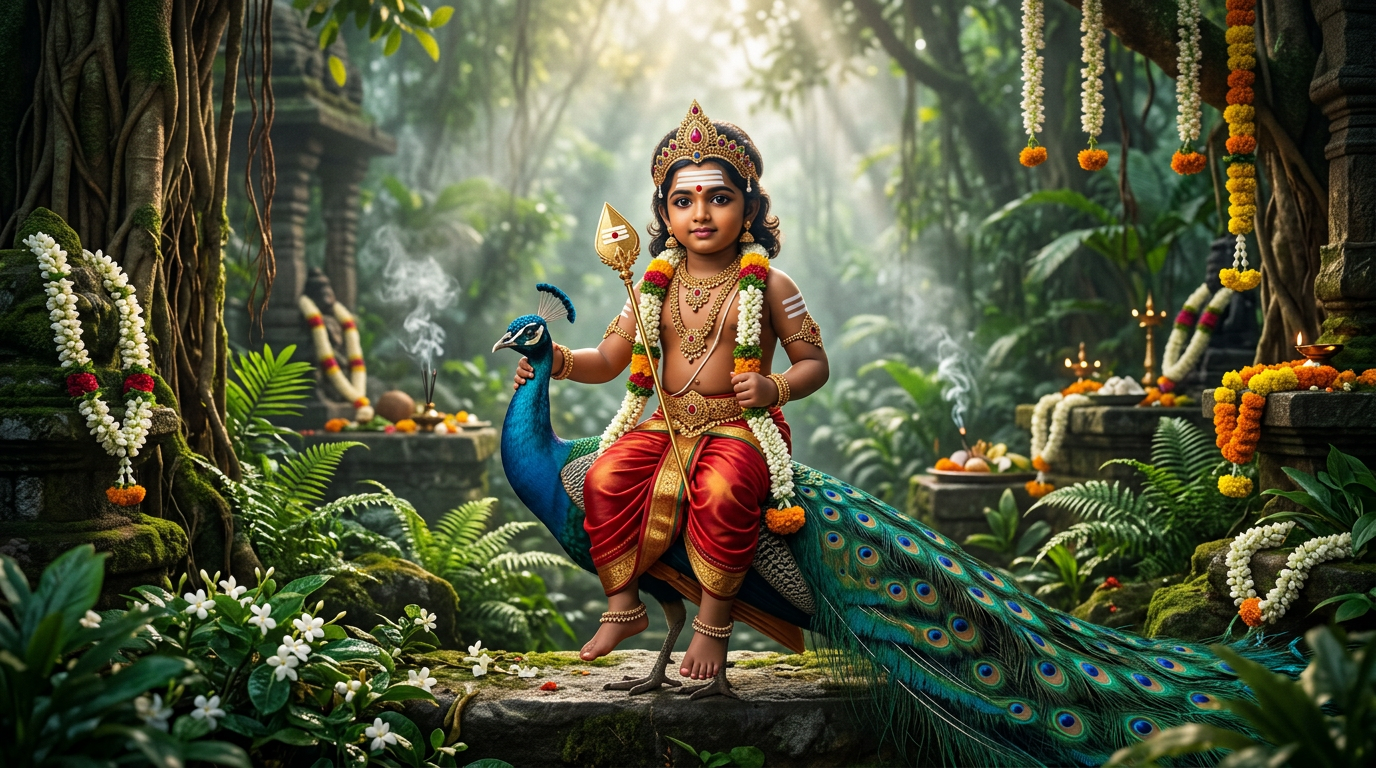
Lord Kartikeya with his golden vel and peacock in a sacred temple

Skanda Purāṇa · Kaumāra Āgama · Tamil sacred tradition

Lord Kartikeya & His Forms

श्री कार्त्तिकेय · स्कन्द · सुब्रह्मण्य

The six-faced son of Śiva and Pārvatī is divine child, supreme teacher, renunciate and commander of the celestial hosts—and, in selected tantric lineages, a fierce Bhairava guardian.

Scriptural foundation

The Vedic seed of this deity appears in Kumāra and Skanda traditions; the epics and Skanda Purāṇa unfold his birth and victory over Tārakāsura. Sanskrit sources call him Skanda, Kumāra, Kārttikeya, Guha and Subrahmaṇya. Tamil devotion knows him intimately as Murugan, Āṟumukam, Kandan and Vēlavan.

His theology joins apparent opposites. He is born of Śiva’s unbearable fire yet raised by six mothers; a child who teaches even Śiva the meaning of Oṃ; a celibate commander in some northern traditions and husband of Vallī and Devasenā in the south. The Kumāra Tantra and South Indian Āgamic manuals regulate his temple images and worship.

Principal Divine Forms

These widely attested forms arise from the Skanda Purāṇa, epic narratives, Tamil sacred literature and South Indian Āgamic iconography.

Bāla Subrahmaṇya — The Divine Child
1The Divine Child

Bāla Subrahmaṇya

बाल सुब्रह्मण्य

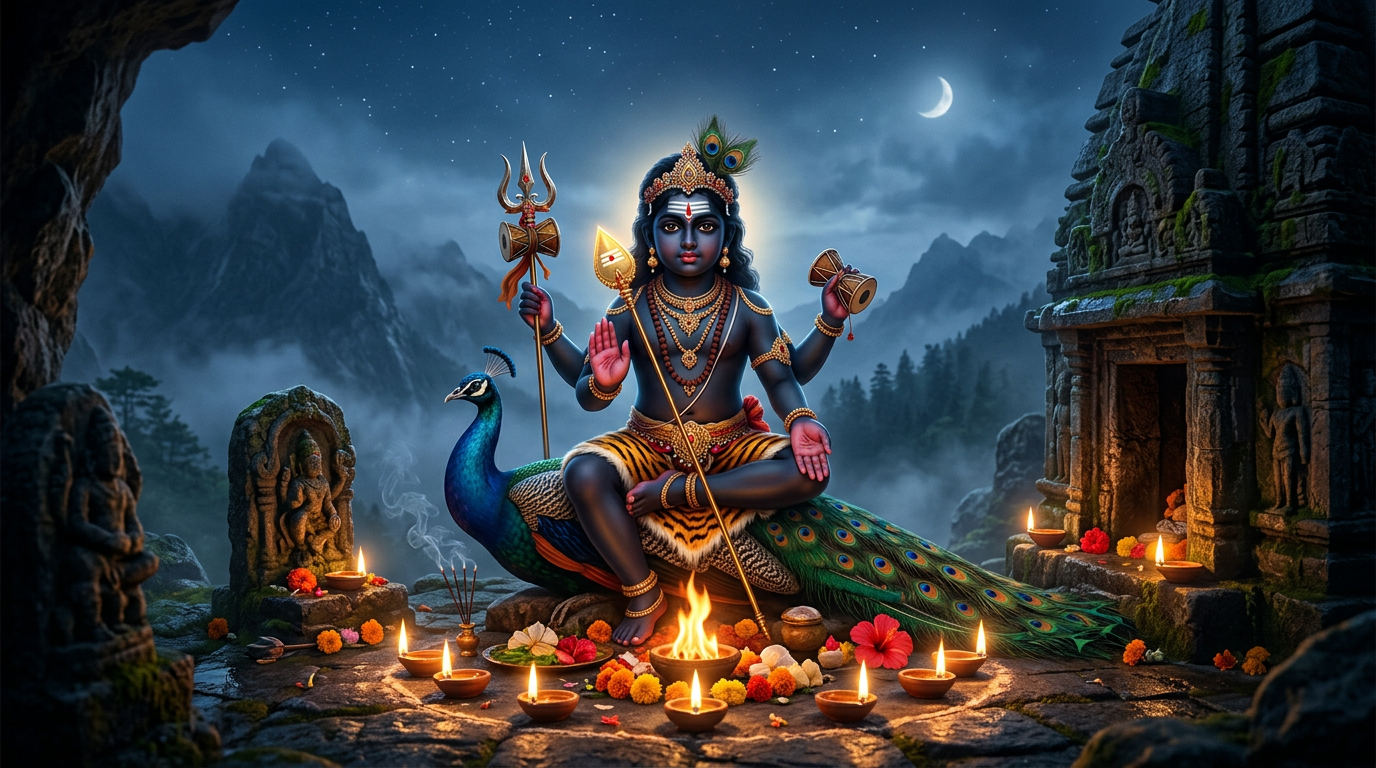
The child-form remembers the mysterious birth of Skanda from Śiva’s fiery seed, borne by Agni and Gaṅgā and nurtured by the six Kṛttikā mothers. Though youthful, he already carries the vel of gnosis: divine wisdom does not depend upon age.

Traditional iconography
One youthful face and two arms, holding the vel; accompanied by or seated upon the peacock.
Source tradition
Skanda Purāṇa; Kumāra-saṃbhava tradition; Kumāra Tantra iconography.
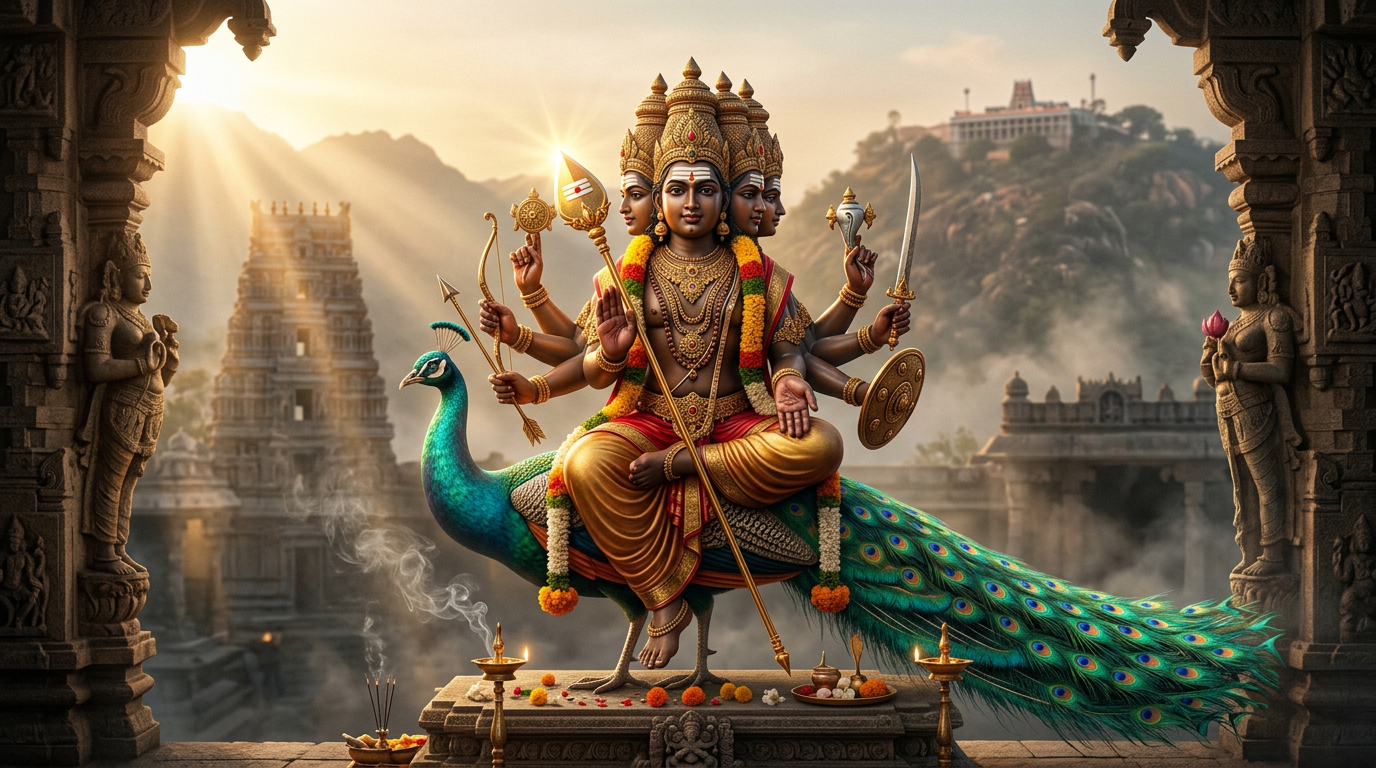
Ṣaṇmukha — The Six-Faced Lord
2The Six-Faced Lord

Ṣaṇmukha

षण्मुख

His six faces behold all directions and recall the six Kṛttikās who nursed him. Tamil exegesis also reads them as six divine functions and six luminous centres of knowledge. As Āṟumukam he gathers multiplicity into one victorious awareness.

Traditional iconography
Six faces, twelve arms, weapons and emblems including vel, bow, arrow, sword, shield and vajra; peacock vehicle.
Source tradition
Skanda Purāṇa; Kumāra Tantra; Śrītattvanidhi’s Subrahmaṇya iconography.
Vallī-Devasenā Sameta Subrahmaṇya — Lord with His Two Śaktis
3Lord with His Two Śaktis

Vallī-Devasenā Sameta Subrahmaṇya

वल्लीदेवसेनासमेत सुब्रह्मण्य

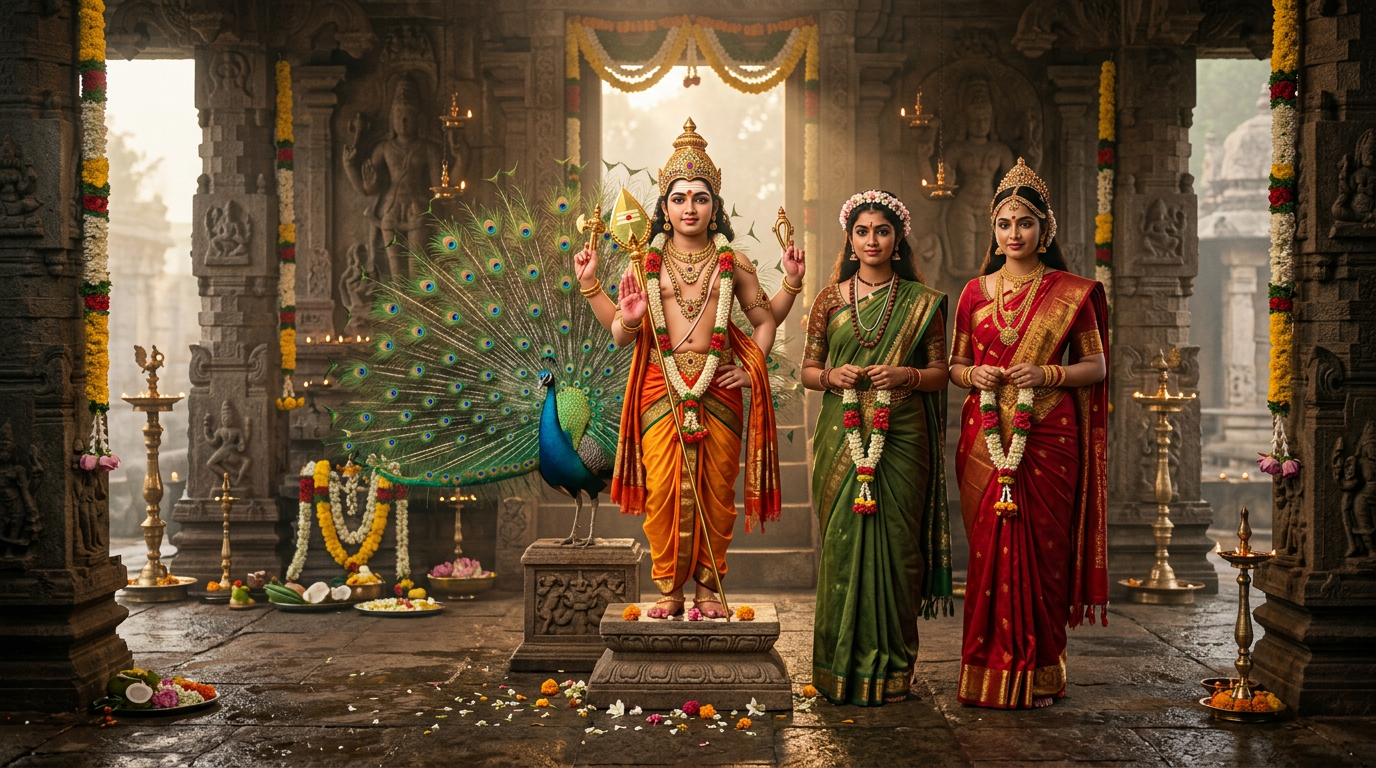
Devasenā, daughter of the celestial order, and Vallī, daughter of the mountain people, express two modes of approach: disciplined sacred order and spontaneous love. Between them stands Murugan, joining heaven and earth.

Traditional iconography
Subrahmaṇya standing with vel, Vallī to one side and Devasenā to the other, with peacock nearby.
Source tradition
Skanda Purāṇa traditions; Tamil Kanda Purāṇam; South Indian temple Āgamas.
Daṇḍapāṇi — The Staff-Bearing Renunciate
4The Staff-Bearing Renunciate

Daṇḍapāṇi

दण्डपाणि

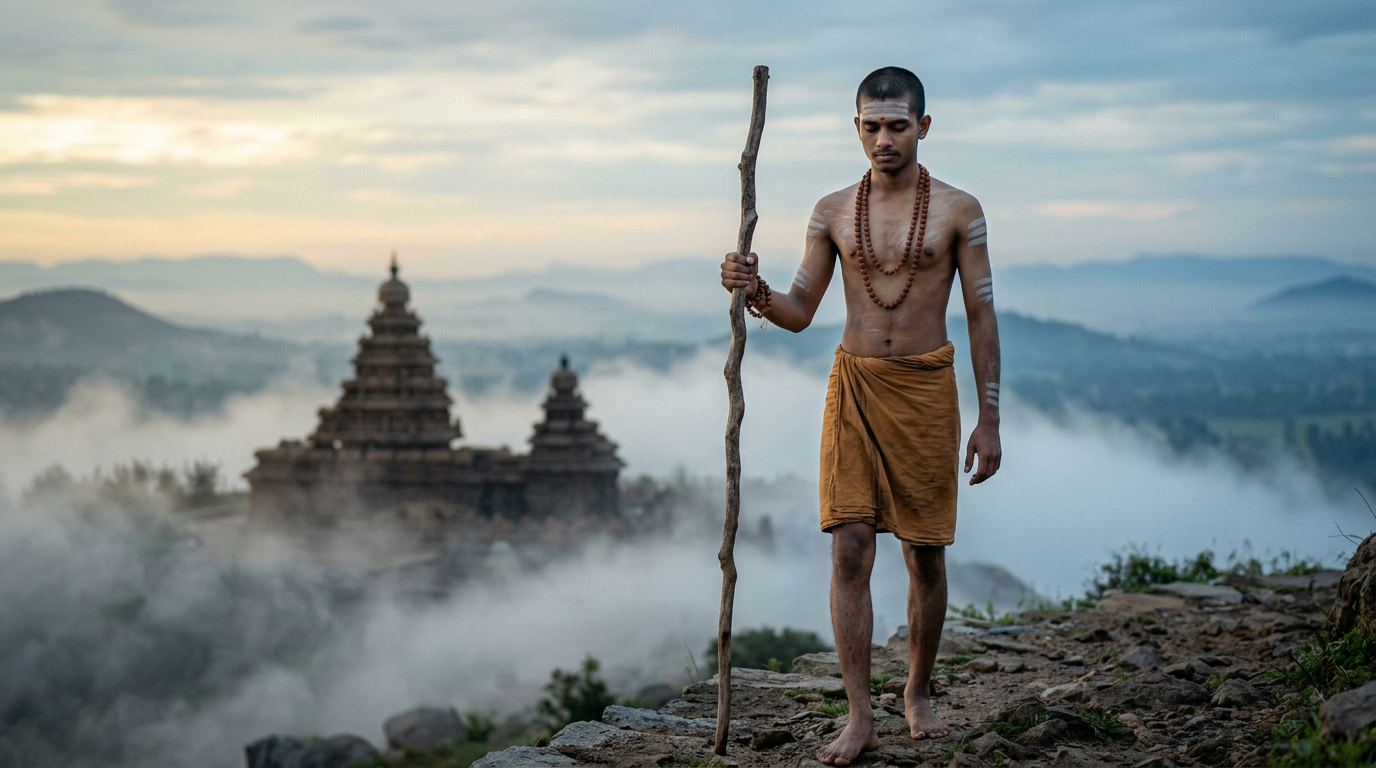
At Palani, Murugan renounces the fruit of worldly knowledge after Śiva reveals: ‘You yourself are the fruit’—<em>pazham nī</em>. Bare, restrained and holding only a staff, Daṇḍapāṇi teaches that the highest victory is mastery of oneself.

Traditional iconography
A youthful ascetic with shaven or simply dressed head, loincloth, staff and minimal ornaments; no elaborate arsenal.
Source tradition
Palani Sthala Purāṇa and Tamil temple tradition; iconography governed by Kumāra/Kaumara Āgama practice.
Senāpati Skanda — Commander of the Divine Hosts
5Commander of the Divine Hosts

Senāpati Skanda

सेनापति स्कन्द

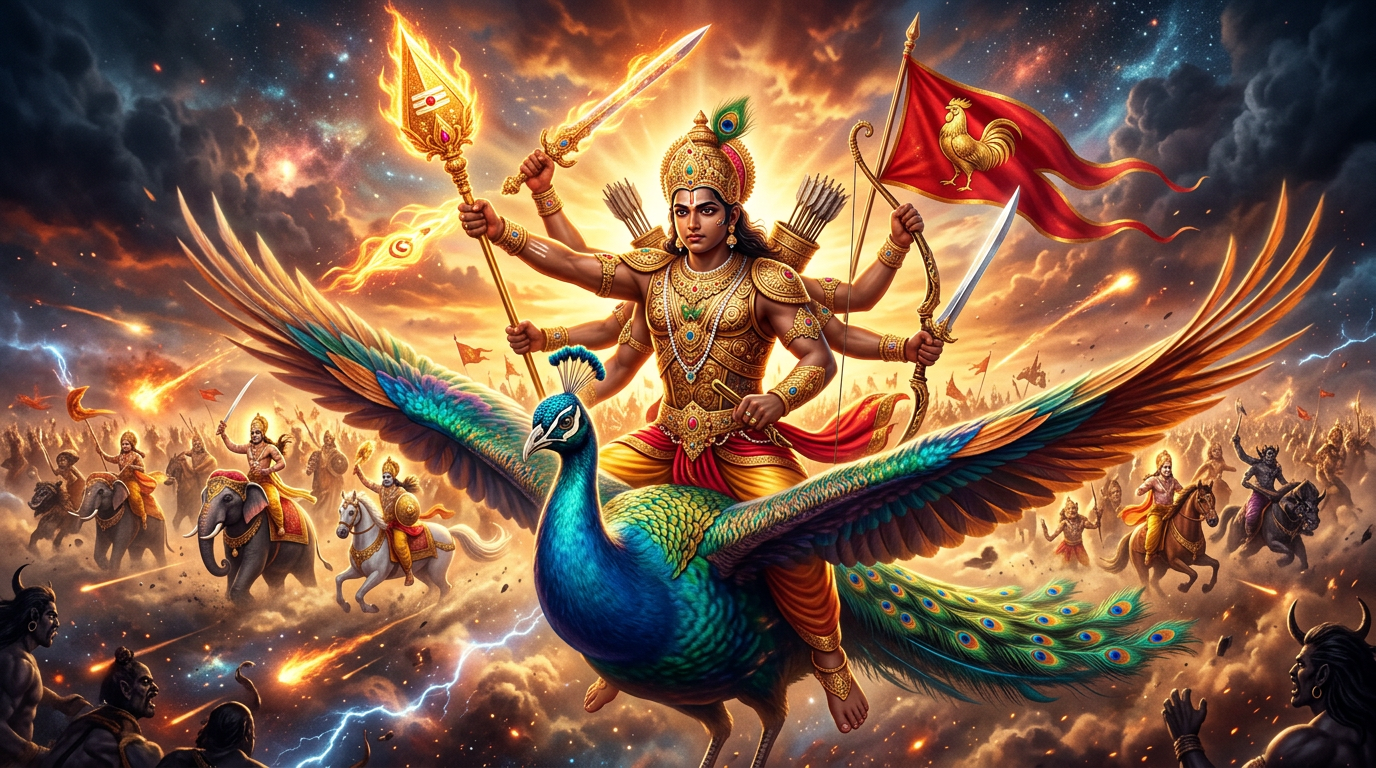
Appointed Devasenāpati, Skanda leads the celestial armies against Tārakāsura and restores cosmic order. His vel is not brute force: it is jñāna-śakti, discriminating wisdom sharp enough to pierce ignorance.

Traditional iconography
Youthful warrior with vel, banner bearing the rooster, peacock vehicle, and additional martial attributes according to the chosen Āgamic form.
Source tradition
Mahābhārata, Śalya and Vana Parvans; Skanda Purāṇa; Kumāra Tantra.

Bhairava Forms & Fierce Guardians

Skanda’s relationship with Bhairava is recension-dependent. Both arise within Śiva’s sacred family and embody protective fire, but the names below do not constitute a universally fixed Purāṇic list.

Unlike the Aṣṭa Bhairavas, there is no single pan-Indian canonical series called ‘Kartikeya’s Bhairava forms.’ These entries preserve names and associations found in selected regional Kaumāra-Śaiva and tantric traditions. Their iconography varies by lineage; restricted mantras are omitted.

Skanda Bhairava — The Fierce Kaumāra Guardian
1The Fierce Kaumāra Guardian

Skanda Bhairava

स्कन्द भैरव

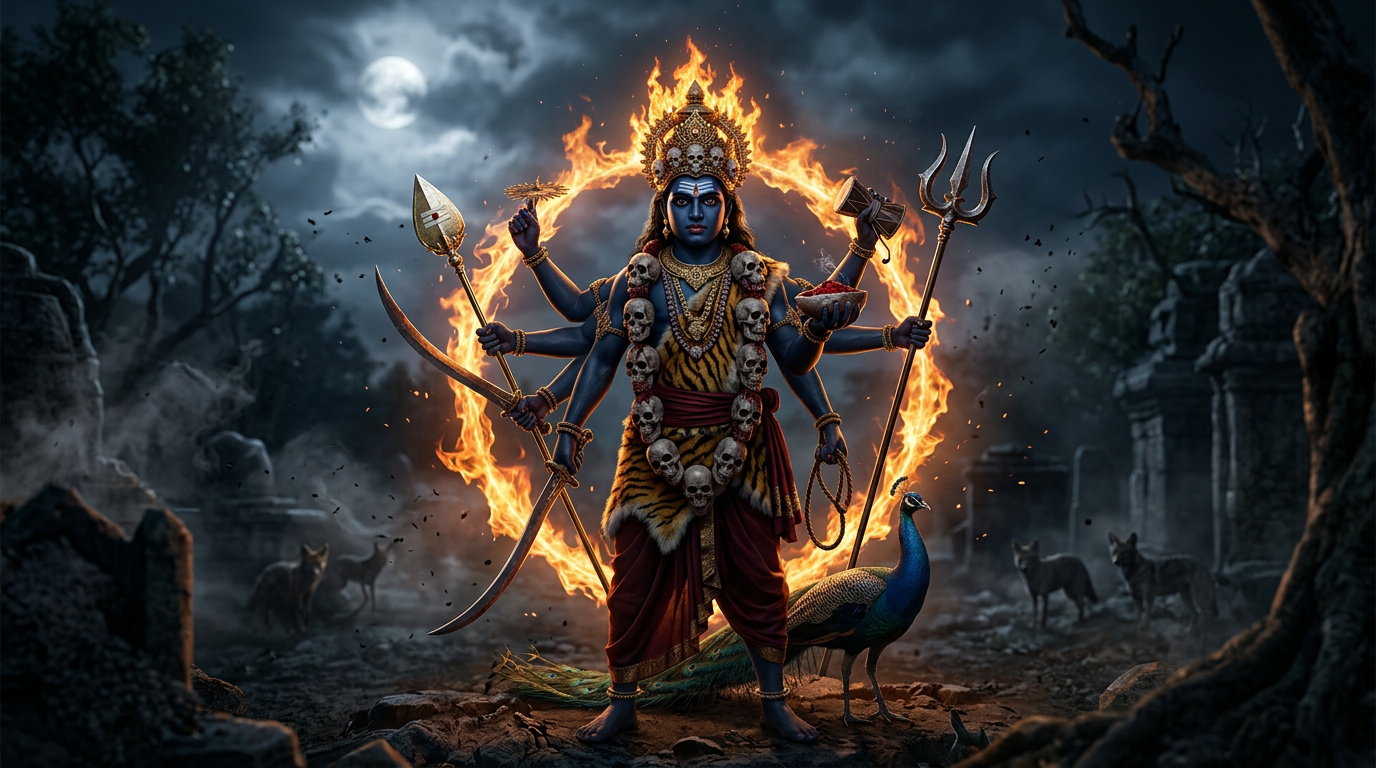
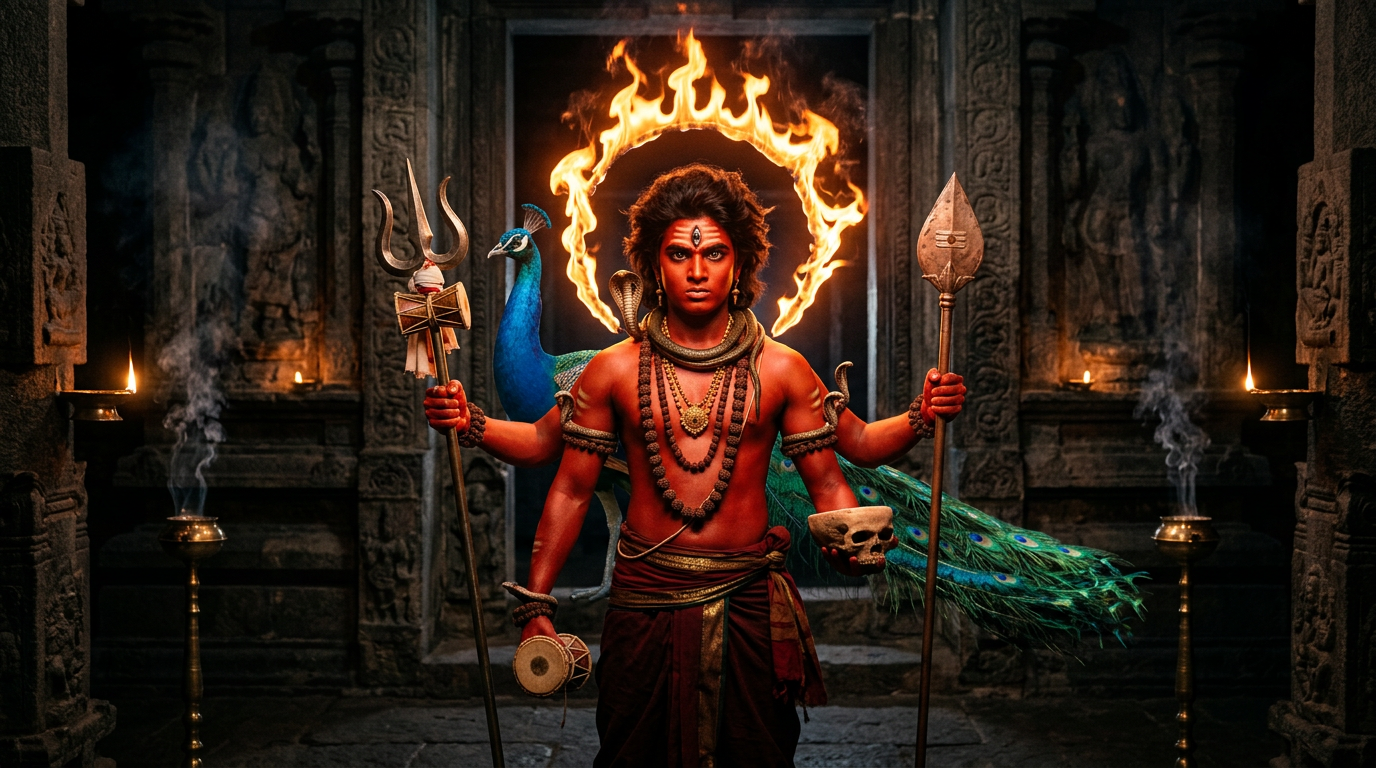
Skanda Bhairava names a fierce protective convergence of Skanda’s martial power and Bhairava’s guardianship in selected Śaiva-tantric and regional practices. He cuts fear, hostile obstruction and spiritual negligence. This is not one of the universally standardized eight Bhairavas.

Traditional iconography
Fierce youthful guardian carrying vel and Bhairava emblems such as trident, drum or skull-cup; peacock retains his Kaumāra identity.
Source tradition
Regional Kaumāra-Śaiva tantric paddhatis; nomenclature and dhyāna vary by recension.
Kumāra Bhairava — Bhairava as the Eternal Youth
2Bhairava as the Eternal Youth

Kumāra Bhairava

कुमार भैरव

Kumāra means the ever-youthful one and is a primary name of Skanda. In certain Bhairava enumerations and temple traditions, Kumāra Bhairava guards youthful power, courage and initiation. He must not be confused with a fixed pan-Indian Purāṇic avatāra.

Traditional iconography
Youthful, fiery or red, bearing vel together with trident, ḍamaru or skull-bowl; details depend on local paddhati.
Source tradition
Regional Bhairava nāmāvalīs and Kaumāra-Śaiva temple practice; no single universal iconographic recension.
Bāla Bhairava — The Child Guardian
3The Child Guardian

Bāla Bhairava

बाल भैरव

Bāla Bhairava is Bhairava’s youthful protective mode; when read through a Kaumāra lens, the child-warrior symbolism resonates with Bāla Skanda. The two should not be casually declared identical: this section records a lineage-specific association, not a universal equation.

Traditional iconography
A youthful guardian with Bhairava emblems; Kaumāra adaptations add the vel or peacock. Other lineages depict Bāla/Baṭuka Bhairava differently.
Source tradition
Bhairava-tantric and regional Kaumāra interpretive traditions; distinct from the better-known Baṭuka Bhairava cycle.

The Vel, the Peacock and the Rooster

The vel given by Pārvatī is jñāna-śakti—the power of knowledge that pierces deception. The peacock, magnificent yet associated with pride, becomes his vehicle: ego is not merely killed but mastered and made to carry divine purpose. The rooster on his banner recalls the transformed remnant of Sūrapadman, showing that even adversarial force can be redeemed.

For public devotion, the simple names “Oṃ Saravaṇabhavāya Namaḥ” and “Oṃ Subrahmaṇyāya Namaḥ” are widely used. Fierce Bhairava-oriented mantras and ritual procedures belong to initiation under a qualified guru.

Primary textual references

  • Ṛgveda 5.2 and Vedic Kumāra/Agni antecedents (interpreted within later tradition)
  • Mahābhārata — accounts of Skanda’s birth and appointment as commander
  • Skanda Purāṇa — principal Purāṇic corpus of Skanda traditions (recensions vary)
  • Kumāra Tantra / Kaumāra Āgama — temple worship and iconography
  • Kālidāsa’s Kumārasambhava — classical sacred-poetic birth narrative
  • Tamil Tirumurukāṟṟuppaṭai and Tiruppukaḻ — Murugan’s sacred sites and theology
  • Kanda Purāṇam — Tamil recension and expansion of Skanda narrative
  • Regional Kaumāra-Śaiva paddhatis for Bhairava-associated names; not a universal list