Vedic Panchang
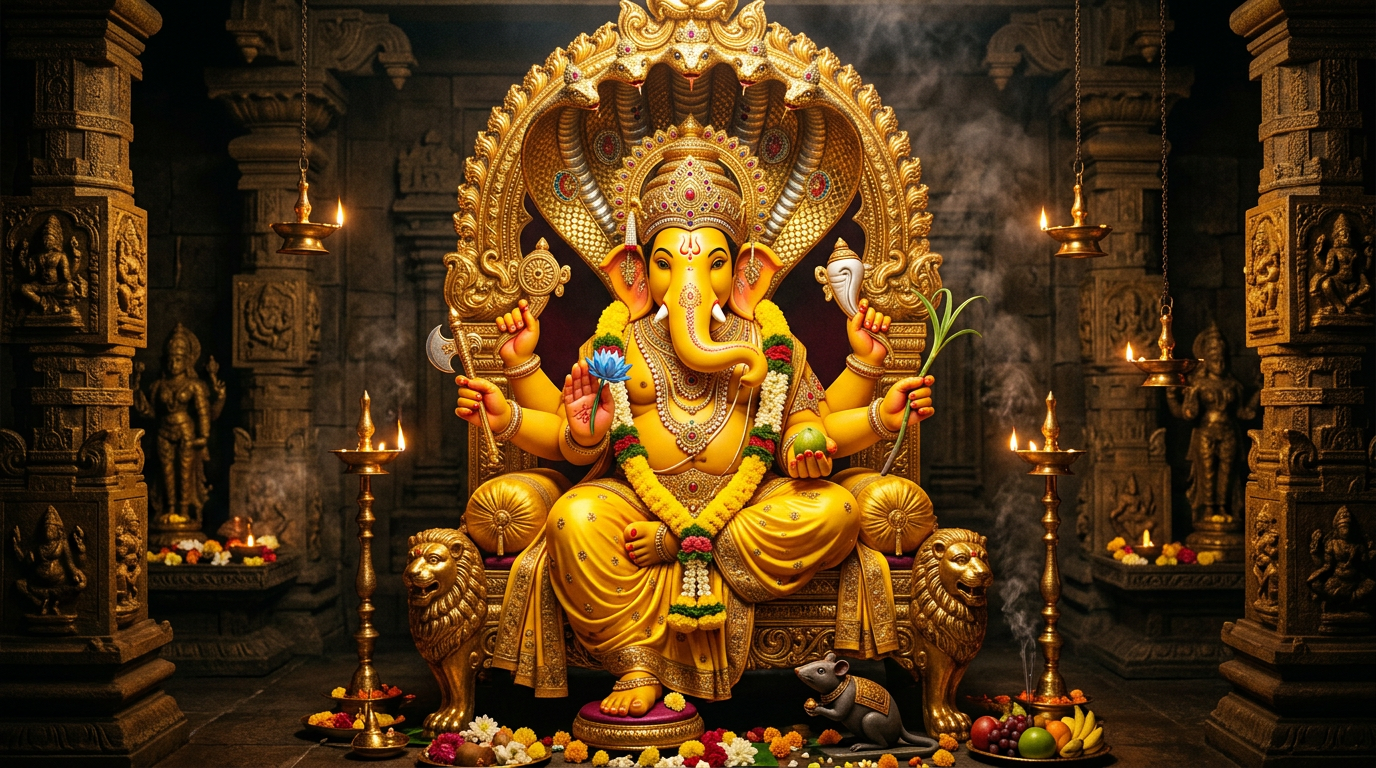
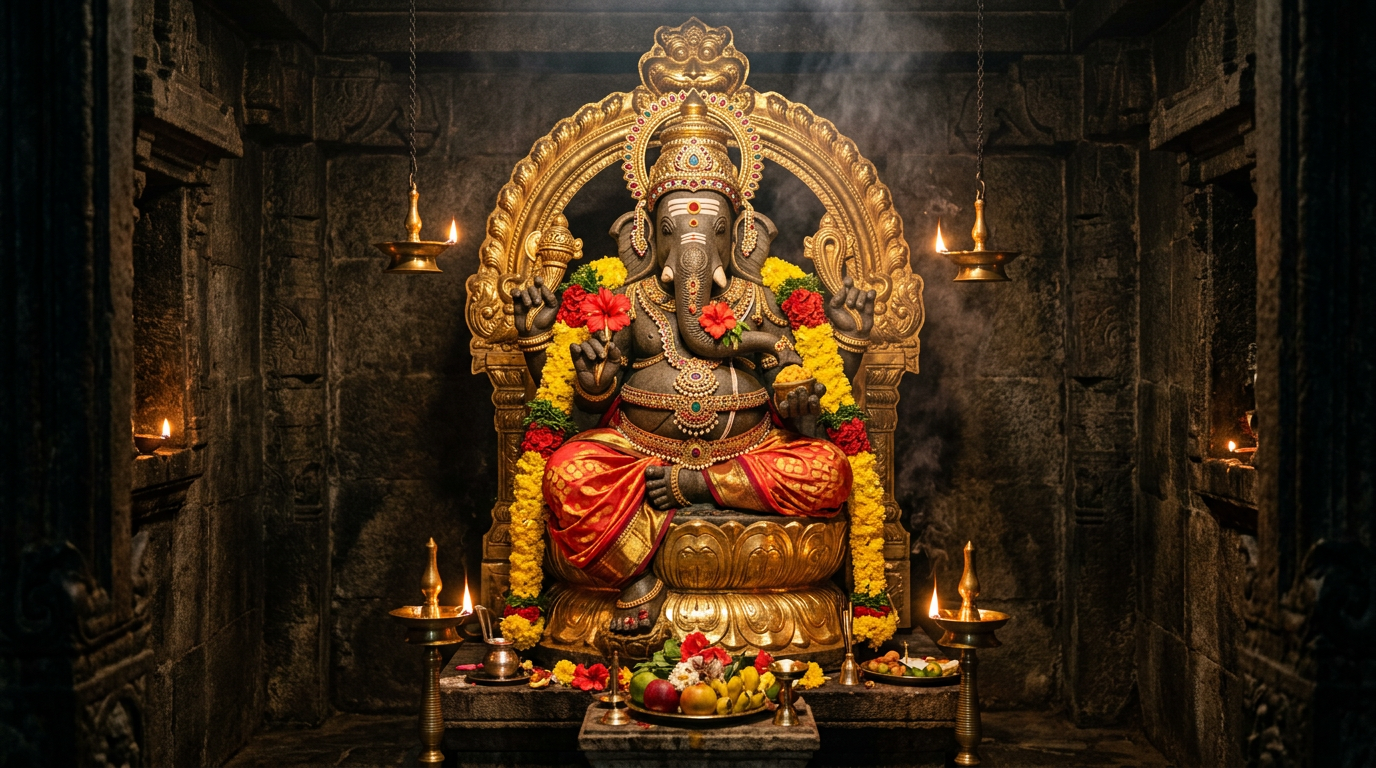
Lord Ganesha enthroned in an ancient lamp-lit temple

Gaṇapatya tradition · Tantra · Sacred iconography

Lord Ganesha & His Forms

श्री गणेश एवं दश तान्त्रिक स्वरूप

Meet the Lord of Beginnings through ten profound tantric manifestations—each a distinct doorway into wisdom, protection, abundance and transformation.

Scriptural foundation

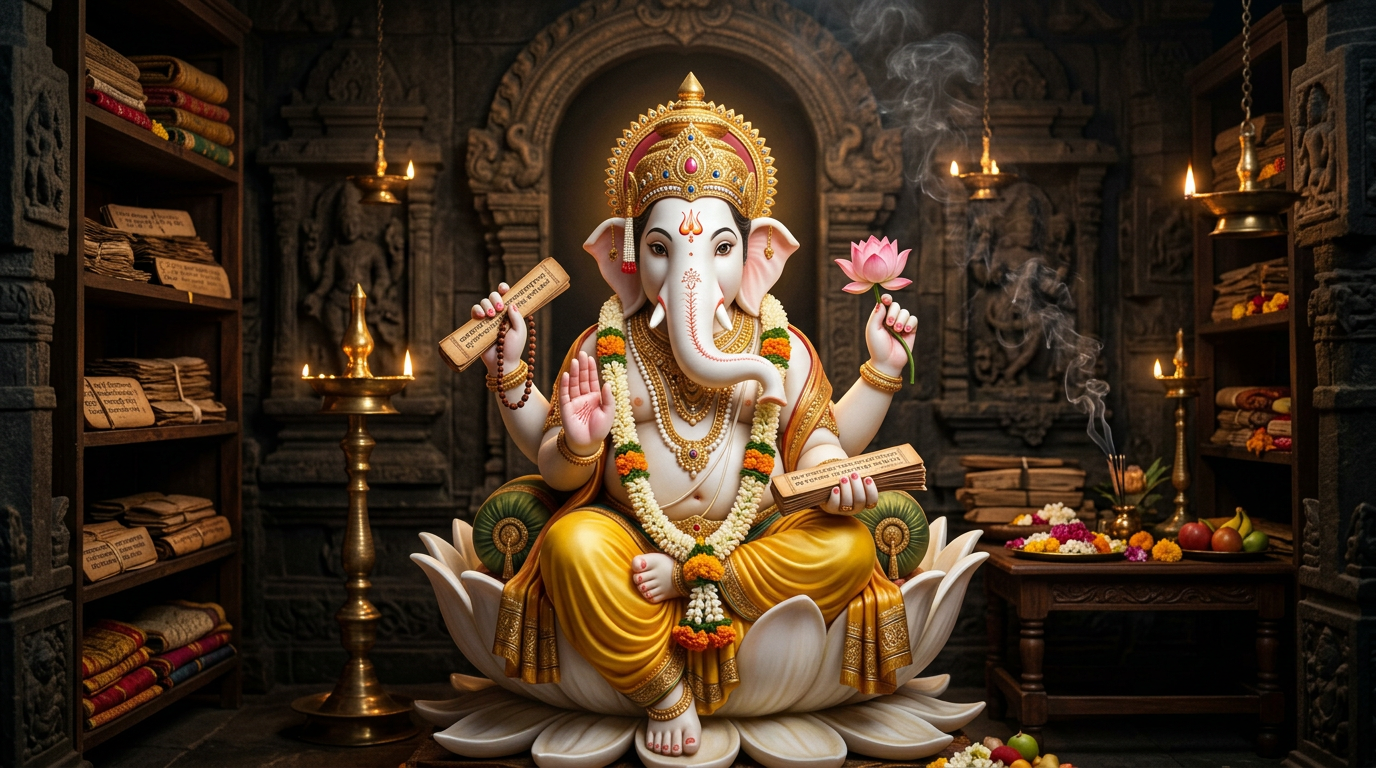
Gaṇeśa is Vighneśvara, lord of obstacles, and Gaṇapati, lord of the hosts. The Gaṇapati Atharvaśīrṣa identifies him with the immediate, all-encompassing Brahman: “You alone are the visible Reality.” The Mudgala Purāṇa develops eight avatāras through which he conquers inner demons such as envy, pride, delusion and possessiveness; South Indian āgamic and śilpa traditions preserve a wider cycle of thirty-two meditative forms.

The ten forms selected here are prominent in tantric worship and iconography. They are presented alongside the ten Mahāvidyās as a comparative sacred gallery—not as canonical one-to-one consorts or equivalents. No early pan-Indian scripture establishes a fixed pairing of ten Gaṇapatis with ten Mahāvidyās; lineages that make such correspondences vary and require a living guru.

10 Tantric Forms

These forms draw from Gaṇapatya tantra, the Mudgala Purāṇa and the thirty-two-form dhyāna tradition preserved in the Śrītattvanidhi. Public iconography and meaning are shared here; restricted bīja-mantras and ritual procedures are intentionally omitted.

Tantric worship of forms such as Ucchiṣṭa, Haridrā and Mahāgaṇapati traditionally requires dīkṣā (initiation). The images and descriptions support respectful learning, not unsupervised ritual practice.

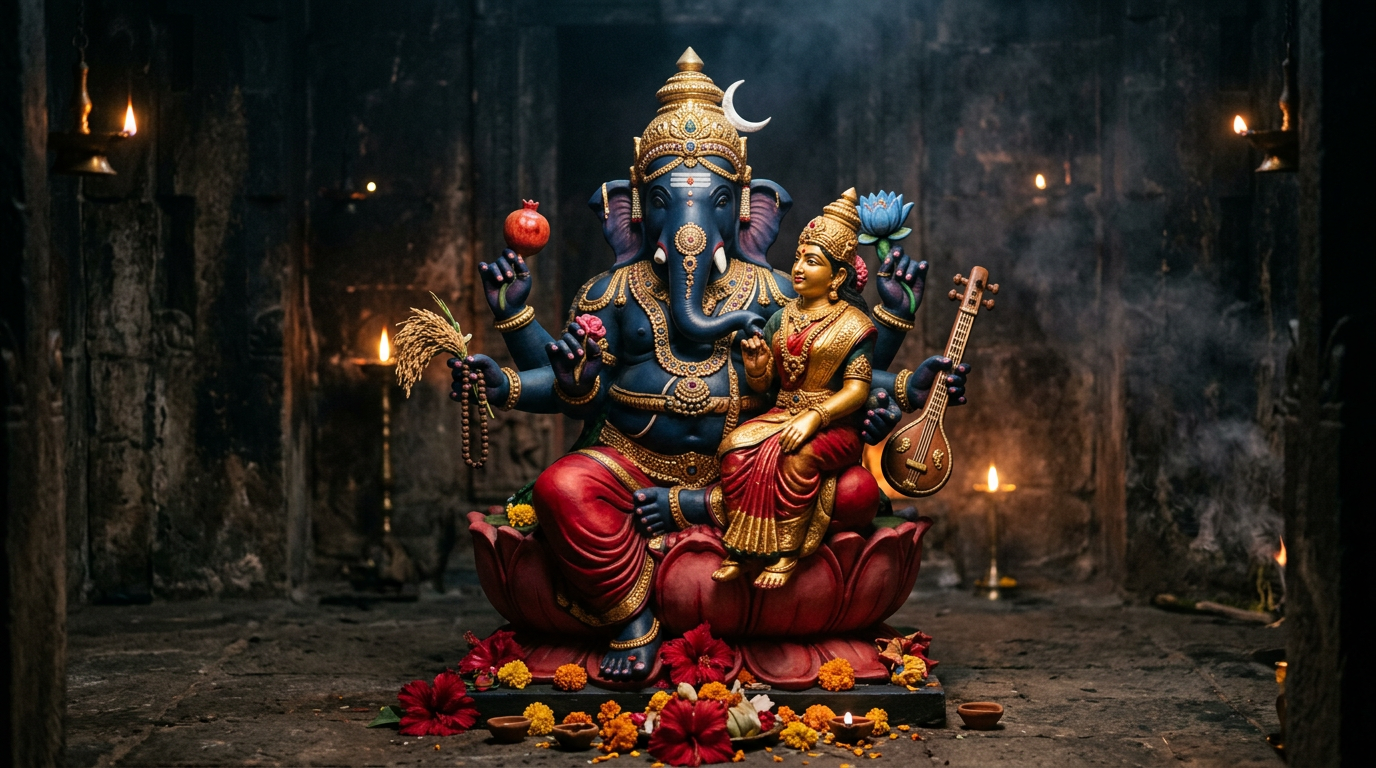
Ucchiṣṭa Gaṇapati — Lord of Transformed Boundaries
1Lord of Transformed Boundaries

Ucchiṣṭa Gaṇapati

उच्छिष्ट गणपति

A secretive tantric form in which Gaṇapati embraces his Śakti. Ucchiṣṭa here signifies what lies beyond ordinary purity conventions: consciousness that remains sacred even at the margins. His worship belongs to initiated practice and is traditionally associated with mastery of mantra, music, speech and desire.

Traditional iconography
Usually blue or dark, six-armed, with his Śakti upon the left thigh; attributes include vīṇā, pomegranate, blue lotus, rice-sheaf and rosary.
Associated Mahāvidyā
Maa Tārā — paired with Akṣobhya / Ucchiṣṭa Gaṇapati, invoked for overcoming grave crises and barriers of speech.
Source tradition
Mantra-mahodadhi; Śrītattvanidhi iconographic recension; later Gaṇapatya tantric paddhatis.
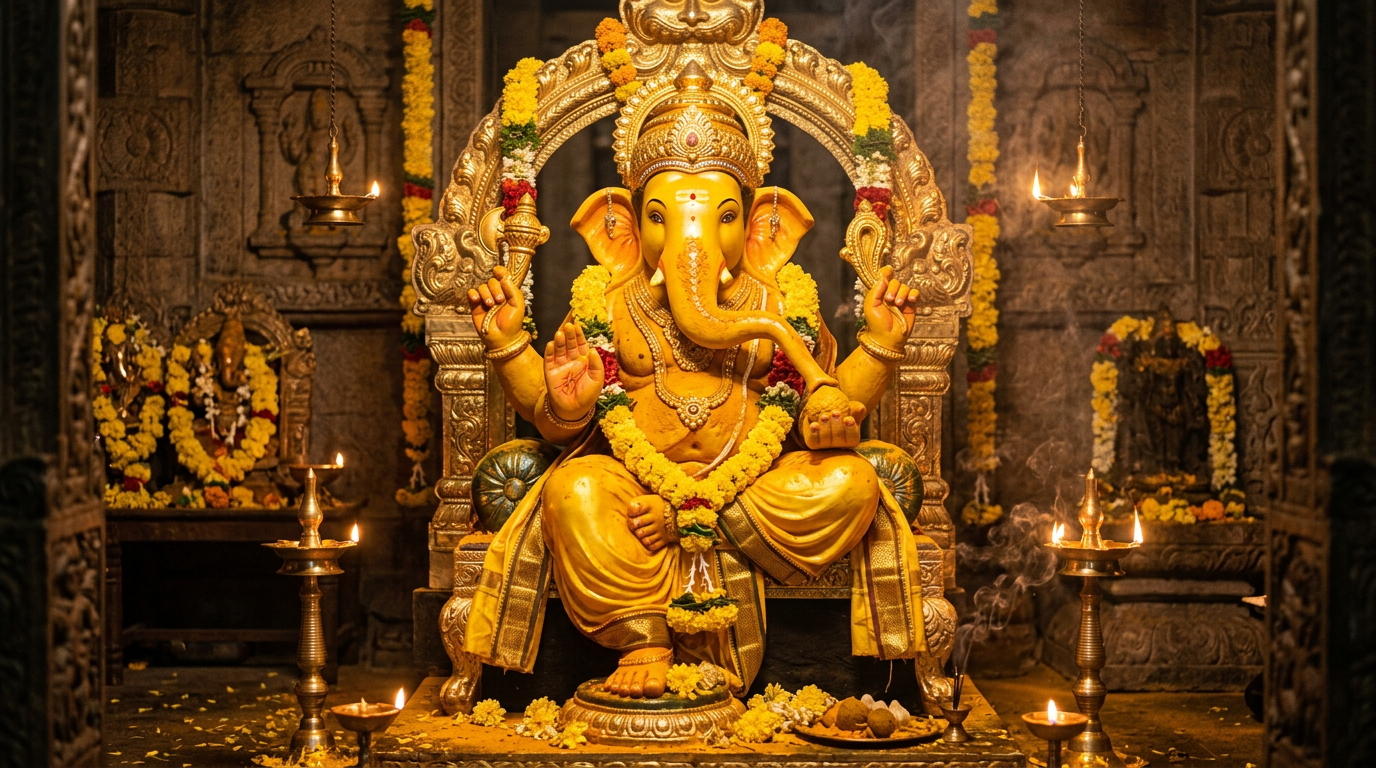
Haridrā Gaṇapati — The Turmeric-Golden Lord
2The Turmeric-Golden Lord

Haridrā Gaṇapati

हरिद्रा गणपति

Completely golden-yellow like turmeric, Haridrā Gaṇapati embodies auspicious attraction, protection and the fixing of beneficial intention. Turmeric is both purifying and life-giving; the form translates its earthly fertility into spiritual abundance.

Traditional iconography
Four-armed and turmeric-yellow, carrying pāśa, aṅkuśa, modaka and broken tusk; clothed and garlanded in yellow.
Associated Mahāvidyā
Maa Bagalāmukhī — paired with Haridrā Gaṇapati, who brings stillness (stambhana) and victory over adversaries.
Source tradition
Mantra-mahodadhi, Haridrāgaṇapati-kalpa traditions and Gaṇapatya prayoga manuals.
Mahā Gaṇapati — The Great Tantric Gaṇapati
3The Great Tantric Gaṇapati

Mahā Gaṇapati

महागणपति

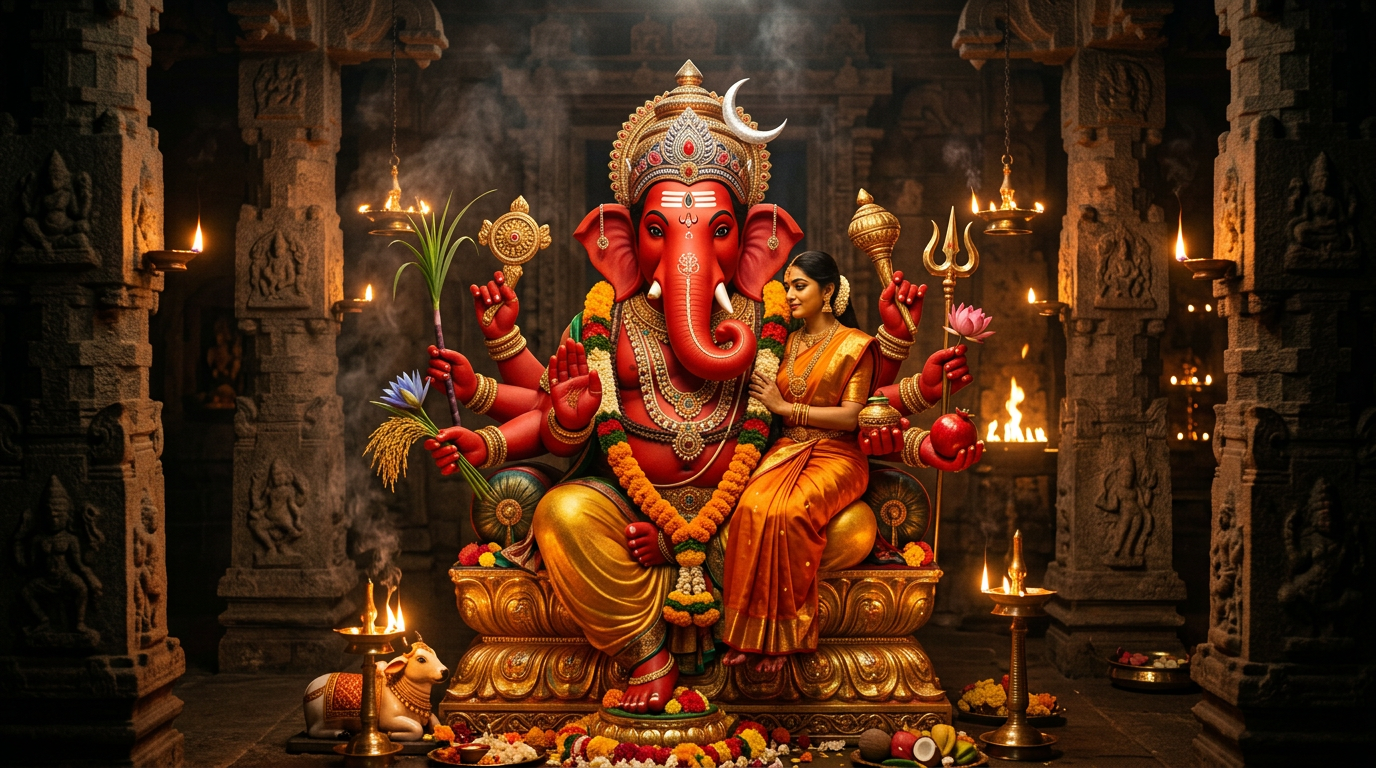
Mahāgaṇapati is the sovereign, ten-armed form who contains the powers of the whole cosmos. With Śakti upon his lap, he unites consciousness and energy. His many emblems represent the elements, nourishment, sweetness, command and liberation.

Traditional iconography
Red, three-eyed and ten-armed, crescent-crowned, embracing Śakti; holds pomegranate, mace, sugarcane bow, trident, discus, lotus, noose, blue lily, rice-sheaf and a gem-pot.
Associated Mahāvidyā
Maa Tripurasundarī (Ṣoḍaśī) — paired with Mahā Gaṇapati, who grants the full realisation of Śrī Vidyā and abundance.
Source tradition
Śāradātilaka Tantra; Prapañcasāra Tantra; Śrītattvanidhi.
Ūrdhva Gaṇapati — The Ascending Lord
4The Ascending Lord

Ūrdhva Gaṇapati

ऊर्ध्व गणपति

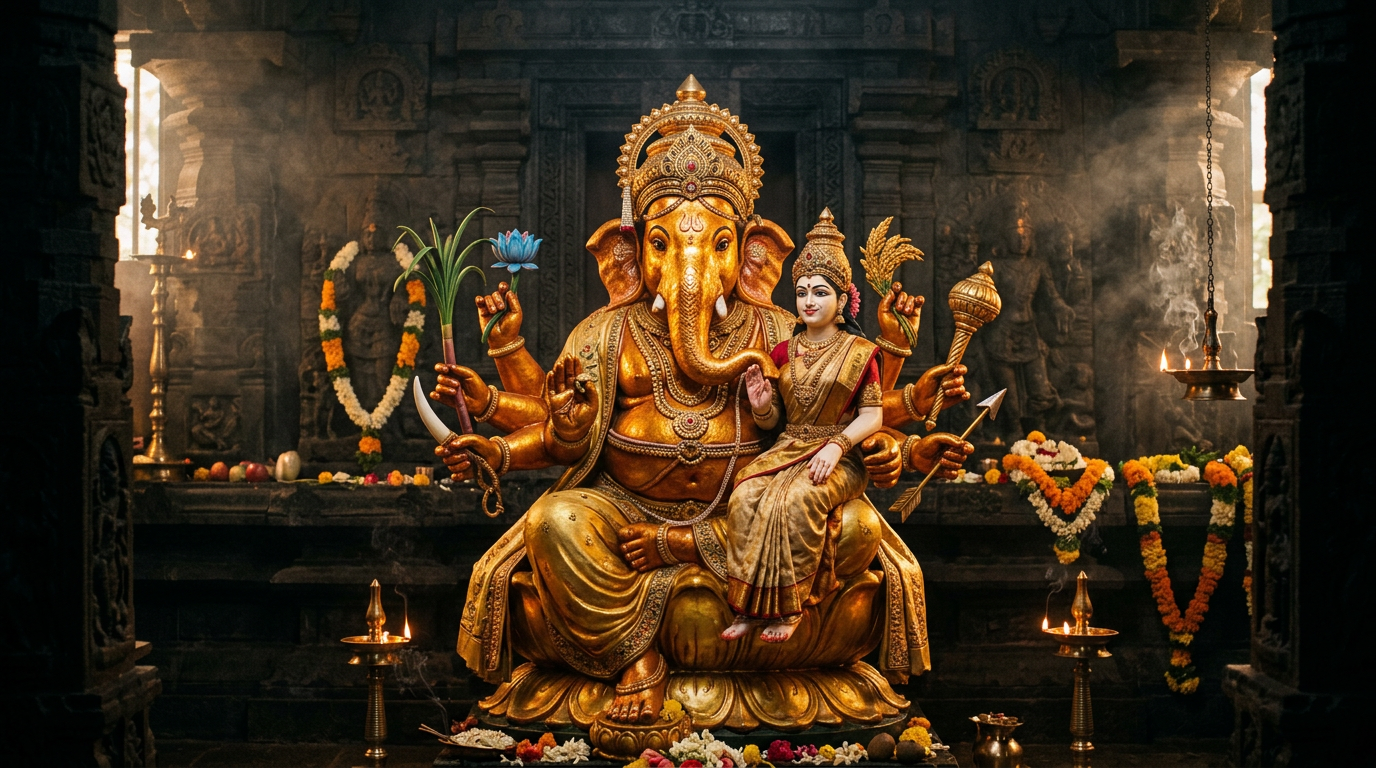
Ūrdhva means upward-rising. This golden form represents the sublimation of embodied energy toward awakened consciousness. His union with Śakti is not sensual display but the indivisibility of Śiva-consciousness and creative power.

Traditional iconography
Golden, eight-armed, with Śakti on his left thigh; rice-sheaf, lotus, sugarcane bow, arrow, tusk, noose and other emblems.
Source tradition
Mudgala Purāṇa’s form traditions as received through South Indian iconographic compendia, especially Śrītattvanidhi.
Vīra Gaṇapati — The Heroic Warrior
5The Heroic Warrior

Vīra Gaṇapati

वीर गणपति

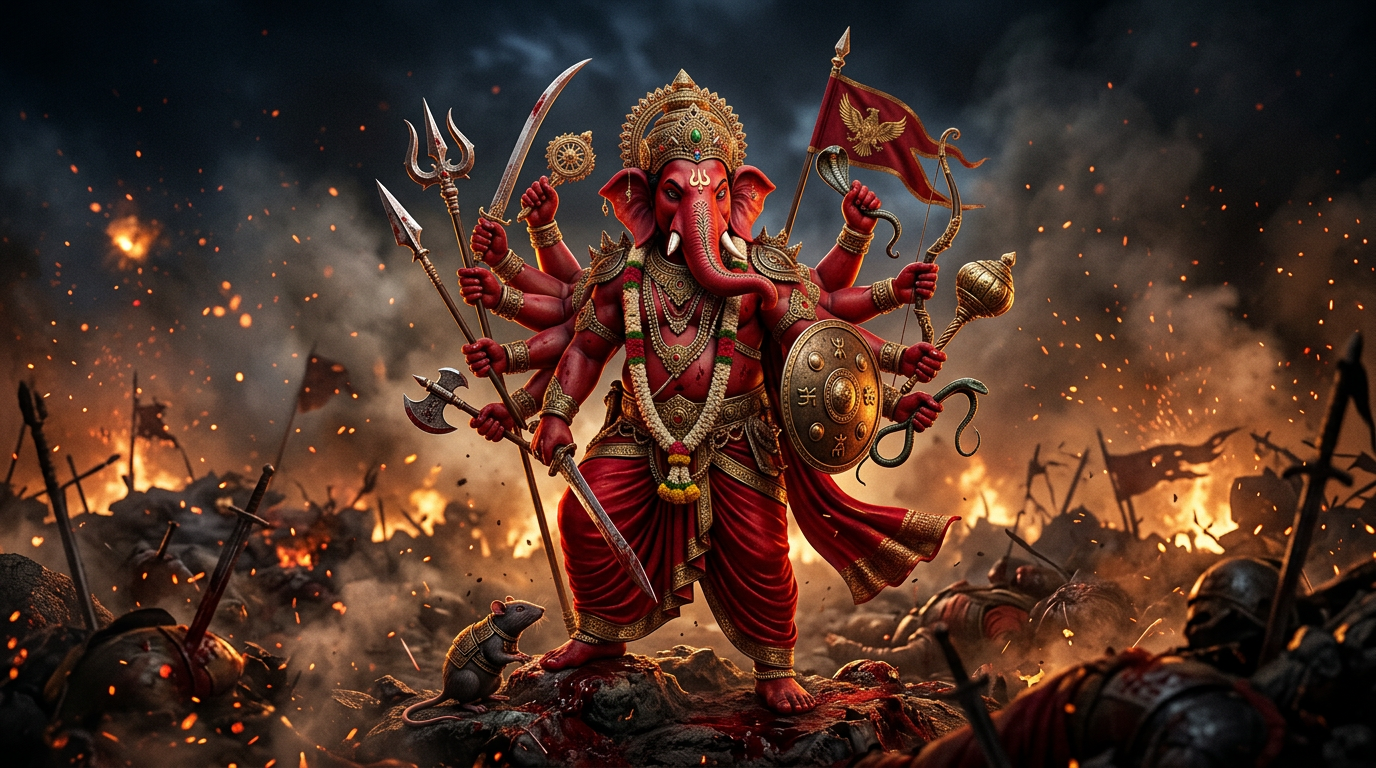
Vīra Gaṇapati is the unconquerable protector who turns spiritual resolve into action. His sixteen arms carry the implements needed to overcome every category of obstruction—from inner inertia to outward hostility.

Traditional iconography
Red and sixteen-armed, bearing weapons including sword, shield, bow, arrow, spear, discus, mace, axe, trident, noose and goad.
Source tradition
Śrītattvanidhi’s thirty-two Gaṇapati dhyānas; Mudgala Purāṇa-associated iconographic tradition.
Kṣipra-prasāda Gaṇapati — Swiftly Gracious
6Swiftly Gracious

Kṣipra-prasāda Gaṇapati

क्षिप्रप्रसाद गणपति

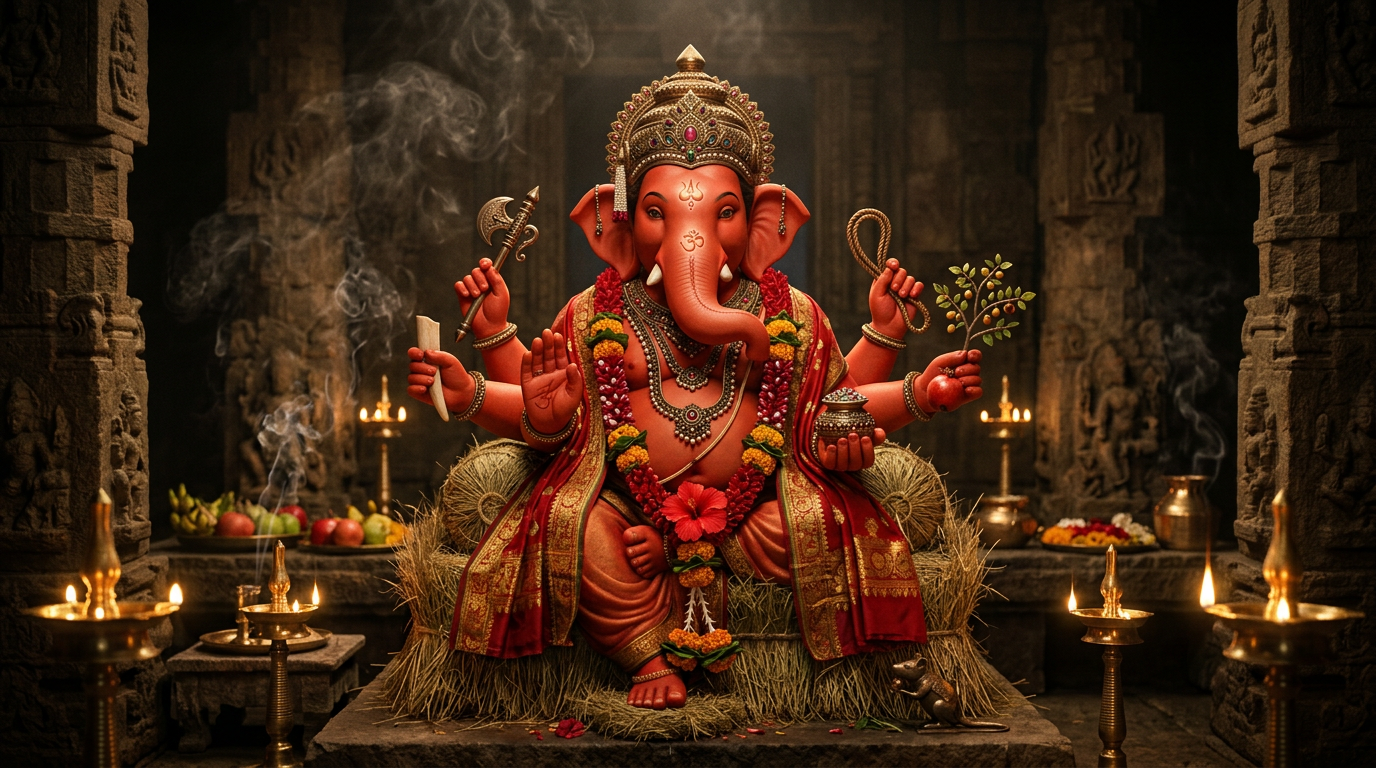
The name means ‘he whose grace comes quickly.’ Seated upon sacred kuśa grass, he answers sincere need without delay, while his large belly signifies the universe held peacefully within him.

Traditional iconography
Red, six-armed and seated upon kuśa grass; holds noose, goad, wish-fulfilling sprig, tusk, pomegranate and pot of jewels.
Source tradition
Śrītattvanidhi; the thirty-two Gaṇapati iconographic cycle.
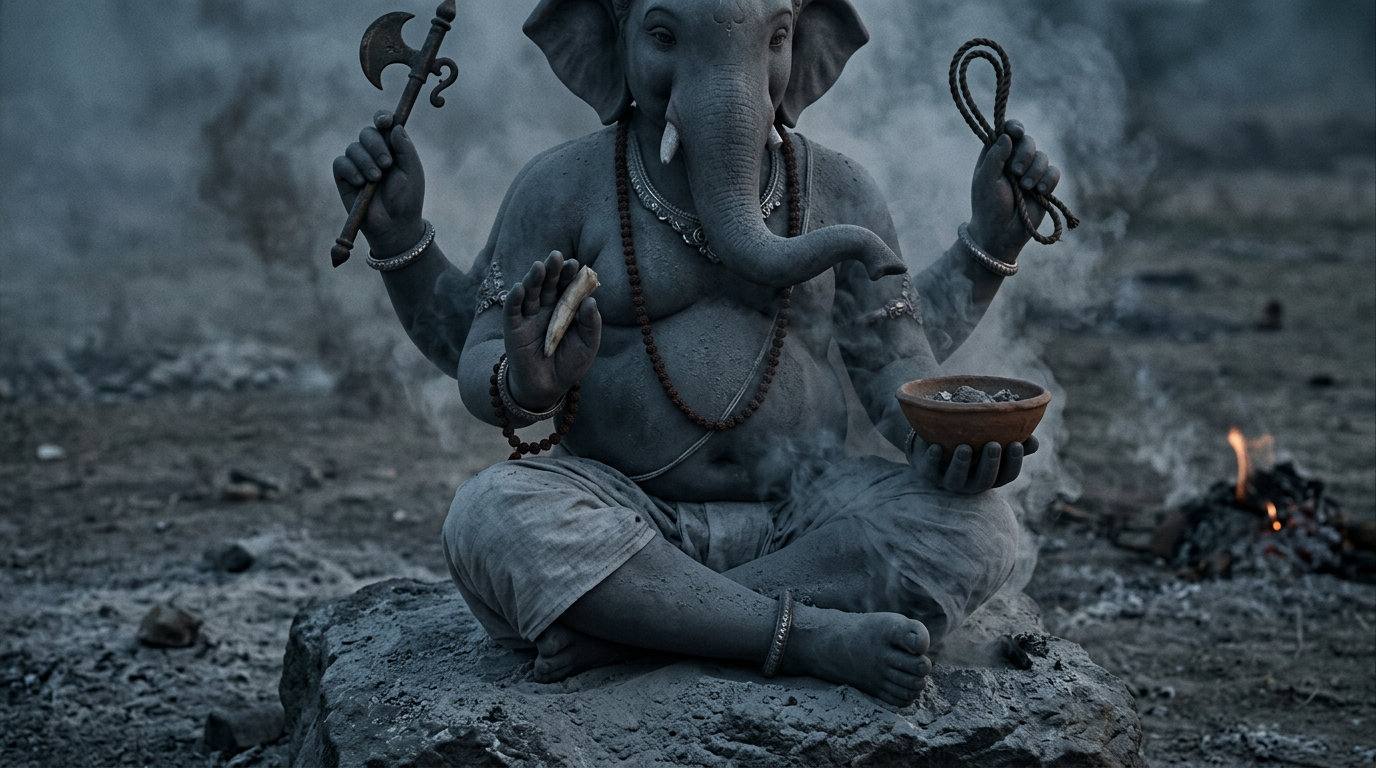
Dhūmravarṇa Gaṇapati — The Smoke-Coloured Lord
7The Smoke-Coloured Lord

Dhūmravarṇa Gaṇapati

धूम्रवर्ण गणपति

Smoke conceals yet also signals the transforming fire. Dhūmravarṇa is the form who subdues Ahaṃkāra, the demon of ego, in the Mudgala Purāṇa. His muted colour teaches that pride dissolves when its apparent solidity is seen as smoke.

Traditional iconography
Smoke-grey, generally four-armed with noose, goad, tusk and modaka; his vehicle is the mouse.
Associated Mahāvidyā
Maa Dhūmāvatī — paired with Dhūmra Gaṇapati, who helps one transcend sorrow, loss and illusion.
Source tradition
Mudgala Purāṇa, Dhūmravarṇa avatāra account; Śrītattvanidhi iconography.
Vighnarāja Gaṇapati — King Over Obstacles
8King Over Obstacles

Vighnarāja Gaṇapati

विघ्नराज गणपति

As Vighnarāja, Gaṇapati does not merely remove obstacles; he rules them. The Mudgala Purāṇa presents him as the conqueror of Mamāsura, possessiveness itself. Thus obstacles become instruments of divine education.

Traditional iconography
Golden, eight-armed, with conch, discus, noose, goad, bow, arrow, lotus and fruit; later imagery may give him Śeṣa as canopy.
Source tradition
Mudgala Purāṇa, Vighnarāja avatāra; Śrītattvanidhi.
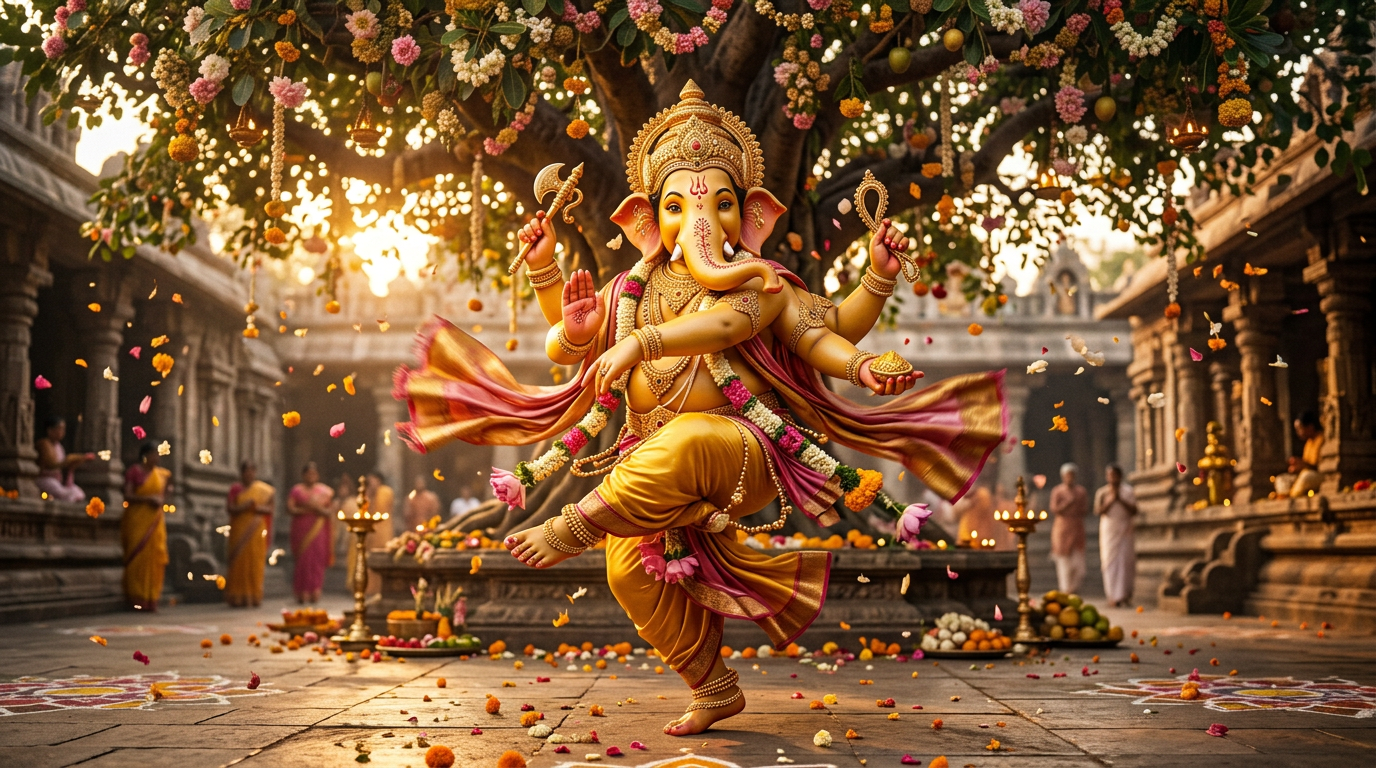
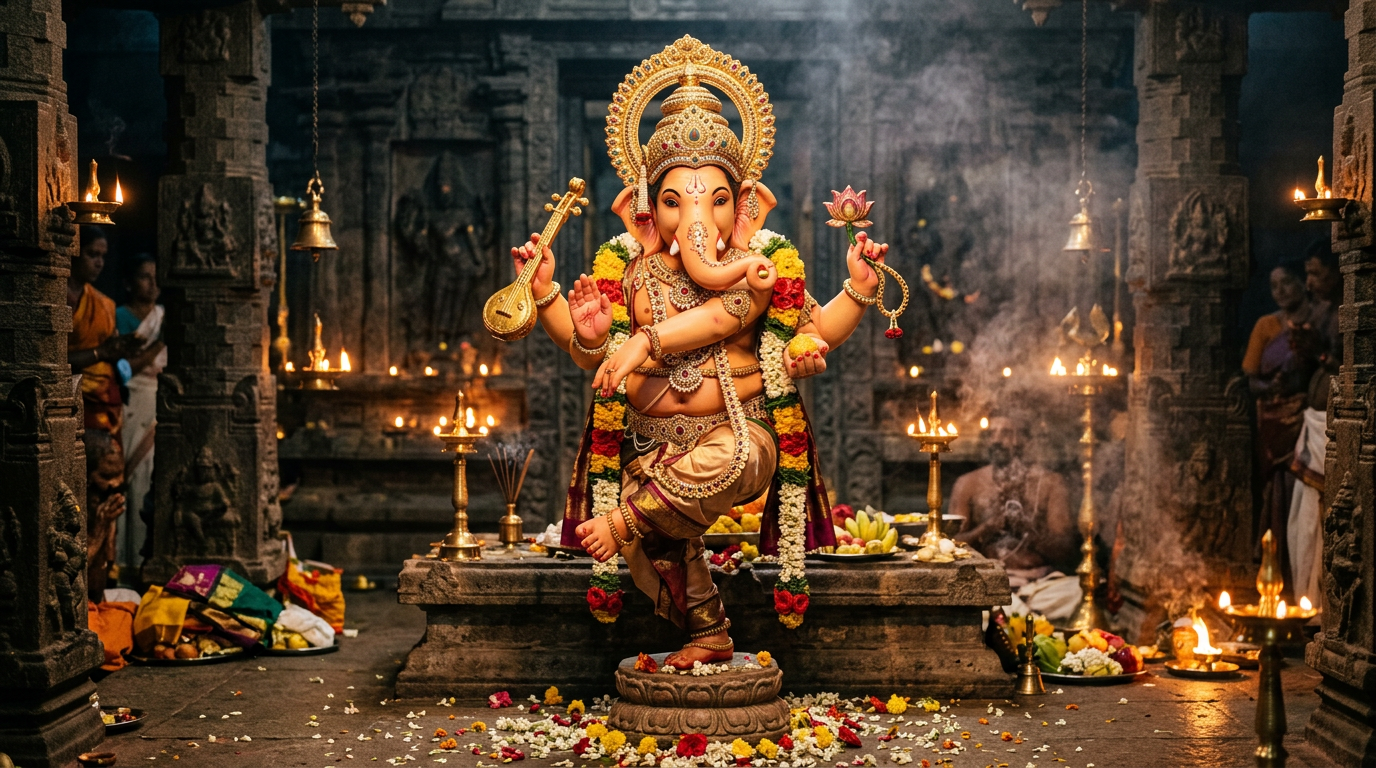
Nṛtya Gaṇapati — Lord of the Sacred Dance
9Lord of the Sacred Dance

Nṛtya Gaṇapati

नृत्य गणपति

Dancing beneath the wish-fulfilling tree, Nṛtya Gaṇapati is rhythm before creation becomes form. His dance loosens rigidity, blesses the arts and reveals the universe as divine play rather than dead mechanism.

Traditional iconography
Golden, dancing on one foot, generally four-armed with tusk, goad, noose and sweet or axe, adorned with rings and anklets.
Source tradition
Śrītattvanidhi’s thirty-two forms; South Indian temple-śilpa tradition.
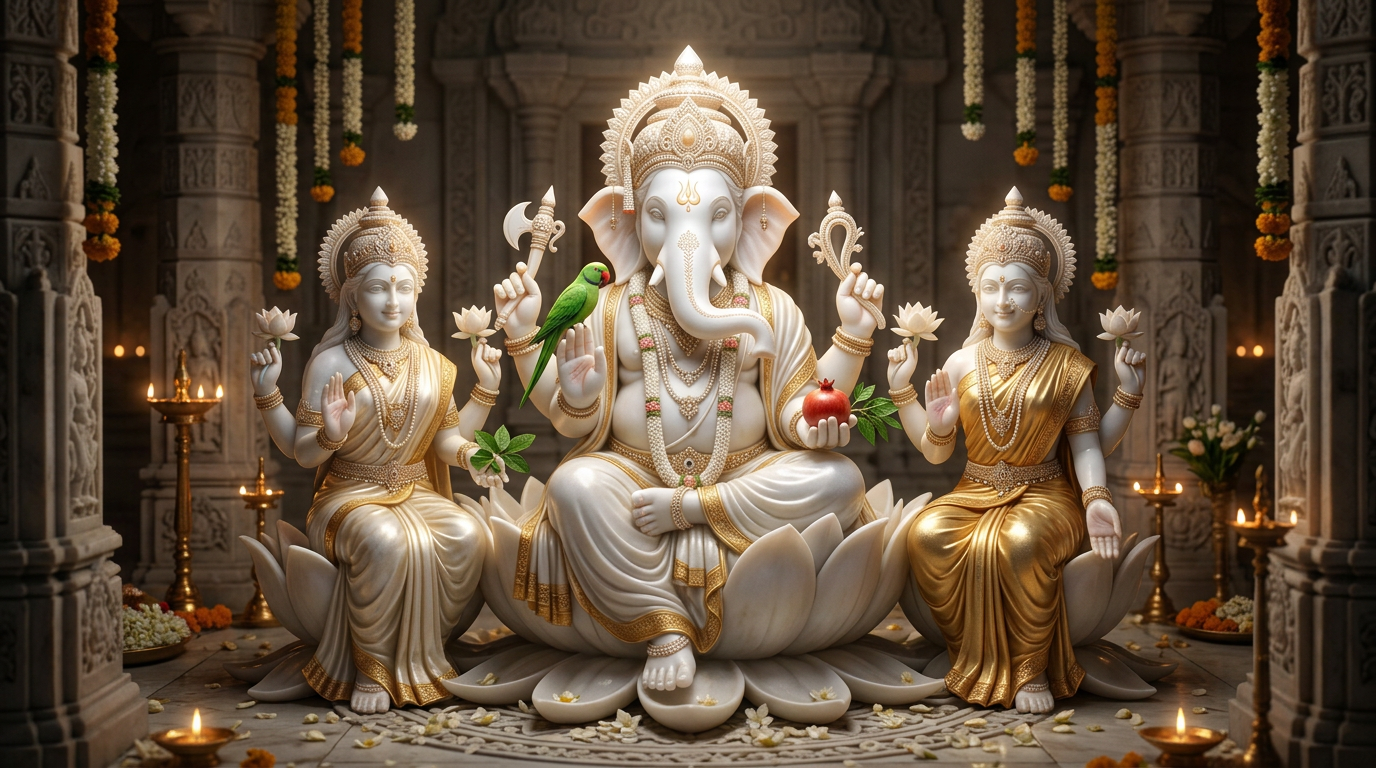
Lakṣmī Gaṇapati — Lord of Auspicious Fulfilment
10Lord of Auspicious Fulfilment

Lakṣmī Gaṇapati

लक्ष्मी गणपति

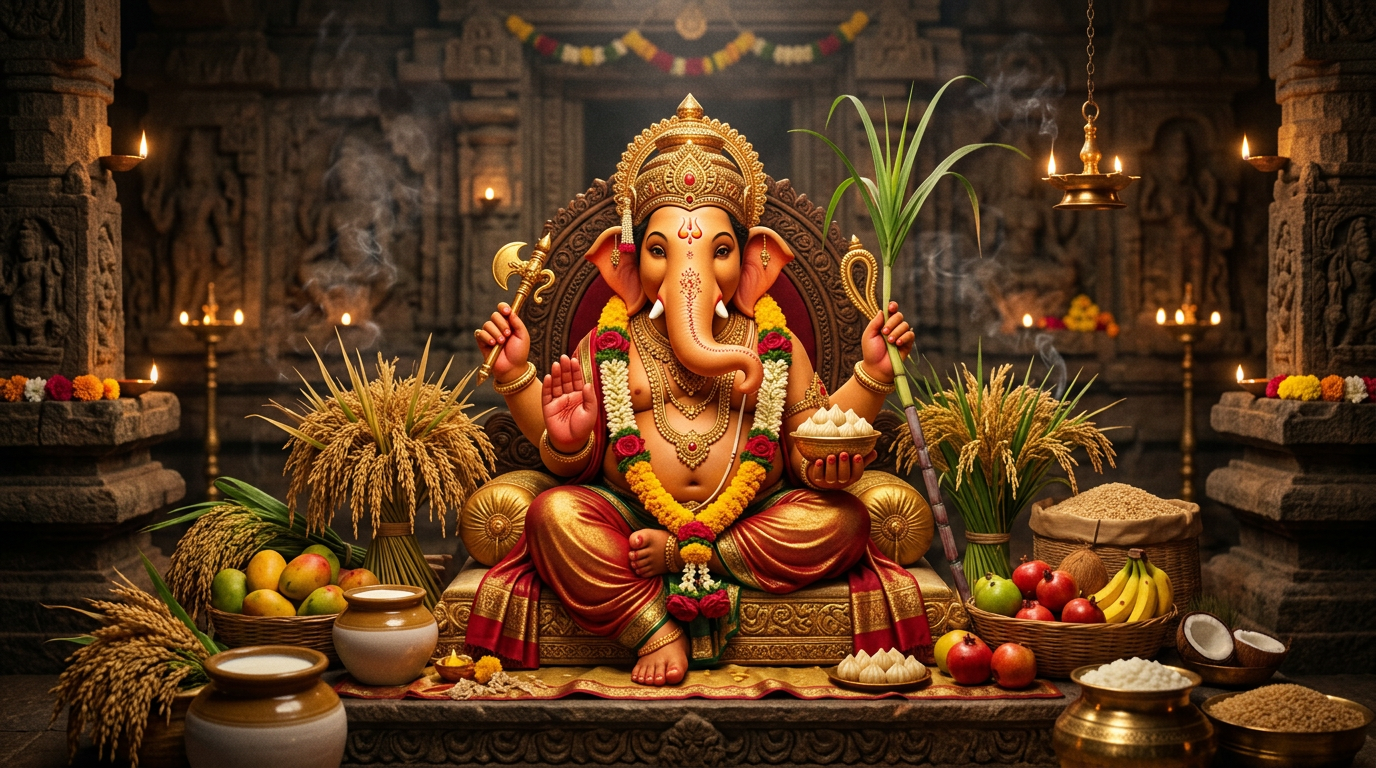
Lakṣmī Gaṇapati is attended by Siddhi and Buddhi—accomplishment and awakened intelligence. His prosperity is not wealth alone: it is the fullness arising when wisdom, skill and right intention work together.

Traditional iconography
White, eight-armed and seated with Siddhi and Buddhi; holds parrot, pomegranate, sword, goad, noose, water-vessel, sprig and lotus.
Associated Mahāvidyā
Maa Kamalā — paired with Lakṣmī-vallabha / Śrī Gaṇapati, bestower of royal prosperity and divine grace.
Source tradition
Śrītattvanidhi; thirty-two Gaṇapati dhyāna tradition. This form is distinct from Goddess Lakṣmī herself.

Alongside the Ten Mahāvidyās

The Mahāvidyās are ten revelations of the Supreme Goddess. In the Gaṇapatya-Śākta paddhati tradition each Mahāvidyā is worshipped alongside a corresponding form of Gaṇapati, who guards the gate of that vidyā and removes obstacles in its sādhanā:

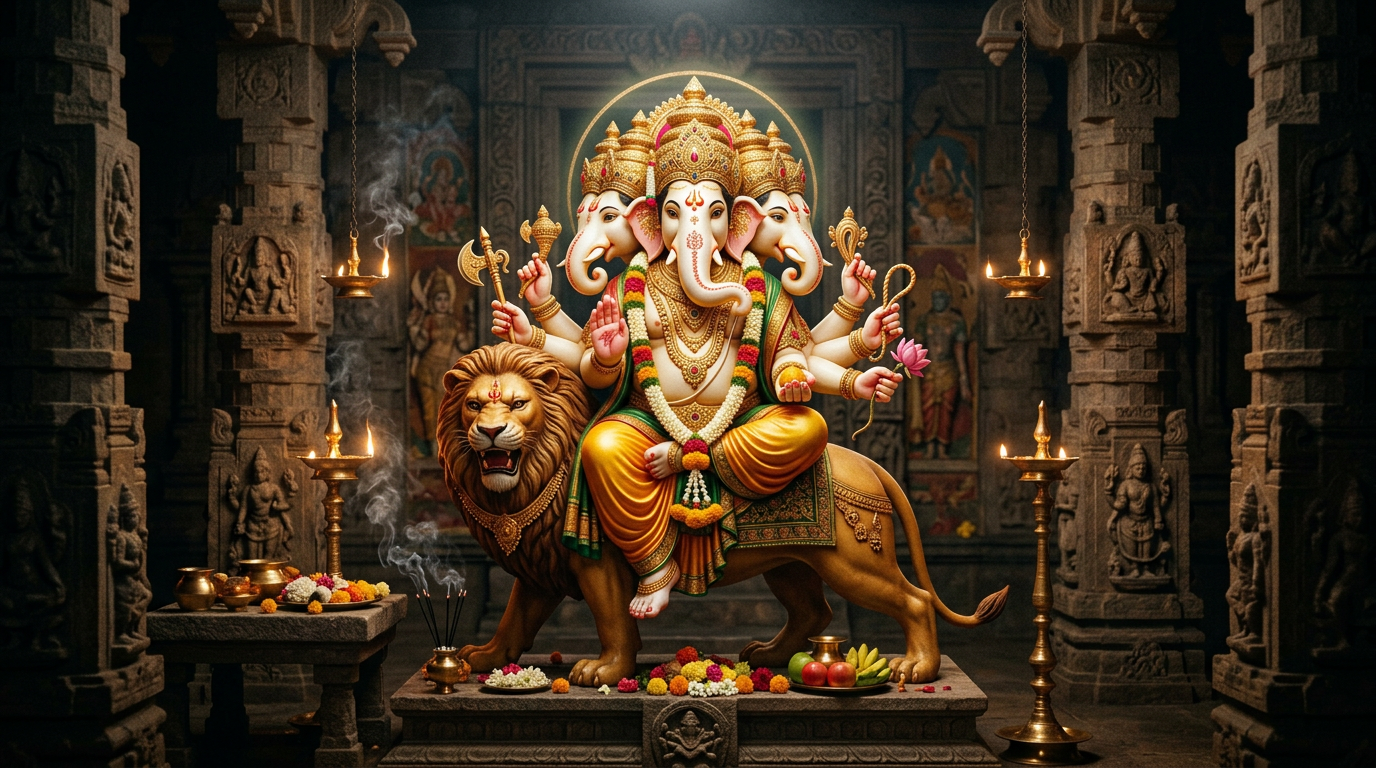
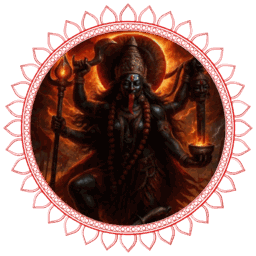
Heramba Gaṇapati (Gaṇanātha Gaṇapati) — paired with Maa Kālī

Maa Kālī

Heramba Gaṇapati (Gaṇanātha Gaṇapati)

Five-faced protector form riding a lion.

Akṣobhya Gaṇapati (Ucchiṣṭa Gaṇapati) — paired with Maa Tārā

Maa Tārā

Akṣobhya Gaṇapati (Ucchiṣṭa Gaṇapati)

Overcoming major crises and barriers of speech.

Mahā Gaṇapati — paired with Maa Tripurasundarī (Ṣoḍaśī)

Maa Tripurasundarī (Ṣoḍaśī)

Mahā Gaṇapati

Full realisation of Śrī Vidyā and abundance.

Puṣṭi Gaṇapati (Puṣṭipati Gaṇapati) — paired with Maa Bhuvaneśvarī

Maa Bhuvaneśvarī

Puṣṭi Gaṇapati (Puṣṭipati Gaṇapati)

Lord of cosmic nourishment and material stability.

Śāradā Gaṇapati — paired with Maa Tripura Bhairavī

Maa Tripura Bhairavī

Śāradā Gaṇapati

Protects the seeker’s intellect from wavering.

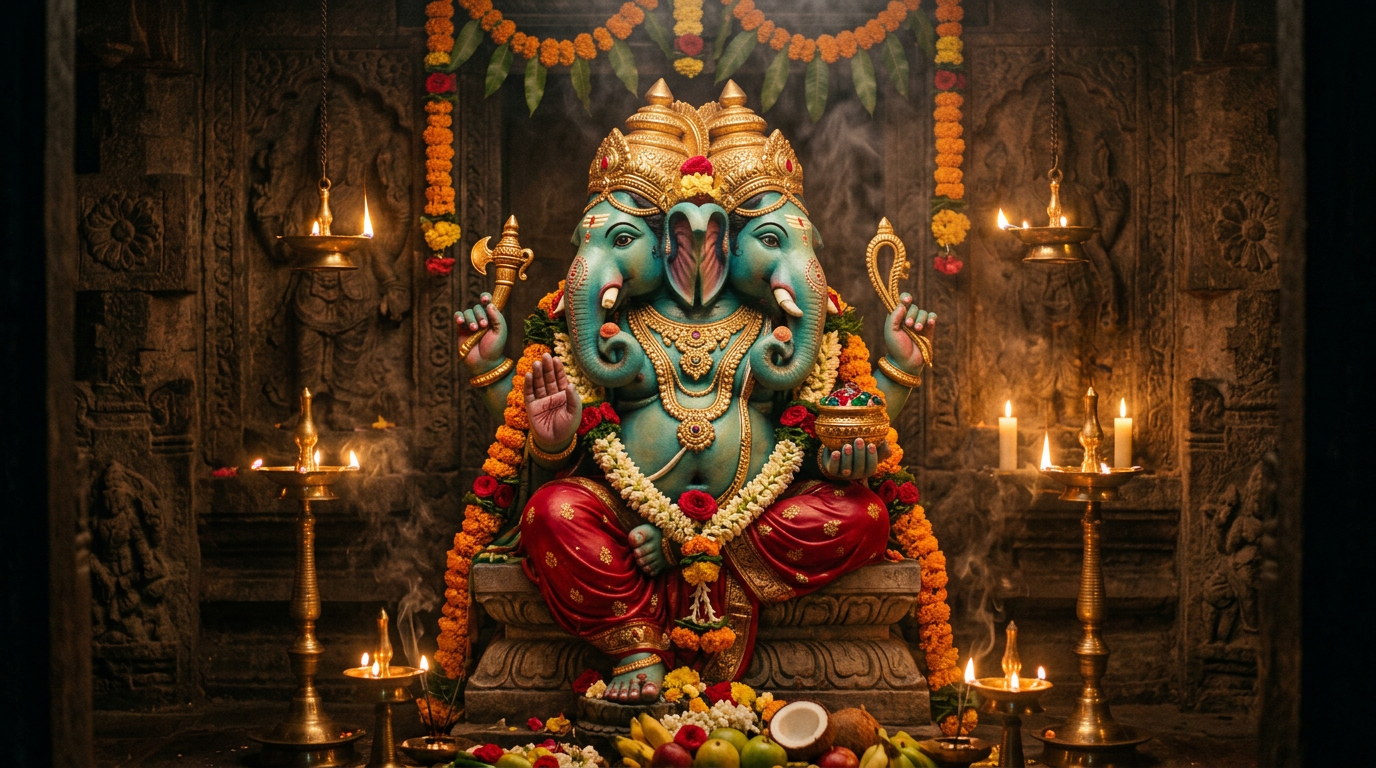
Dvimukha Gaṇapati (Durmukha Gaṇapati) — paired with Maa Chinnamastā

Maa Chinnamastā

Dvimukha Gaṇapati (Durmukha Gaṇapati)

Two-faced form, mastery of inner and outer realities.

Dhūmra Gaṇapati — paired with Maa Dhūmāvatī

Maa Dhūmāvatī

Dhūmra Gaṇapati

Transcending sorrow, loss and illusion.

Haridrā Gaṇapati — paired with Maa Bagalāmukhī

Maa Bagalāmukhī

Haridrā Gaṇapati

Stillness (stambhana) and victory over adversaries.

Mohinīśvara Gaṇapati — paired with Maa Mātaṅgī

Maa Mātaṅgī

Mohinīśvara Gaṇapati

Mastery of the arts, speech and attraction.

Lakṣmī-vallabha Gaṇapati (Śrī Gaṇapati) — paired with Maa Kamalā

Maa Kamalā

Lakṣmī-vallabha Gaṇapati (Śrī Gaṇapati)

Royal prosperity and divine grace.

These pairings are preserved in living Gaṇapatya-Śākta upāsanā lineages and regional tantric paddhatis rather than in a single pan-Indian scripture; the ten Mahāvidyās and the Gaṇapati cycle remain distinct deity traditions, and their joint worship requires dīkṣā. Visit the dedicated Mahāvidyā page to study that lineage on its own terms.

Primary textual references

  • Gaṇapati Atharvaśīrṣa (Atharvaśiras Upaniṣadic tradition)
  • Mudgala Purāṇa — eight avatāras and Gaṇapatya theology
  • Śāradātilaka Tantra and Prapañcasāra Tantra — Mahāgaṇapati dhyāna and mantra traditions
  • Mantra-mahodadhi — Haridrā and Ucchiṣṭa Gaṇapati ritual traditions
  • Śrītattvanidhi, Gaṇapati-nidhi — South Indian recension of thirty-two forms
  • Śilpa and Āgama traditions governing Gaṇapati iconography